MEDINDIA
 English
 हिन्दी
 Español
 français
 中文
中文
Face mask combinations and modifications that healthcare professionals and the public can implement have been identified.
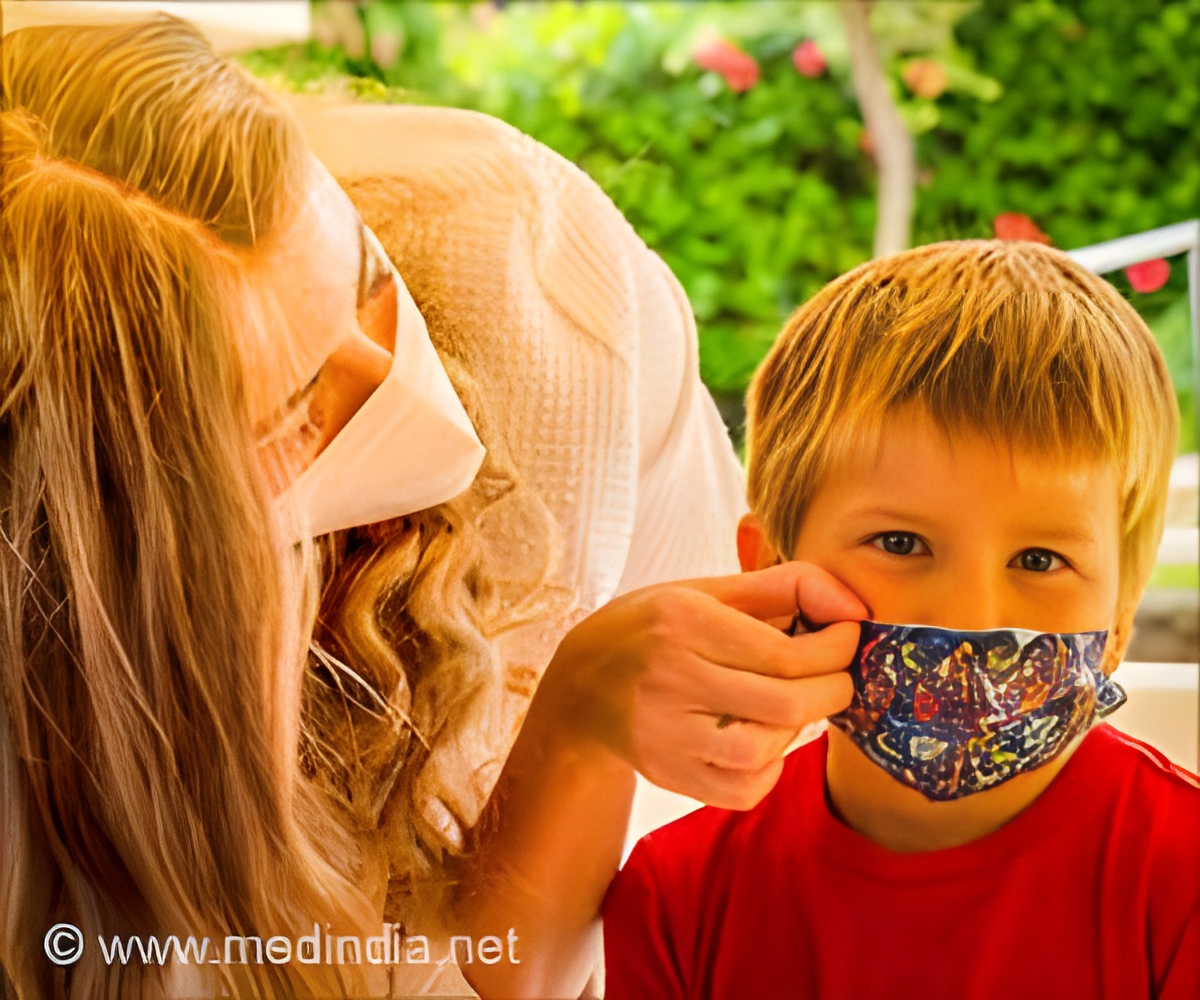

Homemade Face Masks At least Need Two Layers to Restrict COVID-19 Spread
Homemade masks should have at least two layers, ideally, three to prevent the novel coronavirus spread, reports a new study.
Homemade masks should have at least two layers, ideally, three to prevent the novel coronavirus spread, reports a new study.
TOP INSIGHT

Specific, practical combinations of face masks such as the layering of a three-ply cloth mask over a medical mask (double masking) or securing a medical mask with an elastic brace provides the best protection against respiratory aerosols.
The U.S. Centers for Disease Control and Prevention (CDC) recommends a mask that is multi-layered, covers the nose and mouth, and forms a tight seal against the face.
“The performance of face masks as devices that control infection spread depends upon both the ability of the mask material to filter aerosols and on how well the mask fits the wearer,” said Francoise M. Blachere, MSc, research biologist, of the National Institute for Occupational Safety and Health (NIOSH), and the paper’s lead author.
Face Masks Do Not Increase Body Temperature During Exercises: Study
Exercising with a face mask on does not boost body temperature or heart rate during exercises, finds a study.
Exercising with a face mask on does not boost body temperature or heart rate during exercises, finds a study.
Results show that layering a three-ply cloth mask over a medical mask (double masking) or securing a medical mask with an elastic brace provided the best protection against respiratory aerosols.

Face Masks Could Impair How Children Read Emotions
Face masks have been a part of our life since COVID-19 pandemic started its play. However, children might find it challenging to recognize facial cues while seeing people with face masks.
Face masks have been a part of our life since COVID-19 pandemic started its play. However, children might find it challenging to recognize facial cues while seeing people with face masks.
Using earloop toggles or an earloop strap, or knotting and tucking the mask, also increased performance as compared to medical masks without modification. Two other mask-fit modifications, crossing the earloops or placing a bracket under the mask, did not increase performance.

New 3D Face Mask Developed by a Pune Firm
Pune-based startup has developed a 3D face mask that is coated with anti-viral agents keeps Covid-19 virus at bay. The mask coating comprises of a Sodium Olefin Sulfonate-based mixture, which has been tested and shown to inactivate the Covid-19 virus.
Pune-based startup has developed a 3D face mask that is coated with anti-viral agents keeps Covid-19 virus at bay. The mask coating comprises of a Sodium Olefin Sulfonate-based mixture, which has been tested and shown to inactivate the Covid-19 virus.
“The NIOSH study findings are important and timely because they identify specific, practical combinations of face masks and mask modifications that may improve mask seal and thereby measurably reduce the expulsion of infectious aerosols into the environment.”
Source-Eurekalert
 Email
Email