MEDINDIA
 English
 हिन्दी
 Español
 français
 中文
中文
An underused simple blood test can help to improve treatment options for colon cancer.

TOP INSIGHT

An underused cancer test can help to improve treatment for colon cancer.
The researchers found that knowing these blood test results prior to treatment could have changed the classification for 17 percent of stage 2 colon cancer patients from average risk to high risk. That change could have altered treatment options, including whether to use chemotherapy.
"The decision to give a patient chemotherapy after surgery is not a light one, and physicians must weigh the risks and benefits," says senior author Kellie Mathis, M.D., a Mayo Clinic colon and rectal surgeon. "We are currently using the blood test to help make these difficult decisions, and we suggest other physicians do the same."

Colorectal Cancer Screening
Colorectal screening is done using tests to detect blood in stool, colonoscopy or sigmoidoscopy ordouble contrast barium enema or CT colonography.
Colorectal screening is done using tests to detect blood in stool, colonoscopy or sigmoidoscopy ordouble contrast barium enema or CT colonography.
"There is no good reason for a physician to omit this blood test, and more work needs to be done to ensure that all patients receive it," Dr. Mathis says.
Colorectal Cancer - Types, Causes, Risk Factors, Symptoms, Diagnosis, Treatment, Prognosis & Prevention
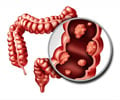
Colorectal cancer is a cancer that starts in the colon or the rectum. Colorectal cancer is the third most common cancer in men.
Colorectal cancer is a cancer that starts in the colon or the rectum. Colorectal cancer is the third most common cancer in men.
Colorectal cancer is the fourth most common cancer in the U.S. and the second deadliest.

Survival Rate of Colorectal Cancer Patients Improved With NSAIDs
Use of NSAIDs,or nonsteroidal anti-inflammatory drugs,is associated with 25 per cent reduction in all-cause mortality among long-term colorectal cancer survivors
Use of NSAIDs,or nonsteroidal anti-inflammatory drugs,is associated with 25 per cent reduction in all-cause mortality among long-term colorectal cancer survivors
The researchers also discovered that, for stage 2 patients who had surgery but not chemotherapy, the five-year survival rate was 66 percent for those with elevated protein levels and 76 percent for those without elevated levels. And for patients with elevated protein levels, those who had chemotherapy and surgery fared better than those who only had surgery.
"If a patient with a new diagnosis of stage 2 colon cancer has an elevated carcinoembryonic antigen level, physicians should consider chemotherapy in addition to surgery," says Dr. Mathis.
Source-Eurekalert
 Email
Email