MEDINDIA
 English
 हिन्दी
 Español
 français
 中文
中文
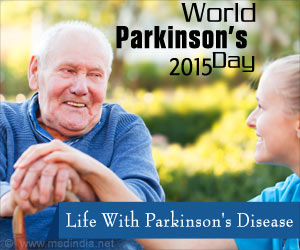
Parkinson's is a progressive neurological condition that affects movement and speech. At present there is no cure as to why some people develop the condition.
Indian Researchers in Uttar Pradesh Discover New Drug for Parkinson's Disease
Infusing the chemical dopamine into the brain can relieve symptoms but scientists have not yet found a way to safely deliver the drug to the brain.
Infusing the chemical dopamine into the brain can relieve symptoms but scientists have not yet found a way to safely deliver the drug to the brain.
TOP INSIGHT

There have been few innovations in the treatment of Parkinson's for over 40 years which could lead to new and highly effective treatments in the armoury of medications to tackle Parkinson's.
This trial is part of The Cure Parkinson's Trust's Linked Clinical Trials Programme which is now in its fourth year. Each year an international committee comprising many of the most respected Parkinson's experts from around the world analyse a number of pre-selected compounds that show the potential to slow, stop or reverse Parkinson's to bring into clinical trials. These compounds already have proven safety records in people and a number of them are already used to treat other conditions.
This exciting programme has seen diabetes treatments, and treatments for mitochondrial dysfunction, amongst others, move forward into Parkinson's trials in a variety of centres in Europe and the US.

Brain Device with 25 Years Battery Life
Implanting a brain device for Parkinsons disease to treat diseases with abnormal brain stimulation will be used widely with the extended battery life.
Implanting a brain device for Parkinsons disease to treat diseases with abnormal brain stimulation will be used widely with the extended battery life.
Tom Isaacs, co-founder of The Cure Parkinson's Trust (CPT) who has been living with Parkinson's for 20 years added: "At CPT, we are leaving no stone unturned in our quest to find new treatments that will slow, stop or reverse Parkinson's. We want to make a difference to those of us living with this condition within five years. The results of a recent trial in multiple sclerosis with simvastatin, and the pre-clinical work investigating its effect on alpha-synuclein clumping (which is a common feature of Parkinson's) indicate that it could be an effective treatment to slow down the progression of Parkinson's."

Existance of Neurological Diseases Spotted by Brainwave Markers
COGNISION system can be used to detect brainwave markers that point to the existence of certain neurological diseases.
COGNISION system can be used to detect brainwave markers that point to the existence of certain neurological diseases.
Parkinson's is a progressive neurological condition that affects movement and speech. At present there is no cure and little understanding as to why some people develop the condition. One in 500 people in the UK, or around 127,000 individuals, currently have Parkinson's. Worldwide, it is estimated that 10-20 million people are living with the disease and this number is expected to double by 2030. Many of these cases are undiagnosed and untreated.

3D Microscopy May Help Crack Secrets of Alzheimer's
Scientists have edged closer to cracking Parkinson's and Alzheimer's secrets with the help of cutting edge 3D microscopy.
Scientists have edged closer to cracking Parkinson's and Alzheimer's secrets with the help of cutting edge 3D microscopy.
 Email
Email