MEDINDIA
 English
 हिन्दी
 Español
 français
 中文
中文
In order to achieve the new goals, 47 countries must speed up progress, 34 of them in sub-Saharan Africa, and two, Afghanistan and Pakistan, in South Asia.


Child Mortality Falls Worldwide, but Not Fast Enough
A study led by the Johns Hopkins Bloomberg School of Public Health finds millions of children worldwide still die before their fifth birthday.
A study led by the Johns Hopkins Bloomberg School of Public Health finds millions of children worldwide still die before their fifth birthday.
The study was led by Danzhen You of UNICEF, and was the first to include estimates for 2015. It also made projections for child mortality in the coming 15 years. The new target is set at 25 or fewer under-five deaths per 1,000 live births by 2030.
The study authors said, "The unfinished business of child survival looms large. Every child's death represents the loss of a unique human being."

Remarkable Progress in Reducing Child Mortality and Improving Maternal Health: Report
In relatively little time, rapid expansion of programs to prevent HIV transmission to babies and vaccinate children can be achieved.
In relatively little time, rapid expansion of programs to prevent HIV transmission to babies and vaccinate children can be achieved.
Nearly half of infant deaths are associated with malnutrition, and 45% occur during the first 28 days of life. Leading causes are labor complications or premature birth, pneumonia, diarrhea, sepsis, and malaria. Th researchers found that West and Central Africa, the world's poorest regions, still have the world's highest under-five death rates.
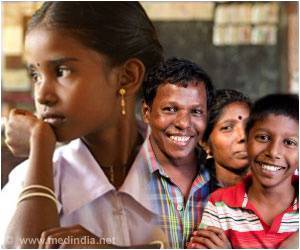
Odisha to Spend Rs.50 Crore Annually to Reduce Mother-Child Mortality Rate
The number of deaths of new mothers and babies is high in many areas of the Indian state due to inaccessibility and a lack of public health facilities.
The number of deaths of new mothers and babies is high in many areas of the Indian state due to inaccessibility and a lack of public health facilities.
Source-AFP

Government Will Soon Unveil a New Strategy to Cut Child Mortality
The health ministry has said that the government will soon unveil a new road map to address the issue of maternal and child health.
The health ministry has said that the government will soon unveil a new road map to address the issue of maternal and child health.
 Email
Email