MEDINDIA
 English
 हिन्दी
 Español
 français
 中文
中文
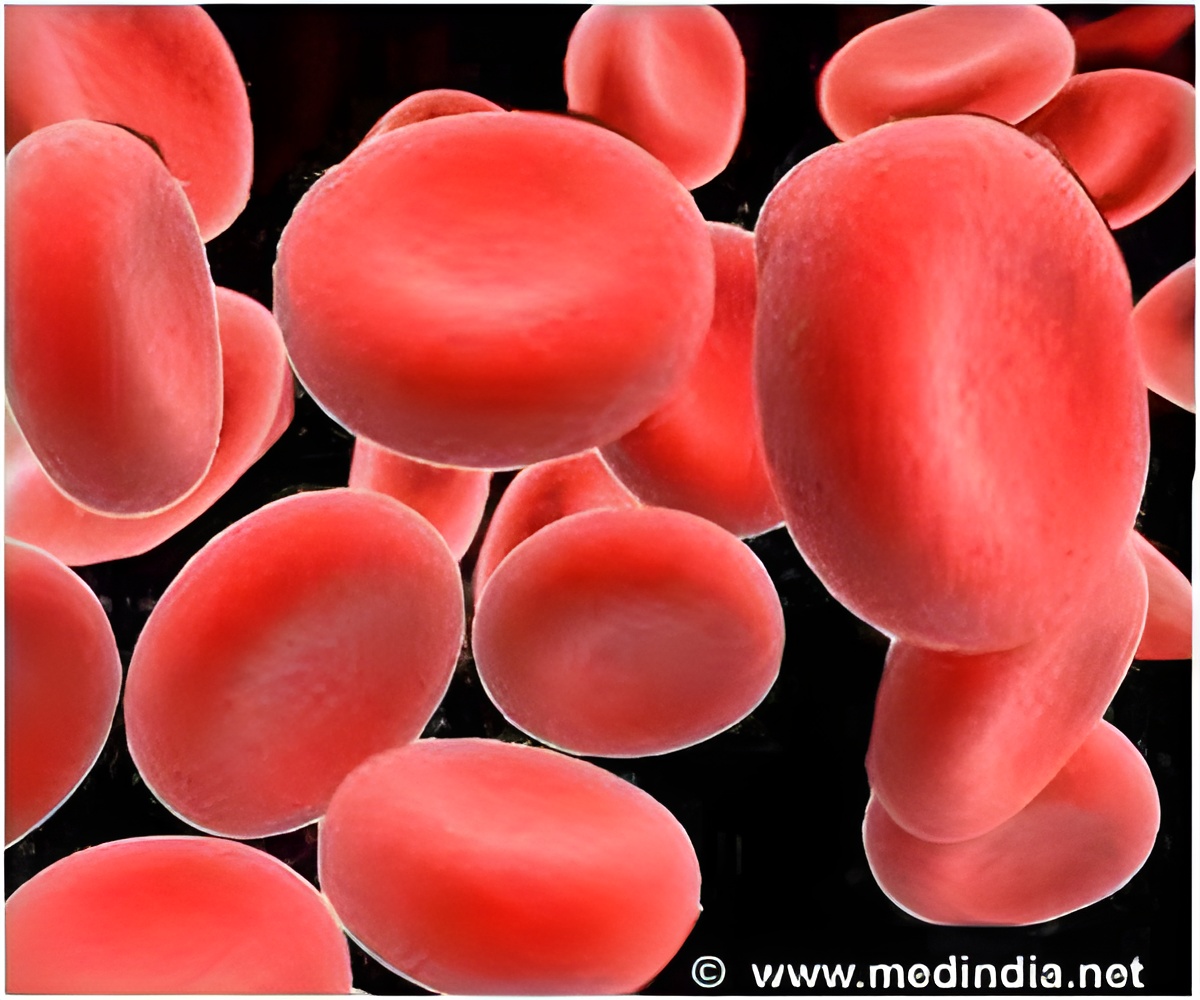
Finding and destroying malignant cells that circulate in the body following the spread of cancer is essential to ensure patient survival.
Tumor Markers - For Cancer Diagnosis and Prognosis
An ideal tumor marker for a cancer should be specific to that cancer and not generate false positive results.
An ideal tumor marker for a cancer should be specific to that cancer and not generate false positive results.
The advance uses photoswitchable fluorescent proteins that change their color in response to light. When the first laser of light hits the circulating tumor cells, they appear to be fluorescent green. A second laser, using a different wavelength, makes the cells appear to be fluorescent red. To label individual cells, researchers use a very thin violet laser beam aimed at small blood vessels.

About Brain Tumor
Brain tumors are the abnormal growth of brain cells that may be benign or metastatic. Brain tumors account for about 2.4% of all the tumor diagnosesandare most challenging due to their critically delicate location.
Brain tumors are the abnormal growth of brain cells that may be benign or metastatic. Brain tumors account for about 2.4% of all the tumor diagnosesandare most challenging due to their critically delicate location.
Auditory Tumor - Causes Symptoms Diagnosis Treatment Prognosis Complications
Auditory Tumor or Acoustic neuroma is a benign growth that arises on the vestibular cochlear nerve. It is not a cancer. Read more on the causes, symptoms, diagnosis and treatment.
Auditory Tumor or Acoustic neuroma is a benign growth that arises on the vestibular cochlear nerve. It is not a cancer. Read more on the causes, symptoms, diagnosis and treatment.
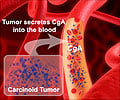
Carcinoid Tumors - Carcinoid Syndrome - Symptoms, Signs, Diagnosis & Treatment
Carcinoid tumors is a benign tumor that results in carcinoid syndrome. Only 8 to 10% of all carcinoid tumors are associated with the carcinoid syndrome.
Carcinoid tumors is a benign tumor that results in carcinoid syndrome. Only 8 to 10% of all carcinoid tumors are associated with the carcinoid syndrome.
 Email
Email