MEDINDIA
 English
 हिन्दी
 Español
 français
 中文
中文
New study finds that we anticipate the time in two distinct parts of the brain, depending on the task at hand.

Brain Exercises to Improve Memory
An active brain can certainly help in improving memory by strengthening the connections between neural impulses in brain.
An active brain can certainly help in improving memory by strengthening the connections between neural impulses in brain.
TOP INSIGHT

The brain utilizes two clocks to predict the future. Neural networks supporting each of these timekeepers are divided between two distinct parts of the brain, depending on the task at hand.
"Whether it's sports, music, speech or even allocating attention, our study suggests that timing is not a unified process, but that there are two distinct ways in which we make temporal predictions and these depend on different parts of the brain," said study lead author Assaf Breska, a postdoctoral researcher in neuroscience at UC Berkeley.
"Together, these brain systems allow us to not just exist at the moment, but also actively to anticipate the future," said senior study author Richard Ivry, a UC Berkeley neuroscientist.

Brain Food
It is a myth that the brain quits generating new cells once you reach adulthood. They are regenerating all the time.
It is a myth that the brain quits generating new cells once you reach adulthood. They are regenerating all the time.
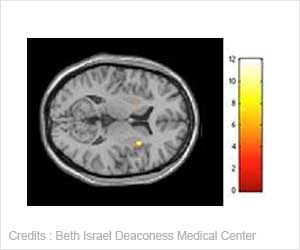
They connected rhythmic timing to the basal ganglia, and interval timing an internal timer based largely on our memory of prior experiences to the cerebellum. Both are primal brain regions associated with movement and cognition.

13 Daily Habits that Damage the Brain
The brain is probably the most important organ in our body and it deserves special care and attention to keep it active and functioning well. Here are thirteen daily habits, you must know that can cause damage to your brain.
The brain is probably the most important organ in our body and it deserves special care and attention to keep it active and functioning well. Here are thirteen daily habits, you must know that can cause damage to your brain.
"Our study identifies not only the anticipatory contexts in which these neurological patients are impaired but also the contexts in which they have no difficulty, suggesting we could modify their environments to make it easier for them to interact with the world in the face of their symptoms," Breska said.

7 Ways How Writing by Hand Improves Brain Power
Do you want to sharpen the way your brain works? Try writing by hand to sharpen your mind and increase your focus.
Do you want to sharpen the way your brain works? Try writing by hand to sharpen your mind and increase your focus.
Both groups viewed sequences of red, white and green squares as they flashed by at varying speeds on a computer screen, and pushed a button the moment they saw the green square. The white squares alerted them that the green square was coming up.
In one sequence, the red, white and green squares followed a steady rhythm, and the cerebellar degeneration patients responded well to these rhythmic cues.
In another, the colored squares followed a more complex pattern, with differing intervals between the red and green squares. This sequence was easier for the Parkinson's patients to follow, and succeed at.
"We show that patients with cerebellar degeneration are impaired in using non-rhythmic temporal cues while patients with basal ganglia degeneration associated with Parkinson's disease are impaired in using rhythmic cues," Ivry said.
Ultimately, the results confirm that the brain uses two different mechanisms for anticipatory timing, challenging theories that a single brain system handles all our timing needs, researchers said.
"Our results suggest at least two different ways in which the brain has evolved to anticipate the future," said Breska.
"A rhythm-based system is sensitive to periodic events in the world such as is inherent in speech and music," he added. "And an interval system provides a more general anticipatory ability, sensitive to temporal regularities even in the absence of a rhythmic signal."
Source-Eurekalert
 Email
Email