MEDINDIA
 English
 हिन्दी
 Español
 français
 中文
中文
Why colorectal cancer cells depend on a specific nutrient, and a way to starve them of it, has been identified by a new scientific study.


Colorectal Cancer Screening with Colonoscopy
Colonoscopy is a widely used endoscopic procedure to screen individuals for colorectal cancer. It is very sensitive in detecting colorectal cancers.
Colonoscopy is a widely used endoscopic procedure to screen individuals for colorectal cancer. It is very sensitive in detecting colorectal cancers.
TOP INSIGHT

Why colorectal cancer cells depend on a specific nutrient, and a way to starve them of it, has been identified by a new scientific study.
Researchers were interested in determining whether or not the common PIK3CA mutation contributes to changes in cancer cell metabolism, such as how nutrients like glutamine are processed. Normally, glutamine is broken down by cancer cells into several other molecules with the help of specific enzymes. This complicated system helps produce adenosine triphosphate, the energy currency of all cells, and other molecules critical for colorectal cancer cell growth.
The researchers found that colorectal cells with the PIK3CA mutation broke down significantly more glutamine than cells without the mutation. The researchers identified several enzymes involved in the process that are more active in the mutant cancer cells than in other cell types, explaining the increased need for glutamine. These enzymes become overactive in the mutant cancer cells due to a cascade of signals led by the protein encoded by mutant PIK3CA gene. This finding represents a novel and important link between the common PIK3CA mutation and altered glutamine metabolism in cancer cells.
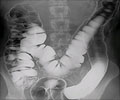
Colorectal Cancer Screening with Double-Contrast Barium Enema
Double-contrast barium enema is a radiological technique that can be used to screen individuals for colorectal cancer and is performed when colonoscopy is not possible.
Double-contrast barium enema is a radiological technique that can be used to screen individuals for colorectal cancer and is performed when colonoscopy is not possible.
When the researchers lowered the amount of glutamine available to mutant cancer cells growing in laboratory dishes, the cancer cells died. This discovery led the team to investigate the effects of blocking glutamine availability in mice with colorectal cancer tumors containing the common PIK3CA mutation. Wang and colleagues found that exposing these mice to a compound that blocks glutamine metabolism consistently suppressed tumor growth. They did not observe the same effect on tumors without the mutation. Together, these results provide a promising new therapeutic avenue to suppress growth of colorectal tumors with the PIK3CA mutation. The researchers have filed a patent application based on the unique mechanism of tumor suppression they have identified and the work is available for licensing.
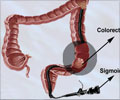
Colorectal Cancer Screening with Flexible Sigmoidoscopy
Flexible sigmoidoscopy is an endoscopic procedure used to screen individuals for colorectal cancer suspected to be in sigmoid colon.
Flexible sigmoidoscopy is an endoscopic procedure used to screen individuals for colorectal cancer suspected to be in sigmoid colon.
Source-Newswise

Colorectal Cancer - Types, Causes, Risk Factors, Symptoms, Diagnosis, Treatment, Prognosis & Prevention
Colorectal cancer is a cancer that starts in the colon or the rectum. Colorectal cancer is the third most common cancer in men.
Colorectal cancer is a cancer that starts in the colon or the rectum. Colorectal cancer is the third most common cancer in men.
 Email
Email