MEDINDIA
 English
 हिन्दी
 Español
 français
 中文
中文
Blockage of sphingolipid de novo synthesis pathway impairs hepatocyte polarity, attenuates liver regeneration after hepatectomy.

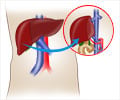
Living Donor Liver Transplant: What Are the Risks? - Causes, Symptoms, Diagnosis, Treatment
The risk of dying as a result of a living donor liver segment removal is between 0.2-2.0%. The risk of morbidity is anywhere between 1.3% (in highly experienced centers) to 60%.
The risk of dying as a result of a living donor liver segment removal is between 0.2-2.0%. The risk of morbidity is anywhere between 1.3% (in highly experienced centers) to 60%.
TOP INSIGHT

Blockage of sphingolipid de novo synthesis pathway impairs hepatocyte polarity, attenuates liver regeneration after hepatectomy.
Importantly, the deficiency significantly reduces sphingomyelin but not other sphingolipids in hepatocyte plasma membrane, and greatly reduces cadherin, the major protein in adherens junctions, on the membrane. The deficiency affects cellular distribution of b-catenin, the central component of the canonical Wnt pathway.
Furthermore, such a defect can be partially corrected by sphingomyelin supplementation in vivo and in vitro. SUNY Downstate's Professor of Cell Biology Xian-Cheng Jiang and Assistant Professor of Surgery Chongmin Huan are co-corresponding authors of the article detailing the research.

Safer Ways Identified To Transplant Liver Cells After Hepatectomy
Liver failure is a life-threatening condition that has many causes, thus effecting varied, diverse portions of the population.
Liver failure is a life-threatening condition that has many causes, thus effecting varied, diverse portions of the population.
Dr. Jiang concludes, "This study also will provide a guide for the development of serine palmitoyltransferase inhibitors, which have a potential for the treatment of metabolic diseases such as diabetes."

First Fully Robotic Procedure Conducted in Italy
The world's first liver transplant using only a robot was conducted in Italy.
The world's first liver transplant using only a robot was conducted in Italy.

Decaf Coffee Boosts Liver Health, Shows New Study
A new study has demonstrated that drinking decaffeinated coffee may be beneficial for the liver.
A new study has demonstrated that drinking decaffeinated coffee may be beneficial for the liver.
 Email
Email