MEDINDIA
 English
 हिन्दी
 Español
 français
 中文
中文
Bacteria causing middle ear infections, pink eye and sinusitis guard themselves from additional immune attack by transporting molecules meant to destroy them away from their inner membrane target.

About Otitis Media
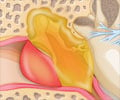
Middle ear infection, or otitis media, is a common type of infection that may or may not accompany the infections of nose and throat. It is the infection of any part of the middle ear.
Middle ear infection, or otitis media, is a common type of infection that may or may not accompany the infections of nose and throat. It is the infection of any part of the middle ear.
To help explain the mechanisms that NTHI uses to protect itself from AMPs, Dr. Mason's team examined an animal model of middle ear infection. They had previously shown that NTHI bacteria lacking the protein SapA were susceptible to AMP attack. In the study, they describe the Sap transporter system that recognizes and transports host immune defense molecules into the bacterial cell. This system is necessary for the bacteria to survive in the host.
"It seems that NTHI senses the presence of these immune molecules, steals them from the host and arms itself to protect against future attacks," said Dr. Mason. "NTHI imports AMPs into the bacterial cell and then degrades them in the interior of the cell. By remodeling its membranes, the bacterium appears as already attacked, which protects it from being bothered by additional AMPs. Basically, transporting AMPs acts as a counter strategy to evade innate immune defense and ultimately benefits the bacterium nutritionally." This study provides the first direct evidence that the protein SapA contributes to bacterial survival by providing protection from AMPs in the host.

Tinnitus Symptom Evaluation-Causes-Diagnosis-Treatment-Prevention-FAQs
Tinnitus is a ringing or a swishing noise that emanates from the ear or head. It is not a life-threatening condition and usually resolves with time.
Tinnitus is a ringing or a swishing noise that emanates from the ear or head. It is not a life-threatening condition and usually resolves with time.
Source-Eurekalert
About Conjunctivitis | Pink Eye
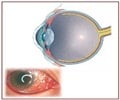
Conjunctivitis or Pink Eye causes redness and soreness of the conjunctiva and is responsible for 1% of all emergency visits to a hospital.
Conjunctivitis or Pink Eye causes redness and soreness of the conjunctiva and is responsible for 1% of all emergency visits to a hospital.

Sinusitis - Types, Causes, Symptoms, Diagnosis, Complications and Treatment
Infections like sinus headache and stuffy nose can be due to acute or chronic sinusitis, affecting the maxillary sinus and other sinuses.
Infections like sinus headache and stuffy nose can be due to acute or chronic sinusitis, affecting the maxillary sinus and other sinuses.
 Email
Email