MEDINDIA
 English
 हिन्दी
 Español
 français
 中文
中文
Artificial sweeteners regulate appetite and alter taste perceptions. It also promoted hyperactivity, insomnia, and poor sleep quality.
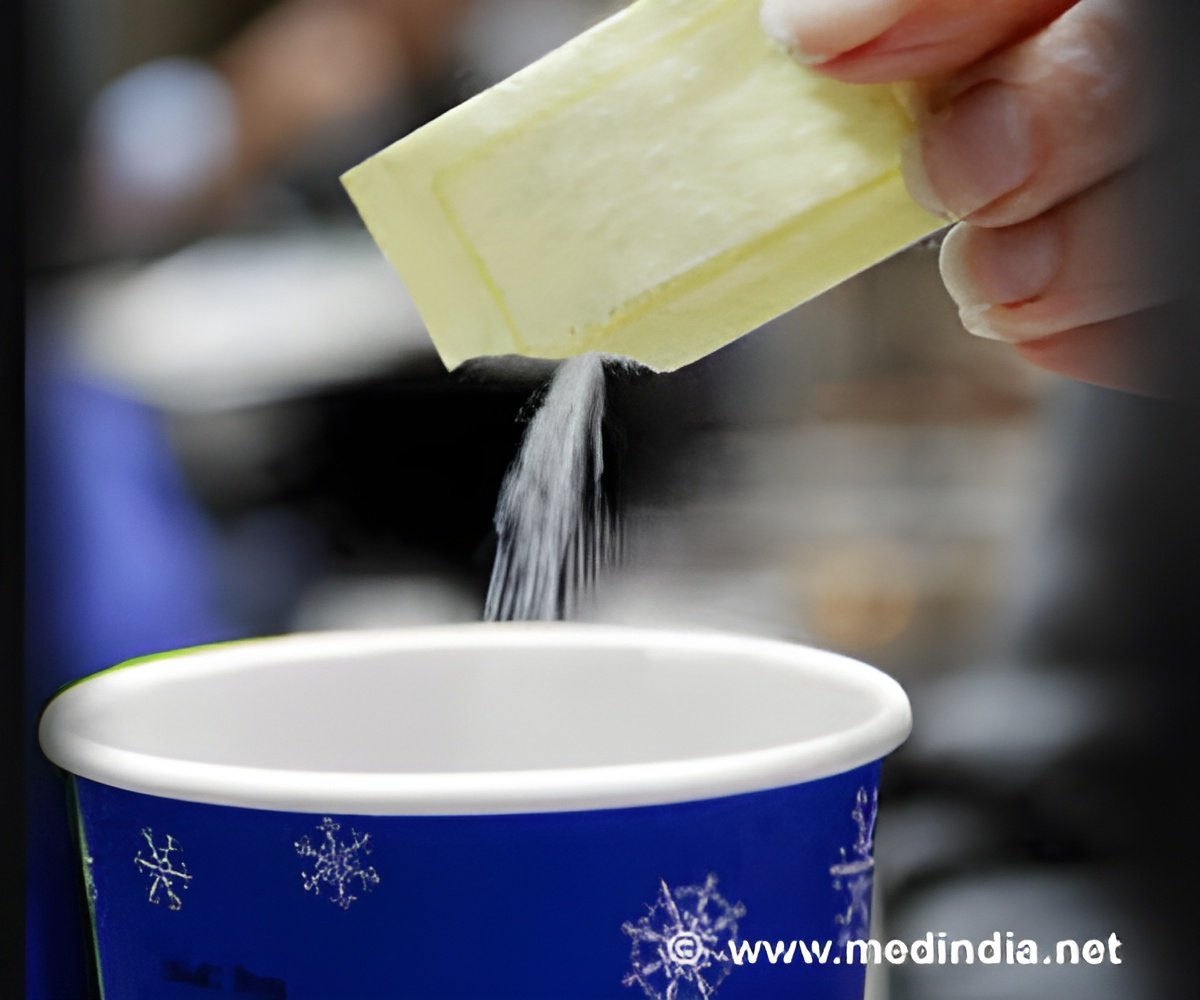

Artificial Sweeteners Equally Bad for Health, Finds Study
Artificial sweetened beverages are associated with obesity, diabetes, metabolic syndrome, finds recent study.
Artificial sweetened beverages are associated with obesity, diabetes, metabolic syndrome, finds recent study.
TOP INSIGHT

Artificial sweeteners change the way how the sweetness of the food is perceived and prompts an increase in caloric consumption.
The researchers also found that they were much more sensitive to real sugar. The flies consumed 30% more calories of naturally sweetened food. "It turns out that these animals were acting like they hadn't eaten, even though they had eaten," said co-author, Associate Professor Greg Neely.
Consumption of artificial sweeteners increased the sweet intensity of real nutritive sugar and the urge to eat more food.

Coca-Cola Under Pressure Over Use of Artificial Sweeteners in Diet Coke
The increasing use of artificial sweeteners in its products has put some pressure on Coca-Cola, a company executive revealed.
The increasing use of artificial sweeteners in its products has put some pressure on Coca-Cola, a company executive revealed.
“The sweet taste sends signals to the brain that integrate with an energy sensor called AMPK. They work together to change the message sent from reward neurons, such as dopamine,” said Prof Neely.
Role of Artificial Sweeteners and Glucose Intolerance
Artificial sweeteners, promoted as aids to diabetes prevention and weight loss, could actually hasten the development of glucose intolerance and metabolic disease.
Artificial sweeteners, promoted as aids to diabetes prevention and weight loss, could actually hasten the development of glucose intolerance and metabolic disease.
Artificial sweeteners are prescribed to lose weight and are consumed by billions of people worldwide. The study is the first to identify a complex neuronal network that responds to artificially sweetened food.

Pregnant Women Should Avoid Artificial Sweeteners to Reduce Risk of Overweight Kids
Artificial sweeteners include aspartame, sucralose, stevia, and saccharin, which are commonly found in diet soda, tea and coffee.
Artificial sweeteners include aspartame, sucralose, stevia, and saccharin, which are commonly found in diet soda, tea and coffee.
Source-Medindia
 Email
Email