MEDINDIA
 English
 हिन्दी
 Español
 français
 中文
中文
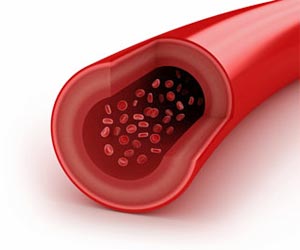
Artificial blood vessels bioengineered in the lab and implanted in young lambs are capable of growth within the recipient, revealed a new study.
Biodegradable Artificial Blood Vessels Transform to Natural Vasculature
They initially allow a small amount of blood to steep through, allowing nearby tissues to thrive. Over time, natural cells replace the artificial blood vessel.
They initially allow a small amount of blood to steep through, allowing nearby tissues to thrive. Over time, natural cells replace the artificial blood vessel.
TOP INSIGHT

Artificial blood vessels bioengineered in the lab and implanted in young lambs are capable of growth within the recipient.
This also means the vessels can be stored and implanted when they are needed, without the need for customized cell growth of the recipient. When implanted in a lamb, the tube was then repopulated by the recipient’s own cells allowing it to grow.
“This might be the first time we have an ‘off-the-shelf’ material that doctors can implant in a patient, and it can grow in the body,” Tranquillo said. “In the future, this could potentially mean one surgery instead of five or more surgeries that some children with heart defects have before adulthood.”
Artificial Blood Vessels From Computer Printer!
Artificial Blood vessels from a computer printer! Yes, that could prove a reality before long, going by the successes of German scientists thus far.
Artificial Blood vessels from a computer printer! Yes, that could prove a reality before long, going by the successes of German scientists thus far.
The bioreactor, developed with Zeeshan Syedain, a senior research associate in Tranquillo’s lab, was a key component of developing the bioartificial vessel to be stronger than a native artery so it wouldn’t burst in the patient.
Scientists Create Tri-layered Artificial Blood Vessels
Researchers at Shanghai University's Rapid Manufacturing Engineering Center have developed a vascular graft composed of three layers for the first time.
Researchers at Shanghai University's Rapid Manufacturing Engineering Center have developed a vascular graft composed of three layers for the first time.
“What’s important is that when the graft was implanted in the sheep, the cells repopulated the blood vessel tube matrix,” Tranquillo said. “If the cells don’t repopulate the graft, the vessel can’t grow. This is the perfect marriage between tissue engineering and regenerative medicine where tissue is grown in the lab and then, after implanting the decellularized tissue, the natural processes of the recipient’s body makes it a living tissue again.”
Artificial Blood Vessels
Artificially engineered body parts have always piqued the interest of scientists in the field of biomedical sciences.
Artificially engineered body parts have always piqued the interest of scientists in the field of biomedical sciences.
“We saw growth and none of the bad things happened,” Tranquillo said. “The results are very encouraging.”
Tranquillo said the next step is talking with doctors to determine the feasibility of requesting approval from the Food and Drug Administration (FDA) for human clinical trials within the next few years.
Source-Newswise
 Email
Email