MEDINDIA
 English
 हिन्दी
 Español
 français
 中文
中文
Alcoholism may have a stronger effect on the brain’s reward system in women when compared to men, reveals study.


Brain Can Reveal Drinking Status Even After Death
Postmortem brain helps to detect the drinking status of individuals through phosphatidylethanol levels.
Postmortem brain helps to detect the drinking status of individuals through phosphatidylethanol levels.
TOP INSIGHT

Alcoholism may have stronger effect on the brain’s reward system in women and could cause higher levels of anxiety.
"Until now, little has been known about the volume of the reward regions in alcoholic women, since all previous studies have been done in men," says co-author Gordon Harris, PhD, of the 3D Imaging Service and the Center for Morphometric Analysis in the Martinos Center for Biomedical Imaging at MGH. "Our findings suggest that it might be helpful to consider gender-specific approaches to treatment for alcoholism."
The brain's reward system is a group of structures - including the amygdala and the hippocampus - that reinforce beneficial experiences, are involved in memory and complex decision-making and have been implicated in the development of substance use disorders.

Drug Interaction with Alcohol
The effects of alcohol, when consumed with certain drugs, can be life-threatening. Hence it is important to be aware of potential alcohol-drug interactions.
The effects of alcohol, when consumed with certain drugs, can be life-threatening. Hence it is important to be aware of potential alcohol-drug interactions.
The study enrolled 60 participants with histories of long-term alcoholism - 30 women and 30 men - and an equivalent group of nonalcoholic volunteers. The alcoholic participants had been abstinent for time periods ranging from four weeks to 38 years.

Alcohol Use Disorder | Alcoholism
Alcohol use disorder or alcoholism is an inability to control drinking. It can cause short term and long term physical, as well as psychological effects on the patient.
Alcohol use disorder or alcoholism is an inability to control drinking. It can cause short term and long term physical, as well as psychological effects on the patient.
Replicating the results of earlier studies, the average sizes of reward region structures of alcoholic men were 4.1 percent smaller than those of nonalcoholic men, but the average sizes of the same structures were 4.4 percent larger in alcoholic than in nonalcoholic women.
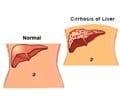
Alcoholic Liver Disease - Causes Symptoms Diagnosis Treatment FAQs
Encyclopedia section of medindia gives general information about Alcoholic Liver Disease.
Encyclopedia section of medindia gives general information about Alcoholic Liver Disease.
Among participants with alcoholism - both women and men - each year of sobriety was associated with a 1.8 percent decrease in the size of the ventricles, suggesting recovery from the damaging effects of alcoholism on the brain.
"We're planning to take a more detailed look at the impact of factors such as the severity of drinking and the length of sobriety on specific brain structure, and hope to investigate whether the imaging differences seen in this and previous studies are associated with gender-based differences in motivational and emotional functions," says co-author Marlene Oscar-Berman, PhD, a professor of Psychiatry, Neurology, and Anatomy & Neurobiology at BUSM.
Source-Eurekalert
 Email
Email