MEDINDIA
 English
 हिन्दी
 Español
 français
 中文
中文
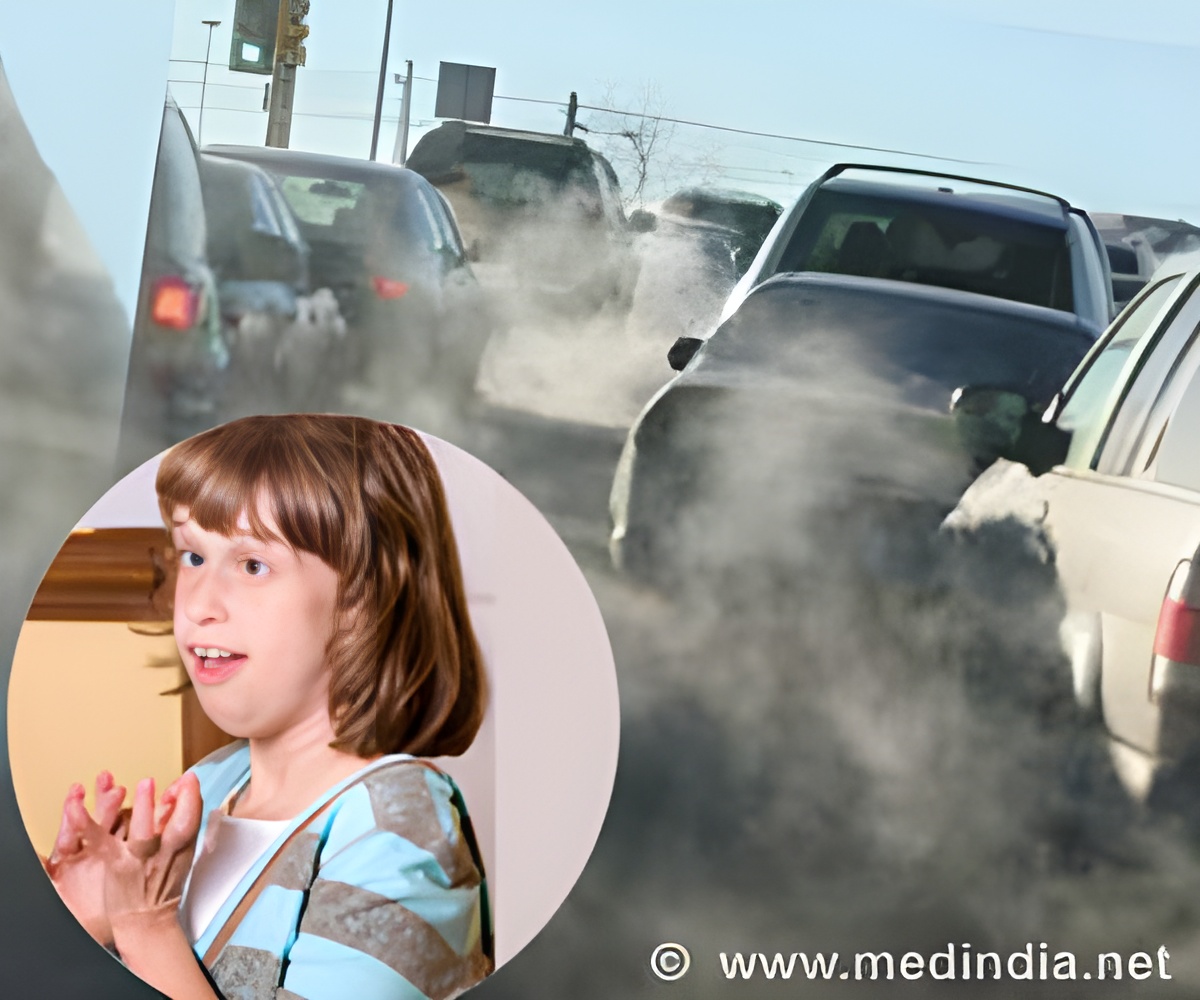
Details of how exposure to air pollution early in life produces harmful changes in the brains of mice, such as enlargement of part of brain that is seen in humans with autism, published.
About Schizophrenia
Schizophrenia is a mental disorder characterized by symptoms of thought, behavior and social problems.
Schizophrenia is a mental disorder characterized by symptoms of thought, behavior and social problems.
Brains of mice in all three groups also had elevated levels of glutamate, a neurotransmitter, which is also seen in humans with autism and schizophrenia. Most air pollution is made up mainly of carbon particles that are produced when fuel is burned by power plants, factories, and cars. For decades, research on the health effects of air pollution has focused on the part of the body where its effects are most obvious -- the lungs. That research began to show that different-sized particles produce different effects. Larger particles -- the ones regulated by the Environmental Protection Agency (EPA) -- are actually the least harmful because they are coughed up and expelled.
But many researchers believe that smaller particles known as ultrafine particles -- which are not regulated by the EPA -- are more dangerous, because they are small enough to travel deep into the lungs and be absorbed into the bloodstream, where they can produce toxic effects throughout the body. That assumption led Cory-Slechta to design a set of experiments that would show whether ultrafine particles have a damaging effect on effect on the brain, and if so, to reveal the mechanism by which they inflict harm. Her study published today is the first scientific work to do both."I think these findings are going to raise new questions about whether the current regulatory standards for air quality are sufficient to protect our children," said Cory-Slechta.
Traffic Related Air Pollution Causes Autism in Infants
Autism is characterized by developmental disturbances in social interaction, behavior and language. Air pollutants exposure can lead to autism development in infants and during pregnancy.
Autism is characterized by developmental disturbances in social interaction, behavior and language. Air pollutants exposure can lead to autism development in infants and during pregnancy.

Nutritional Therapies Can Treat Common Mental Disorders
Supplementing diet with the correct nutrient and dosage can be as effective as pharmaceutical drugs but with minimal side effect for patients
Supplementing diet with the correct nutrient and dosage can be as effective as pharmaceutical drugs but with minimal side effect for patients
Influence of Diet and Toxins in Autism Epidemic
Autism is directly affected by the food we eat. Mineral deficiencies, inability to remove toxins from the body and use of high fructose corn syrup may fuel autism.
Autism is directly affected by the food we eat. Mineral deficiencies, inability to remove toxins from the body and use of high fructose corn syrup may fuel autism.
 Email
Email