MEDINDIA
 English
 हिन्दी
 Español
 français
 中文
中文
A new study reveals that aggressive and drug resistant forms of prostate cancer can be treated with a new drug known as pyrvinium pamoate.

Prostate Cancer Screening
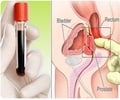
PSA (Prostate Specific Antigen) test and Digital Rectal Examination are two tests that allow detection of prostate cancer at early stages.
PSA (Prostate Specific Antigen) test and Digital Rectal Examination are two tests that allow detection of prostate cancer at early stages.
An age-related disease, prostate cancer usually affects men who are 65 or older. In addition to advanced age, genes and certain environmental factors influence the development of prostate cancer, although the exact causes remain unknown.
In a healthy prostate gland, cells express a protein called androgen-receptor, or AR, which is activated by male sex hormones, or androgens, including the primary male hormone testosterone. These same receptors also play a role in promoting the growth of the abnormal cells of prostate cancer.

Prostate Cancer | Cancer of Prostate - Incidence, Prevention, Causes, Symptoms & Treatment
This cancer affects men over the age of 50 years and screening with rectal examination and PSA can help both in early detection and effective treatment
This cancer affects men over the age of 50 years and screening with rectal examination and PSA can help both in early detection and effective treatment
The problem is that prostate-cancer cells usually become resistant to androgen blockage. After initially responding, these aggressive cancers develop mutations that enable them to spread, or metastasize, without the influence of androgens. For this reason, these aggressive prostate cancers are called castration-resistant.
![Prostate Specific Antigen [PSA] & Prostate Cancer Diagnosis](https://images.medindia.net/patientinfo/120_100/prostate-specific-antigen.jpg "Prostate Specific Antigen [PSA] & Prostate Cancer Diagnosis")
Prostate Specific Antigen [PSA] & Prostate Cancer Diagnosis
PSA blood test is specific to prostate gland but not necessarily a cancer specific test but is commonly used to diagnose prostate cancer.
PSA blood test is specific to prostate gland but not necessarily a cancer specific test but is commonly used to diagnose prostate cancer.
Investigators conducted this pre-clinical study using prostate-cancer cells in an animal model.
Prostate Cancer: Treatment Options - Surgery, Radiation Therapy, Hormone Therapy
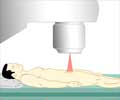
Treatment options of prostate cancer includes waiting, surgery, radiation, hormone therapy, chemotherapy, cryosurgery or biologic therapy.
Treatment options of prostate cancer includes waiting, surgery, radiation, hormone therapy, chemotherapy, cryosurgery or biologic therapy.
Source-Newswise
 Email
Email