MEDINDIA
 English
 हिन्दी
 Español
 français
 中文
中文
Scientists have discovered how the malaria parasite sticks to blood vessels, opening up novel drug targets to protect children who are the biggest victims of the disease.
Malaria - Causes, Symptoms, Diagnosis, Prevention, Treatment
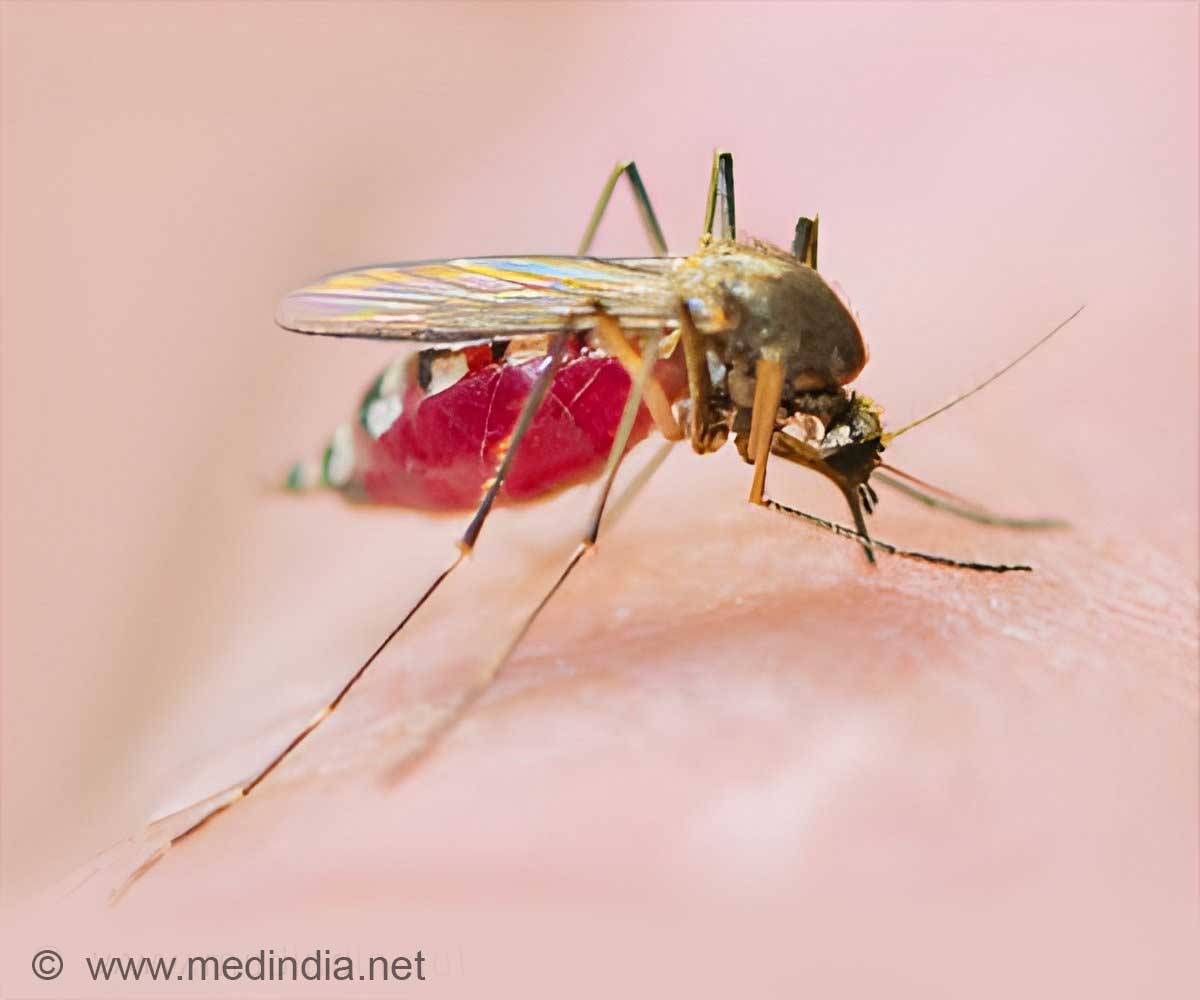
Malaria is caused by a parasite that enters blood through the bite of an infected mosquito. It is characterized by fever, vomiting, shivering, sweating and other symptoms.
Malaria is caused by a parasite that enters blood through the bite of an infected mosquito. It is characterized by fever, vomiting, shivering, sweating and other symptoms.
The binding trick has been known for more than a century, but how it is done has remained unclear.
A first insight came last year, when a lab team pointed the finger at a protein on the parasite called PfEMP1.
About Mosquito Diseases
Mosquito-borne diseases, like malaria, filaria, dengue, etc are common in places conducive of mosquito breeding. Swamps, ponds and stagnated drainage provide optimal breeding ground for mosquitoes.
Mosquito-borne diseases, like malaria, filaria, dengue, etc are common in places conducive of mosquito breeding. Swamps, ponds and stagnated drainage provide optimal breeding ground for mosquitoes.
A team led by Louise Turner at the University of Copenhagen screened 2,500 profiles, but only one provided a fit: a receptor called endothelial protein C, or EPCR.

Quiz on Malaria
Malaria is a common parasitic disease of the tropics, resulting in a million deaths every year. It is most commonly found in tropical countries. The symptoms of malaria include fever with chills, headache, muscle aches, tiredness, nausea, vomiting, and diarrhea. Malaria fatalities can be reduced if they are detected early and treated appropriately
Malaria is a common parasitic disease of the tropics, resulting in a million deaths every year. It is most commonly found in tropical countries. The symptoms of malaria include fever with chills, headache, muscle aches, tiredness, nausea, vomiting, and diarrhea. Malaria fatalities can be reduced if they are detected early and treated appropriately
"It was true eureka moment," said fellow researcher Thomas Lavstsen, in a press release issued by the university.
Key to Fight Malaria Identified
By isolating a chemical that causes kidney failure in mosquitoes leaving some of the mosquitoes too bloated to survive after feeding, researchers have come a step closer to fighting malaria.
By isolating a chemical that causes kidney failure in mosquitoes leaving some of the mosquitoes too bloated to survive after feeding, researchers have come a step closer to fighting malaria.
"The discovery that parasites bind and interfere with this receptor's normal function may help us explain why severe symptoms of malaria develop."
The new findings will help pharmaceutical engineers target the parasite's binding mechanism, said Matthew Higgins of Oxford University.
"We want to know exactly which bits of the parasite protein are needed to bind to the receptor in the blood vessel wall. Then we can aim to design vaccines to drugs to prevent this binding."
In 2010, an estimated 219 million people were infected with the disease and some 660,000 died, most of them African children aged under five, the UN's World Health Organisation (WHO) said last December.
A study published in the Lancet in February 2012 said the global death toll was likelier to be around 1.2 million a year.
Source-AFP
 Email
Email