MEDINDIA
 English
 हिन्दी
 Español
 français
 中文
中文
Preservation of hearing, and preventing deafness, in humans with USH3 syndrome could become a reality within the next ten years.


Genes Critical That may Cause Hearing Loss Discovered
The cause of a particular hearing loss is important to understand since it factors heavily into determining the right treatment.
The cause of a particular hearing loss is important to understand since it factors heavily into determining the right treatment.
TOP INSIGHT

People with Usher syndrome type 3 are born with normal hearing and most commonly develop hearing loss in their teenage years, requiring hearing aids by mid- to late-adulthood. By middle age, they are often completely deaf.
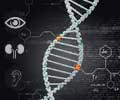
In a new study published in Scientific Reports, Alagramam, who is an associate professor of otolaryngology, genetics and genomic sciences, and neurosciences at CWRU School of Medicine, and Lawrence Lustig, MD, chair of the Department of Otolaryngology--Head & Neck Surgery at Columbia University Medical Center, found that loss of hearing can be curtailed in a mouse model for hearing loss in USH3 through gene therapy. In gene therapy, normal genes are transplanted into cells in place of malfunctioning or missing ones to repair genetic disorders.
The clarin-1 gene provides information for making CLRN1, a protein found in hair cells, which help convey sound signals to the brain. "I think of hair cells as neatly arranged mini-microphones in the inner ear that are sensitive to different frequencies of sound entering the ear," said Alagramam. Previous work from the Alagramam lab showed that clarin-1 is essential for maintaining the structural integrity of the hair cells.
Hearing Loss Affects the Person With Whom They Communicate
The impact of the condition on those closest to the patients with deafness should be considered when personalising rehabilitation plans for the patients.
The impact of the condition on those closest to the patients with deafness should be considered when personalising rehabilitation plans for the patients.
Seeking to address this problem, the authors surmised that inducing gradual hearing loss in mice would parallel the progression of hearing loss in humans with USH3, paving the way to investigate therapies for eventual human benefit. As reported in the new study, the researchers were able to postpone the onset of hearing loss and associated hair cell degeneration by about a month, providing enough time to inject normal copies of the Clarin-1 gene into the ear before the onset of hearing loss to see if the treatment was effective.

Children with Hearing Loss are Better at Learning Languages
Children with hearing loss have higher capacity for learning languages, even if they have poor cognitive abilities. Early screening can help these children.
Children with hearing loss have higher capacity for learning languages, even if they have poor cognitive abilities. Early screening can help these children.
In a third "first," Alagramam and his colleagues revealed the potential importance of untranslated regions of genes in gene therapy. They showed that both the coded and the untranslated regions of the Clarin-1 gene are critical for effective gene therapy. Coded regions are portions of the gene that are translated into amino acids. Untranslated regions, once thought of as evolutionarily useless junk remnants, are now known to be vital for many of the regulatory aspects of genes.

Gene Therapy Can Treat Hereditary Hearing Loss
Gene therapy is the new alternative treatment for congenital hereditary inner ear defects, injecting USH1G gene can partially treat hearing loss.
Gene therapy is the new alternative treatment for congenital hereditary inner ear defects, injecting USH1G gene can partially treat hearing loss.
Source-Eurekalert
 Email
Email