MEDINDIA
 English
 हिन्दी
 Español
 français
 中文
中文
With 3D mammography, cancer tumors can be detected more accurately compared to the current standard mammography screening.

Screening for Breast Cancer with Clinical Breast Examination
Clinical breast examination is a simple and inexpensive method of detecting breast cancer especially in women who do not have access to mammography.
Clinical breast examination is a simple and inexpensive method of detecting breast cancer especially in women who do not have access to mammography.
TOP INSIGHT

3D mammography or Digital Breast Tomosynthesis (DBT), can detect 34 percent more breast cancers than traditional mammography with a majority of the identified breast tumors being classified as invasive.
Read More..
"We did, however, need to call back a few more women for additional examinations compared to traditional mammography. We needed to confirm that these women did not have cancer, as this method finds more structures in the breast in general. So, there was an increased call-back rate."
In traditional mammography screening, all breast tissue is captured in a single image. Breast tomosynthesis, on the other hand, is three-dimensional and works according to the same principle as what is known as tomography. This means that several low-dose x-ray images are taken of the breast from different angles, which are reconstructed by a computer to show thin layers of the breast. With more and improved image information and less overlapping tissue structures, the chance of detecting tumors increases. Further, the radiation dose may be lowered in certain circumstances.
Triple-Negative Breast Cancer - Causes, Symptoms, Diagnosis, Treatment, Prevention & Prognosis
Triple-negative breast cancers are ER negative, PR negative, and lack overexpression of HER-2. They are difficult to treat and are very aggressive.
Triple-negative breast cancers are ER negative, PR negative, and lack overexpression of HER-2. They are difficult to treat and are very aggressive.
Breast tomosynthesis is already used at Skåne University Hospital, among other places, to investigate suspected breast cancer. Prior to a possible large-scale introduction in the general breast cancer screening programme, the research team is now conducting a cost-benefit study.

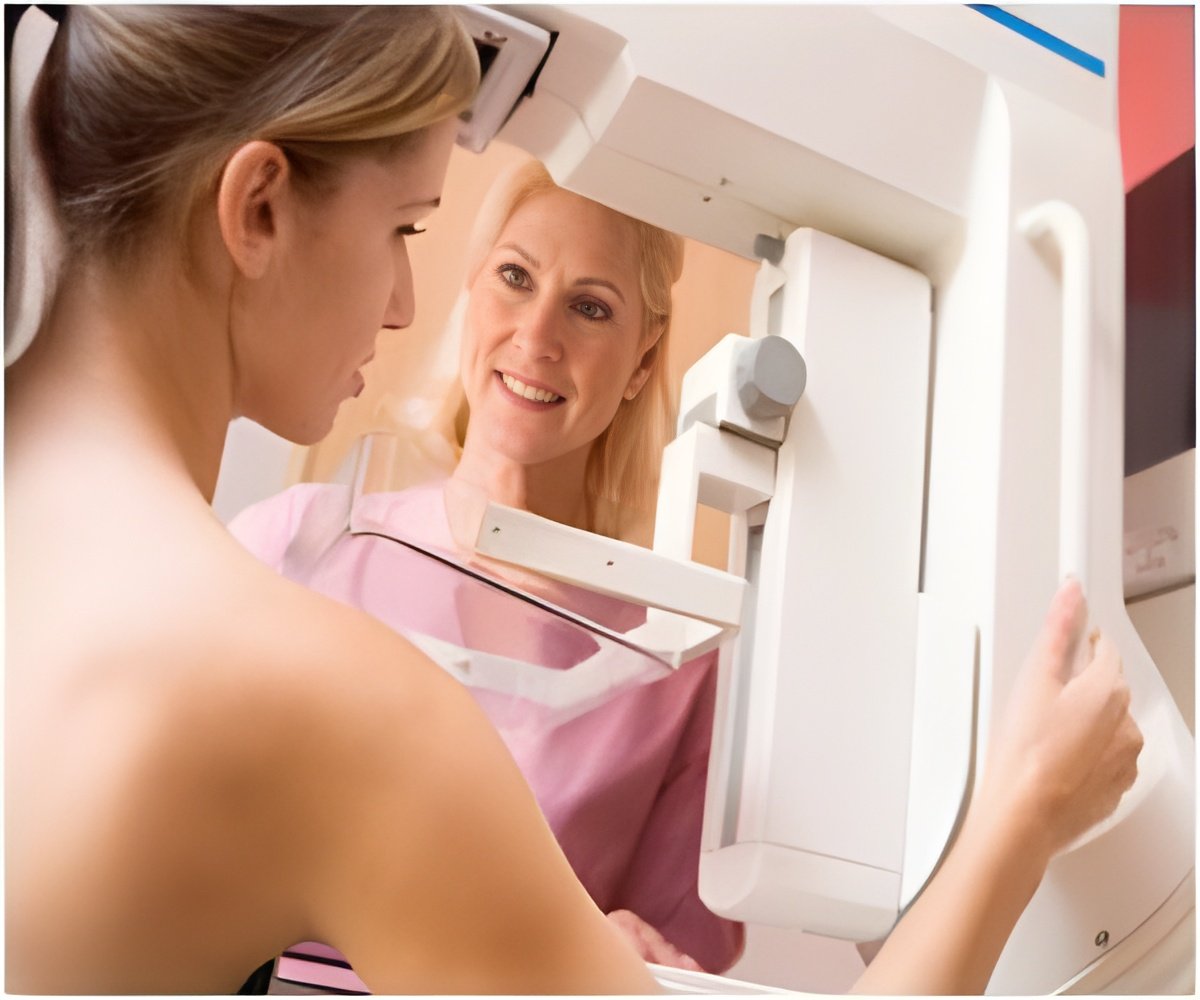
Breast Cancer Screening using Mammogram
Breast cancer if detected early can be completely cured. Mammography is used to screen women for breast cancer.
Breast cancer if detected early can be completely cured. Mammography is used to screen women for breast cancer.
The lack of radiologists who can review the increased image material generated by 3D methods presents a further challenge before large-scale introduction. However, the method used at Skåne University Hospital may be more efficient than those previously examined in international studies. In Skåne, only the 3D method has been used whereas other studies have combined 3D with traditional mammography screening. This leads to more image material and a higher radiation dose.

Inflammatory Breast Cancer - Causes, Symptoms, Diagnosis, Treatment & Prognosis
One of the rare breast cancers, inflammatory breast cancer is marked by redness, swelling and warmth of the breast skin looking like an orange peel.
One of the rare breast cancers, inflammatory breast cancer is marked by redness, swelling and warmth of the breast skin looking like an orange peel.
Source-Eurekalert
 Email
Email