MEDINDIA
 English
 हिन्दी
 Español
 français
 中文
中文
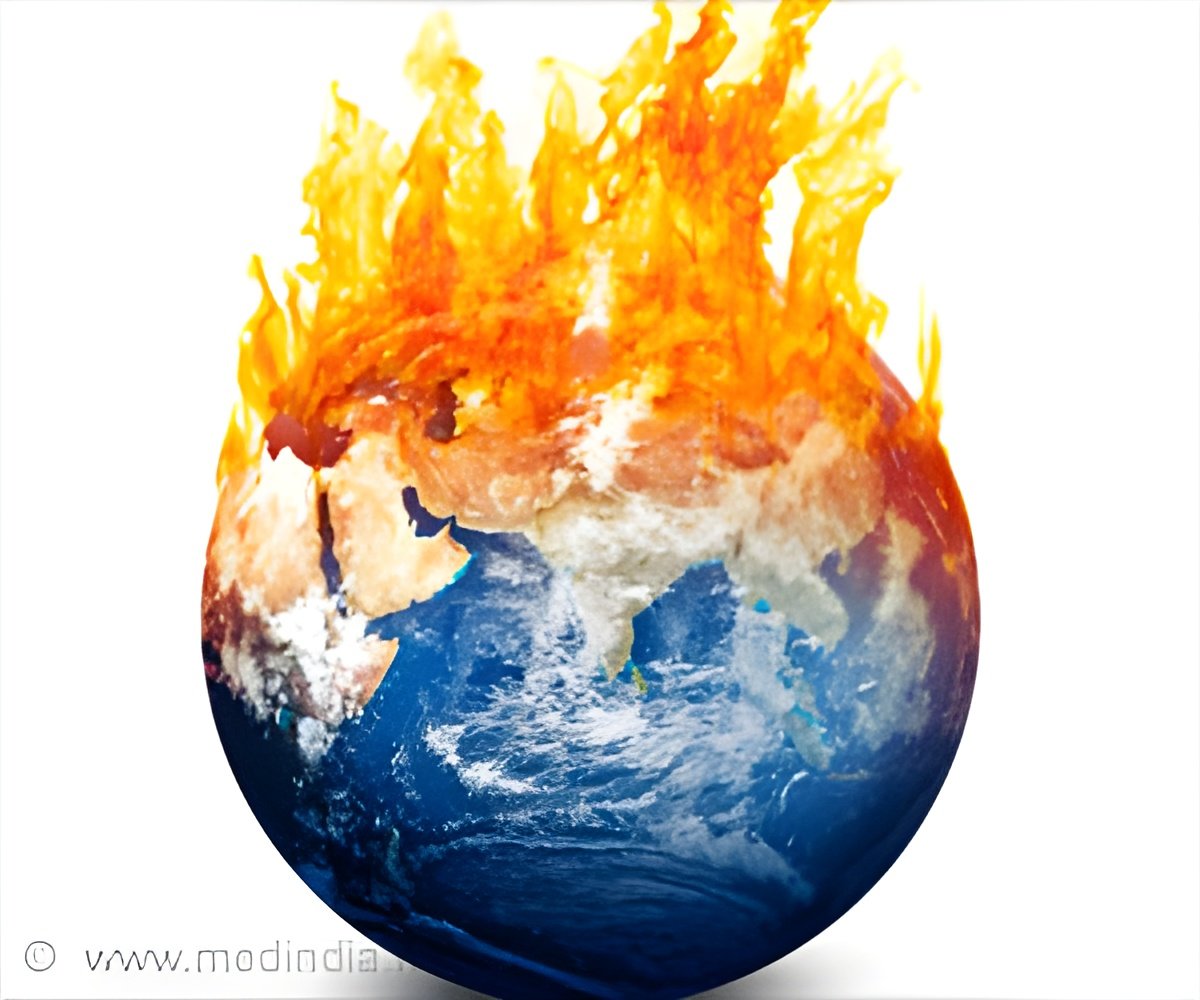
A new study has revealed that by 2100, heat stress from extreme heat and humidity will annually affect areas now home to 1.2 billion people.

Health Effects of Global Warming/What is Global Warming?
Greenhouse effect causes excessive heat to build up in the earth’s atmosphere causing global warming and affects the environment and health.
Greenhouse effect causes excessive heat to build up in the earth’s atmosphere causing global warming and affects the environment and health.
TOP INSIGHT

Rising global temperatures are increasing exposure to heat stress, which harms human health, agriculture, the economy and the environment.
"When we look at the risks of a warmer planet, we need to pay particular attention to combined extremes of heat and humidity, which are especially dangerous to human health," said senior author Robert E. Kopp, director of the Rutgers Institute of Earth, Ocean, and Atmospheric Sciences and a professor in the Department of Earth and Planetary Sciences in the School of Arts and Sciences at Rutgers University-New Brunswick.
"Every bit of global warming makes hot, humid days more frequent and intense. In New York City, for example, the hottest, most humid day in a typical year already occurs about 11 times more frequently than it would have in the 19th century," said lead author Dawei Li, a former Rutgers post-doctoral associate now at the University of Massachusetts.

Quiz on Global Warming
The International Conference on Global Warming (GCGW-2012) will be held in Istanbul, Turkey on July 8-12, 2012. Take this quiz to learn what causes global warming, how it can affect your health, and what can be your contribution to contain it.
The International Conference on Global Warming (GCGW-2012) will be held in Istanbul, Turkey on July 8-12, 2012. Take this quiz to learn what causes global warming, how it can affect your health, and what can be your contribution to contain it.
The study looked at how combined extremes of heat and humidity increase on a warming Earth, using 40 climate simulations to get statistics on rare events. The study focused on a measure of heat stress that accounts for temperature, humidity and other environmental factors, including wind speed, sun angle and solar and infrared radiation.

Women and Men Always Respond Differently to Heat Stress
The body cools itself down in two main ways: sweating and increasing circulation to the skin's surface.
The body cools itself down in two main ways: sweating and increasing circulation to the skin's surface.
An estimated 1.2 billion people would be affected with 3 degrees Celsius (5.4 degrees Fahrenheit) of warming, as expected by the end of this century under current global policies.

Climate Change May Become The New Killer By 2030
Climatic changes may account for over 250,000 deaths each year by 2030. Most of these deaths maybe attributed to malaria, diarrhea, stress, malnutrition.
Climatic changes may account for over 250,000 deaths each year by 2030. Most of these deaths maybe attributed to malaria, diarrhea, stress, malnutrition.
With 3 degrees Celsius (5.4 degrees Fahrenheit) of warming, extreme heat and humidity are projected to occur for about 24 days in a typical year.
Source-Eurekalert
 Email
Email