How to Deal with a Stroke - Signs - Symptoms - Risk Factors - Prevention
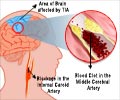
Stroke is a brain attack, which occurs when the blood supply to the brain is interrupted. It affects all age groups; according to the WHO, 15 million people are affected by stroke annually.
Stroke is a brain attack, which occurs when the blood supply to the brain is interrupted. It affects all age groups; according to the WHO, 15 million people are affected by stroke annually.
"The link between increased stroke risk and these particulates can be observed within hours of exposure and are most strongly associated with pollution from local or transported traffic emissions," says Murray A. Mittleman, MD, DrPH, the study''s senior author, a physician in the CardioVascular Institute at Beth Israel Deaconess Medical Center and an Associate Professor of Medicine at Harvard Medical School. "Any proposed changes in regulated pollution levels must consider the impact of lower levels on public health."
"Considering that almost everyone is exposed to air pollution and is at risk for stroke, that''s actually a pretty large effect," adds Gregory Wellenius, ScD, the study''s lead author and an Assistant Professor of Community Health at Brown University.
Researchers analyzed the medical records of more than 1,700 patients who went to the hospital for treatment of confirmed strokes between 1999 and 2008. They matched the onset of stroke symptoms in each patient to hourly measurements of particulate air pollution taken at the nearby Harvard School of Public Health''s environmental monitoring station.

Air Pollution and Cancer Incidence: a Danish Cohort Study
Air pollution is on the increase and so are the associated risks. A recently published study links air pollution near residence and cancer.
Air pollution is on the increase and so are the associated risks. A recently published study links air pollution near residence and cancer.
Meanwhile, Harvard''s hourly measurements of pollution within 13 miles of 90 percent of the stroke patients'' homes allowed for close matching in time of exposure and stroke onset.
Advertisement
Asthma-specific Costs Associated With Air Pollution: Study
The total cost of asthma due to traffic-related air pollution is much higher than once believed, says study published in European Respiratory Journal.
The total cost of asthma due to traffic-related air pollution is much higher than once believed, says study published in European Respiratory Journal.
Advertisement

New Scoring Method may Help Decide Who Will Benefit From Stroke Drug
A new study has suggested that a new scoring method can help doctors quickly decide which stroke patients will respond well to the drug alteplase, which works by dissolving clots.
A new study has suggested that a new scoring method can help doctors quickly decide which stroke patients will respond well to the drug alteplase, which works by dissolving clots.
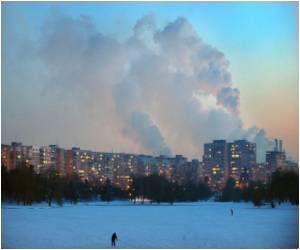
They also found that black carbon and nitrogen dioxide, two pollutants associated with vehicle traffic, were closely linked with stroke risk, suggesting that pollution from cars and trucks may be particularly important.
Stroke is a leading cause of long-term disability and the third leading cause of death in the United States. An estimated 795,000 Americans suffer a new or recurrent stroke every year, resulting in more than 135,000 deaths and 829,000 hospital admissions.
The finding that days of moderate air quality substantially elevate stroke risk compared to days of good air quality suggest that the Environmental Protection Agency may need to strengthen the language it uses to describe the health consequences of moderate air quality, researchers say.
"In partnership with NIEHS, EPA funded this research advancing our understanding of air pollution and health effects," said Dan Costa, ScD, DABT, Interim National Program Director for Air Climate & Energy Research in U.S. Environmental Protection Agency Office of Research and Development Research.
"In 2009, EPA published an Integrated Science Assessment concluding a causal relationship exists between PM2.5 and cardiovascular impacts, including strokes. Dr. Wellenius and colleagues'' study is the first to show that the onset of stroke can occur with less than a day''s exposure to fine PM. Highly relevant research such as this informs the PM2.5 standards and protects human health."
Researchers estimate reducing PM2.5 pollution by about 20 percent could have prevented 6,100 of the 184,000 stroke hospitalizations in the northeastern United States in 2007.
While researchers acknowledge results need to be replicated in other cities, they note that Boston is considered to have relatively clean air.
"The levels of PM2.5 in Boston are lower than those seen in many in other parts of the country, yet we still find that within these moderate levels the risk of stroke is higher on days with more particles in the air," Mittleman says.
In addition to Wellenius and Mittleman, co-authors include Mary R. Burger, MD, and Gottfried Schlaug, MD, MPH of BIDMC, Brent A. Coull. PhD, Joel Schwartz, PhD, Helen Suh, ScD, Petros Koutrakis, PhD, of the Harvard School of Public Health and Diane R. Gold, MD, of Brigham an d Women''s Hospital.
The study was supported by National Institute of Environmental Health Sciences and the Environmental Protection Agency. One or more of the authors are currently receiving or have received funding from the Health Effects Institute of Boston; the Electric Power Research Institute of Palo Alto, CA; the EPA and the National Institutes of Health.
Source-Newswise