Both a large belly and obesity can increase the risk of developing restless legs syndrome (RLS), a common sleep disorder characterized by an irresistible urge to move your legs, a new study has shown.
The research is published in the April 7, 2009, print issue of Neurology, the medical journal of the American Academy of Neurology.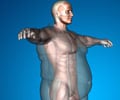
Obesity - Causes, Symptoms, Diagnosis, Complications, Treatment
Obesity is a condition where there is excess accumulation of body fat which poses a risk to the health of the individual. It can affect children and adults.
Obesity is a condition where there is excess accumulation of body fat which poses a risk to the health of the individual. It can affect children and adults.
The research found men and women with a body mass index (BMI) score over 30 were nearly one-and-a-half times more likely to have RLS than people who were not obese.
In addition, people who were in the top 20 percent of the group for highest waist circumference were more than one-and-a-half times more likely to have RLS than the bottom 20 percent of the group with the lowest belly size. The results were the same regardless of age, smoking, use of antidepressants or anxiety.

Body Mass Index
The BMI calculator helps you assess your weight indicating if it is normal or if you are underweight or overweight, based on your height.
The BMI calculator helps you assess your weight indicating if it is normal or if you are underweight or overweight, based on your height.
"More research is needed to confirm whether obesity causes RLS and whether keeping a low BMI score and small waist size could help prevent RLS," the expert added.
Advertisement

Sleep Disorder : Restless Legs Syndrome
Restless legs syndrome (RLS) causes - An urge to move, usually due to uncomfortable sensations that occur primarily in the legs.
Restless legs syndrome (RLS) causes - An urge to move, usually due to uncomfortable sensations that occur primarily in the legs.
"Since decreased dopamine function is believed to play a critical role in RLS as well, this could be the link between the two," Gao said.
Advertisement

Study to Determine Link Between Testosterone, Obesity and Sleep Apnea
A study to determine link between testosterone, obesity and sleep apnea is being undertaken in Australia.
A study to determine link between testosterone, obesity and sleep apnea is being undertaken in Australia.
Source-ANI
SRM