
General Anesthesia - Risks, Post Operative Recovery & Complications
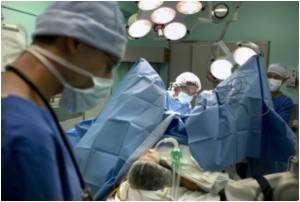
General anesthesia is treatment with medications that induce a state of deep sleep and unconsciousness in the patient in order to be pain free during surgery.
General anesthesia is treatment with medications that induce a state of deep sleep and unconsciousness in the patient in order to be pain free during surgery.
Occasionally an aneurysm may occur because of an area of weakness within the artery wall. An aortic aneurysm is serious because it may rupture, causing life-threatening internal bleeding. The risk of an aneurysm rupturing increases as the aneurysm gets larger. Each year, approximately 15,000 Americans die of a ruptured aortic aneurysm, however the condition is usually asymptomatic until the point of rupture. As such, most aortic aneurysms are unexpectedly identified while a patient is having a computed tomography (CT) scan or ultrasound done for another condition. Men over the age of 65 with a history of ever smoking can have an ultrasound done to specifically screen for aneurysms as part of a "Welcome-to-Medicare" visit with their physician. When detected in time, an aortic aneurysm can usually be repaired with surgery.
Infrarenal abdominal aortic aneurysms make up about 95 percent or more of abdominal aortic aneurysms and, while they occur in both sexes, they are most prevalent in men older than 60, affecting about 3 percent of this population, explained study co-author Matthew S. Edwards, B.A., M.S., M.D., a professor of vascular and endovascular surgery and public health sciences at Wake Forest Baptist.

Mitral Valve Prolapse (MVP) - Causes - Symptoms and Complications, Treatment
Mitral Valve Prolapse is a relatively common condition and causes leakage of blood through the valve. MVP is not life-threatening in most instances.
Mitral Valve Prolapse is a relatively common condition and causes leakage of blood through the valve. MVP is not life-threatening in most instances.
EVAR has completely revolutionized the care of aneurysms, allowing doctors to do repairs through two small incisions in the groin, Edwards said. It is currently the most common procedure for repairing aortic aneurysms in the United States. Historic trends have led to general anesthesia being the most common mode of anesthesia used for this procedure, but it is sometimes associated with the development of pneumonia, the need for a breathing tube and other pulmonary complications, he explained.
Advertisement

Spinal or Epidural anesthesia
Slides and animation on spinal and epidural anesthesia illustrating the essentials of the procedure for a patient to understand.
Slides and animation on spinal and epidural anesthesia illustrating the essentials of the procedure for a patient to understand.
"In our study, general anesthesia was associated with increased postoperative length of stay (LOS) and increased complications involving the lungs when compared to the other anesthetic methods," Edwards said.
Advertisement

Statin Drugs Lower Costs in Aortic Aneurysm Repair
A new study presented at the Clinical Congress of the American College of Surgeons says that patients taking cholesterol-lowering statin drugs may have better results
A new study presented at the Clinical Congress of the American College of Surgeons says that patients taking cholesterol-lowering statin drugs may have better results
The team then reviewed the data to evaluate rates of mortality, morbidity and length of stay (LOS), or how long the patient remained in the hospital after the procedure.
The researchers found that general anesthesia was associated with an increase in pulmonary complications when compared to spinal and local/MAC anesthesia. Use of general anesthesia also was associated with a 10 percent increase in LOS for general when compared to spinal anesthesia, and a 20 percent increase when compared to general versus local/MAC anesthesia. Trends toward increased pulmonary complications and LOS were not observed for general versus epidural anesthesia. No significant association between anesthesia type and mortality was observed.
"Our study data suggest that increasing the use of less invasive anesthetic techniques, when appropriate, may limit postoperative complications in EVAR patients," Edwards said.
Source-Eurekalert