MEDINDIA
 English
 हिन्दी
 Español
 français
 中文
中文
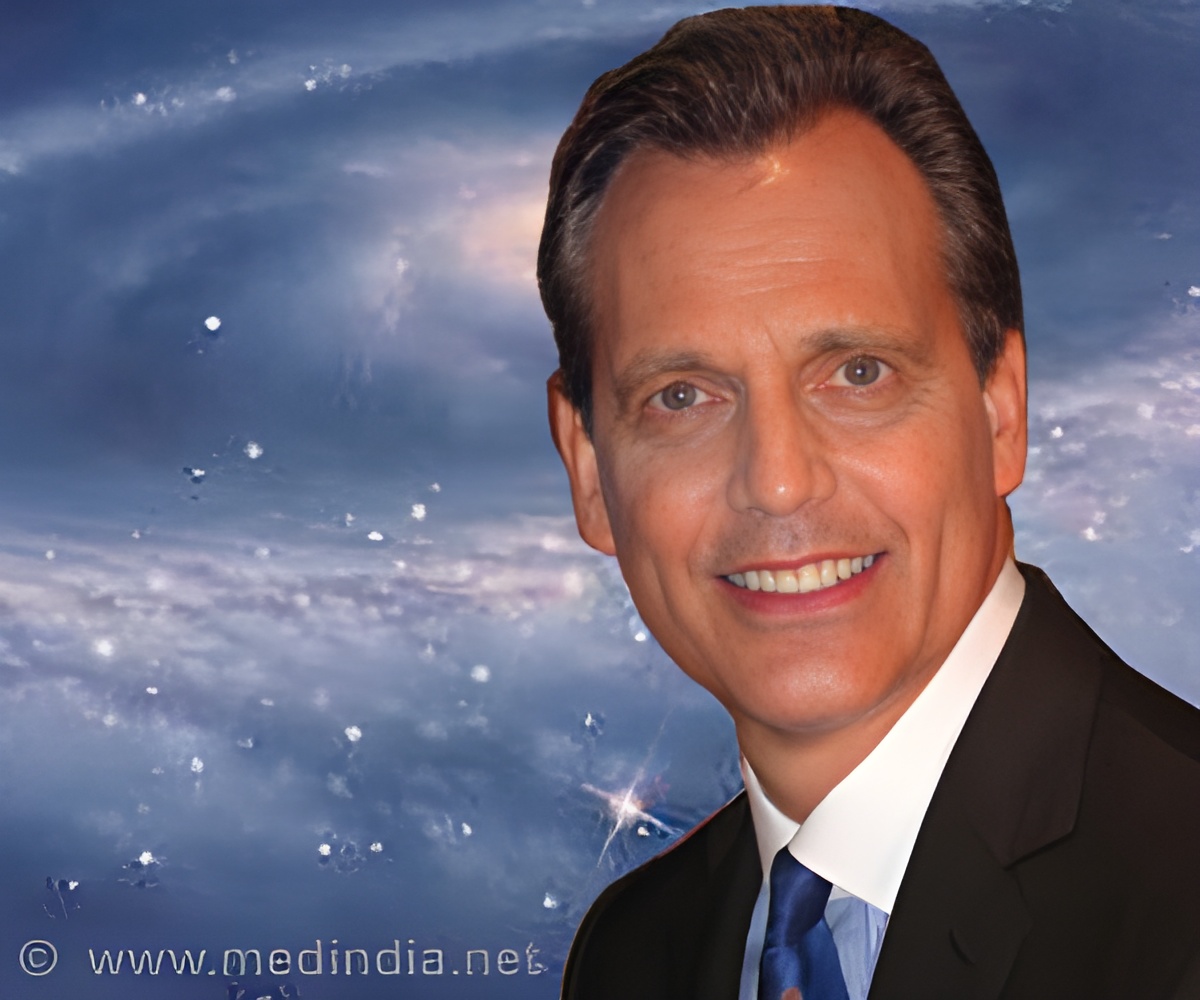
'Theory of Reality' by Dr. David Wiebers, M.D. neurologist and neuroscientist, provides scientific evidence that consciousness transcends beyond thoughts and physical self.

Near Death Experience - An Indian Forum
Near Death Experience (NDE) is perhaps the closest one can come to take a peek into the vast void beyond life. It is perhaps like the black hole of our mother universe
Near Death Experience (NDE) is perhaps the closest one can come to take a peek into the vast void beyond life. It is perhaps like the black hole of our mother universe
With the support of world leaders in neuroscience, we have created a new knowledge base, which provides compelling scientific evidence for existence beyond the brain. We have credible new evidence that you can exist and function separately without your brain; that the ‘you’ beyond your brain is indestructible, even by physical death; that your brain does not create your thoughts; and that your brain and body are temporary vehicles rather than your core identity. Deeply understanding these concepts is fundamental to virtually any form of what has been referred to as spiritual enlightenment.
We have found that Near-Death Experiences and other types of Peak Experiences are valid, real phenomena and not hallucinations, seizures or some other aberration. These experiences can be induced by many techniques. Facilitation of Peak Experiences, seconds to minutes where one feels the highest levels of peace, happiness, connectedness, harmony and possibility, can advance one’s higher understanding and spiritual discovery.

Benefits of Meditation
Meditation therapy is one of the best Alternative Therapies. It is a Mind-Body Medicine.
Meditation therapy is one of the best Alternative Therapies. It is a Mind-Body Medicine.
A variety of tools and techniques have been associated with producing or facilitating Peak Experiences or with otherwise deeply enhancing one’s creative, intellectual, visionary or integrative understanding and/or capabilities. Everyone has the capacity to accomplish all of the expanded-reality techniques discussed in the TOR if they are inclined to do so and if they dedicate some time and energy to it.

Sixth Sense
The Sixth Sense is a colloquial term that denotes the ability to receive or send information outside the realm of the five senses of touch, sight, sound, smell and taste.
The Sixth Sense is a colloquial term that denotes the ability to receive or send information outside the realm of the five senses of touch, sight, sound, smell and taste.
Q. How can science, which is obsessed with facts and evidence reconcile with the metaphysical? Is Theory of Reality a religion (way of life) based on self-reliance?

Defying Death
Now there is a greater surge in defying death, fostered by an increased demand for lasting life.
Now there is a greater surge in defying death, fostered by an increased demand for lasting life.
As a neurologist and neuroscientist, I have had the opportunity to experience the brain and consciousness from numerous perspectives in a variety of clinical and research settings. In my college days, I had taken a road less traveled to medical school by concentrating my coursework in physics, chemistry and mathematics, subjects which were not only fascinating, but which also provided very different ways to approach and reflect upon reality and the universe.
Throughout my scientific training and subsequent career, I found myself consistently gravitating not only to the Science and Medical sections of bookstores but also to the Metaphysical, New Age, Self-Help and Spiritual sections of such stores in search of answers to many of the ongoing mysteries of science and to many of life’s most profound and perplexing questions.
The TOR represents an amalgamation of all of these perspectives and how they complement and inform one another.
Although important bits and pieces of the TOR and its infrastructure and underpinnings have been presented in various forms over the past 100 years, the TOR differs from anything else that has been previously advanced. Its unique and integrative approach allows a transformative new level of understanding of ourselves, our lives and our place in the universe.
The science underneath all of this exists—(some of it has only come to light in bits and pieces over the past couple of decades). Part of the reason it has been difficult to piece all of this together relates to most of the attempts coming from within one field at a time--largely physics or philosophy--and virtually no attempts from neuroscience or a combination of neuroscience, physics, metaphysics and multiple other sciences.
The amalgamation of fields and approaches has often been exceedingly difficult in human endeavor. Individuals have generally tended to approach life and its various issues and questions from a certain vantage point which often relates to a particular field of one’s training. This, in turn, has often led to a lack of open-mindedness and to defending one approach against another rather than to finding the common denominators, which define how the different approaches complement, one another. So instead of framing the issue as ‘science vs. spirituality’ or ‘neuroscience vs. physics’, for example, and detailing how each field might compete with or detract from another, we need to look carefully at how each of these areas informs the others. Without recognizing the nature and scope of these intersections, we miss a big part of the whole.
The TOR contains many spiritual aspects but does not represent itself as a specific religion or spiritual tradition. It recognizes and respects the potential value of (and is compatible with) all spiritual and religious traditions.
Q. Is there an alternate reality?
A: Yes, there is considerable evidence for other dimensions enfolded within the same time and space as this one. (discussed in detail in the book-TOR Secondary Evidence #6 ).
There is also considerable scientific evidence that the material (physical) universe that we perceive around us constitutes only a miniscule portion of all that exists (see TOR Secondary Evidence #8). Moreover, physics tells us that the vast majority of the energy that we are missing and are unable to access resides in the higher frequencies where energy densities are greater than what we generally deal with in our day to day lives on this physical plane—and much greater than the densities of our bodies or even substances such as lead which we consider to be very dense. Together, these factors strongly suggest that what we are currently missing in our materialist perception of reality must involve other dimensions at higher (finer) frequencies.
That we cannot readily “tune in” to these higher frequencies needn’t come as a great surprise to us given that our brains are a form of transducer which is constantly converting waveform information into particle type information and often “stepping down” frequencies in the process (see TOR Secondary Evidence #2, #3, #4, #7). It is analogous to tuning into the right frequency (“being on the same wavelength”) to listen to a particular radio or television station—when we (or the transducer we are using) are not on the same wavelength or frequency, we can’t perceive the station even though it is there around us in what appears to be “empty space”. Again, the station exists in the same space and time, yet if we’re not tuned in, we don’t perceive it. Obviously, if we did not have any transducer or filter and were tuned into all frequencies (including all TV and radio stations in all languages on earth, as a modest example) at once, it would be more than a minor overload in terms of our processing capabilities.
Landmark experimental neuroscience studies by Russell and Karen De Valois at Berkeley in 1979 (which have subsequently been confirmed by many other laboratories) provided compelling evidence that the brain does not respond to material features but rather to wave or frequency interference patterns (demonstrable via Fourier transform processes as discussed in TOR Secondary Evidence #3). These wave or frequency interference patterns are clearly “more fundamental” than the material objects that they represent and must emanate from a different, more fundamental level than our material plane.
There is compelling evidence to suggest that consciousness does not arise from the physical matter of the brain or any other matter on this physical plane (see TOR Primary Evidence #3), and hence, consciousness itself must emanate from a more fundamental (deeper, higher frequency, enfolded) level than this material plane.
The work of Alain Aspect and colleagues in 1982 and subsequent related experiments by Bouwmeester et. al. in 1997, Zbinden et. al. in 2001 and others (see TOR Secondary Evidence #1 and #4), which established that photons (light particles) are able to communicate instantaneously whether they are a few feet or a few billion miles apart, also showed that such communication occurs with no exchange of energy . Such findings provided novel, reproducible, convincing evidence from many laboratories of a form of communication or signaling occurring without the use of power (unlike radio, TV or cell phone signaling, for example). Such communication between photons (light particles) was also documented to be occurring at speeds far exceeding the speed with which light can travel on this material plane. It is clear that such signaling must be occurring from a different level, which is more fundamental than energy as we perceive it on this physical plane.
Other evidence for higher levels of existence can be found in the thousands of researched accounts of Near- Death Experiences (NDEs) that include features highly suggestive of a finer, more energy dense (higher frequency/lower wavelength) realm or realms including: non-locality and extraordinary awareness of interconnectedness; instantaneous telepathic exchanges of information in a timeless, placeless dimension; extraordinarily enhanced light, colors and radiance of everything including beings; and, in some cases a variety of other “unearthly” environmental features. In addition, phenomena such as congenitally blind individuals having the capability of seeing during NDEs are highly suggestive of function at a different level than our physical plane. (See TOR Primary Evidence #1)
Our "world" that we see as mountains, oceans, buildings, planets etc., is illusionary at its core yet real in its perception. This is the basis for mystics speaking of the illusionary nature of our world. Both this plane and its deeper counterparts can all be thought of as "real" or forms of "reality"-this may be the easiest way to think of them. Alternatively, all (or all but the deepest level of pure consciousness) could be thought of as illusionary depending upon one’s vantage point and orientation.
Click Theory of Reality Part 2 to read the rest of the interview.
Source-Medindia
 Email
Email