MEDINDIA
 English
 हिन्दी
 Español
 français
 中文
中文
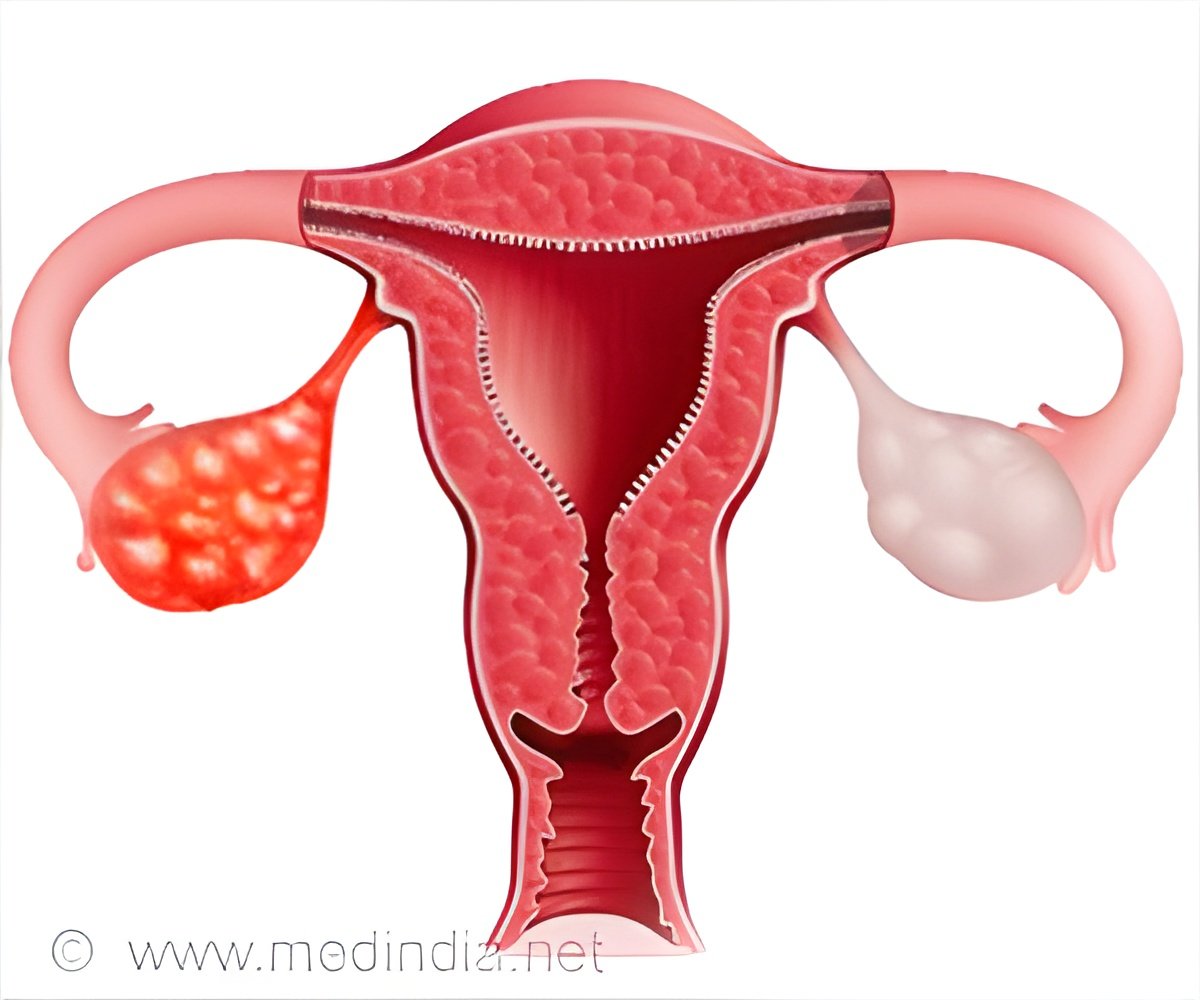
Women with BRCA gene mutation should decide to get their ovaries removed by 35 years in order to reduce the risk of getting ovarian cancer, says a study.
No Difference in Breast Cancer Characteristics After Oophorectomy, Say Researchers
Researchers have reported that over half a million women in the United States undergo a hysterectomy each year and approximately half of those surgeries include removal of the ovaries.
Researchers have reported that over half a million women in the United States undergo a hysterectomy each year and approximately half of those surgeries include removal of the ovaries.
The study, published in Journal of Clinical Oncology, revealed that women who decide to opt for the surgery after 35 years increase their risk of developing ovarian cancer five times and for them even the risk of death increases four times.
BRCA1 and BRCA2 are called breast cancer genes. And to be on the safe side, women with a mutation in one or both often prefer to get their breasts removed.
Clinically Validated Diagnostic Test for Detecting Mutations in BRCA1 and BRCA2 Genes
The recognition of a link between mutations in BRCA1 and BRCA2 genes and increased risk of developing ovarian and breast cancer has increased the demand for genetic testing.
The recognition of a link between mutations in BRCA1 and BRCA2 genes and increased risk of developing ovarian and breast cancer has increased the demand for genetic testing.
Women with faulty genes are advised to go for regular cancer screenings. Dr Steven Narod of the University of Toronto in Canada, who led the study, told NBC, “These data are so striking that we believe prophylactic oophorectomy by age 35 should become a universal standard for women with BRCA1 mutations.”

Endometriosis
Slide animation on Endometriosis explaining symptoms and laparoscopic surgical treatment
Slide animation on Endometriosis explaining symptoms and laparoscopic surgical treatment

Healthy Lifestyle Key To Escaping Breast Cancer
A healthy lifestyle, including keeping weight down, exercising for 30 minutes a day and limiting alcohol to a single drink a day, is the simplest and best way for women to cut the
A healthy lifestyle, including keeping weight down, exercising for 30 minutes a day and limiting alcohol to a single drink a day, is the simplest and best way for women to cut the
 Email
Email