Drug-delivery system disguises chemotherapeutics as fat in order to outsmart, penetrate and destroy tumors.
Oncology Drug Delivery Systems
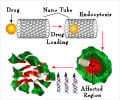
Drug delivery in oncology offers a localized, prolonged and protected drug interaction with the cancer cells and reduces the side effects.
Drug delivery in oncology offers a localized, prolonged and protected drug interaction with the cancer cells and reduces the side effects.
To develop the targeting system, Gianneschi and his team engineered a long-chain fatty acid with two binding sites -- able to attach to drugs -- on each end. The fatty acid and its hitchhiking drugs are then hidden inside human serum albumin (HSA), which carries molecules, including fats, throughout the body.
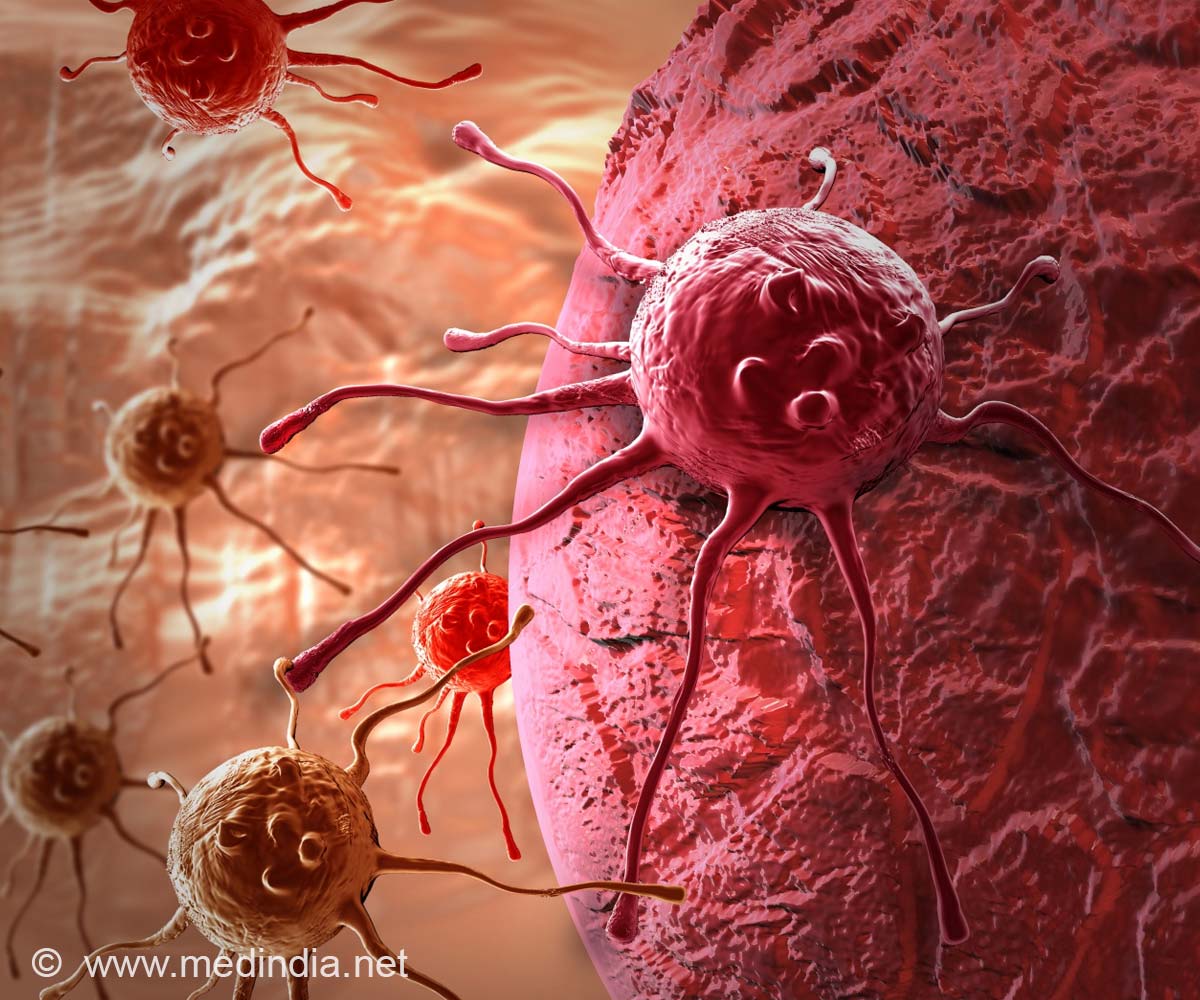
The body’s cellular receptors recognize the fats and proteins supplied by the HSA and allow them inside. Quick-growing and hungry, cancer cells consume the nutrients much faster than normal cells. When the cancer cells metabolize the hidden drug, they die.
"It’s like the fatty acid has a hand on both ends: one can grab onto the drug and one can grab onto proteins," Gianneschi said. "The idea is to disguise drugs as fats so that they get into cells and the body is happy to transport them around."
In the study, the researchers used the drug delivery system to carry a common, FDA-approved chemotherapy drug, paclitaxel, into tumors in a small animal model. Disguised as fat, the drug entered and completely eliminated the tumors in three types of cancer: bone, pancreatic and colon.
Advertisement
"Commonly used small-molecule drugs get into tumors -- and other cells," Gianneschi said. "They are toxic to tumors but also to humans. Hence, in general, these drugs have horrible side effects. Our goal is to increase the amount that gets into a tumor versus into other cells and tissues. That allows us to dose at much higher quantities without side effects, which kills the tumors faster."
Advertisement
Source-Eurekalert