MEDINDIA
 English
 हिन्दी
 Español
 français
 中文
中文
Two promising therapies to treat patients with acute megakaryocytic leukemia (AMKL) was identified by investigators at Northwestern University Feinberg School of Medicine.
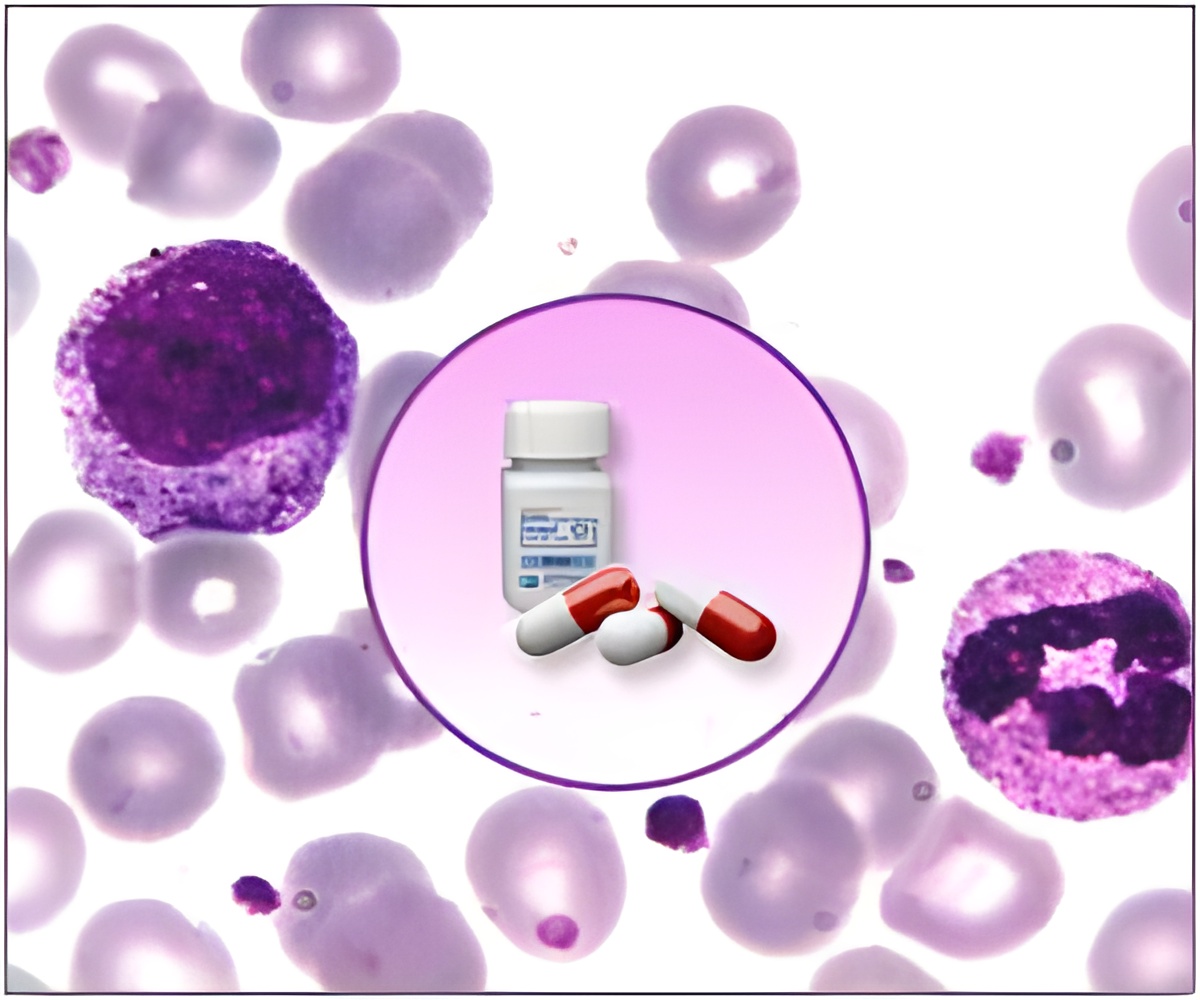
Alisertib has been tested before in humans with limited success to treat other types of leukemia and lymphoma, a cancer of the immune system. However, the drug should be effective against AKML in humans because it specifically targets the enzyme Aurora A kinase, said study senior author John Crispino, the Robert I. Lurie, MD, and Lora S. Lurie Professor of Hematology/Oncology at Feinberg. In normal cell development, this enzyme enables healthy cells to proliferate correctly, but with leukemia, is also allows adolescent cells to multiply unchecked if they are in the mix.
Crispino also is a member of the Robert H. Lurie Comprehensive Cancer Center of Northwestern University.
Acute Lymphoblastic Leukemia - Incidence Causes Symptoms Diagnosis Treatment Prognosis
Acute lymphoblastic leukemia (ALL) is the cancer of white blood cells characterized by excess lymphoblasts. It is the most common of all childhood cancers and can be fatal in weeks if left untreated.
Acute lymphoblastic leukemia (ALL) is the cancer of white blood cells characterized by excess lymphoblasts. It is the most common of all childhood cancers and can be fatal in weeks if left untreated.
Crispino expects alisertib will be a more gentle cancer drug without the ravaging side effects of conventional chemotherapies. This is because the drug specifically targets a key enzyme, avoids healthy cells in the bone marrow and blood, and will probably be more effective at lower doses than drugs tested in previous studies.
Acute Myeloid Leukemia-Causes-Symptoms-Diagnosis-Treatment-Prognosis-FAQs
Acute myeloid Leukemia, more popularly known by its abbreviated form AML, is a fast- evolving leukemia that affects both children and adults alike
Acute myeloid Leukemia, more popularly known by its abbreviated form AML, is a fast- evolving leukemia that affects both children and adults alike
Investigators also identified another attack plan for other types of leukemias. Sifting through 9,000 chemical compounds during the study, they found that dimethylfasudil boosted the number of mature bone marrow cells and shot down malignant ones.
Chronic Lymphocytic Leukemia
Chronic Lymphocytic Leukemia (CLL) is one of the most common types of adult leukemia and is considered as one of the ‘good cancers’.
Chronic Lymphocytic Leukemia (CLL) is one of the most common types of adult leukemia and is considered as one of the ‘good cancers’.
Investigators believe dimethylfasudil may be valuable to fight other types of leukemias because it has broad action against other enzymes that let cancer cells reproduce.
Source-Eurekalert
 Email
Email