MEDINDIA
 English
 हिन्दी
 Español
 français
 中文
中文
Using Beagle, one of the fastest supercomputers devoted to life sciences, the complete genome analysis can be radically accelerated, a new study reveals.


About Genetic Testing
Genetic testing helps to confirm a genetic condition in an individual and involves q complex laboratory techniques
Genetic testing helps to confirm a genetic condition in an individual and involves q complex laboratory techniques
Because the genome is so vast, those involved in clinical genetics have turned to exome sequencing, which focuses on the two percent or less of the genome that codes for proteins. This approach is often useful. An estimated 85 percent of disease-causing mutations are located in coding regions. But the rest, about 15 percent of clinically significant mutations, come from non-coding regions, once referred to as "junk DNA" but now known to serve important functions. If not for the tremendous data-processing challenges of analysis, whole genome sequencing would be the method of choice.
To test the system, McNally's team used raw sequencing data from 61 human genomes and analyzed that data on Beagle. They used publicly available software packages and one quarter of the computer's total capacity. They found that shifting to the supercomputer environment improved accuracy and dramatically accelerated speed.
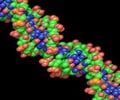
Epigenetics
In the recent years ‘epigenetics’ represents inheritable changes in gene expression that do not include DNA alterations.
In the recent years ‘epigenetics’ represents inheritable changes in gene expression that do not include DNA alterations.
Source-Eurekalert
Importance of Health Screening Tests
Health screening, along with a healthy diet and exercise, is necessary for good health and a higher quality of life.
Health screening, along with a healthy diet and exercise, is necessary for good health and a higher quality of life.
 Email
Email