MEDINDIA
 English
 हिन्दी
 Español
 français
 中文
中文
Some regions of the brain, such as the olfactory bulb in rodents and the hippocampus in humans constantly regenerate their neurons in adulthood.
Special Type of Blood Cells are Source of Neurons
Production and integration of neurons into the brain throughout adult life has always intrigued researchers.
Production and integration of neurons into the brain throughout adult life has always intrigued researchers.
TOP INSIGHT

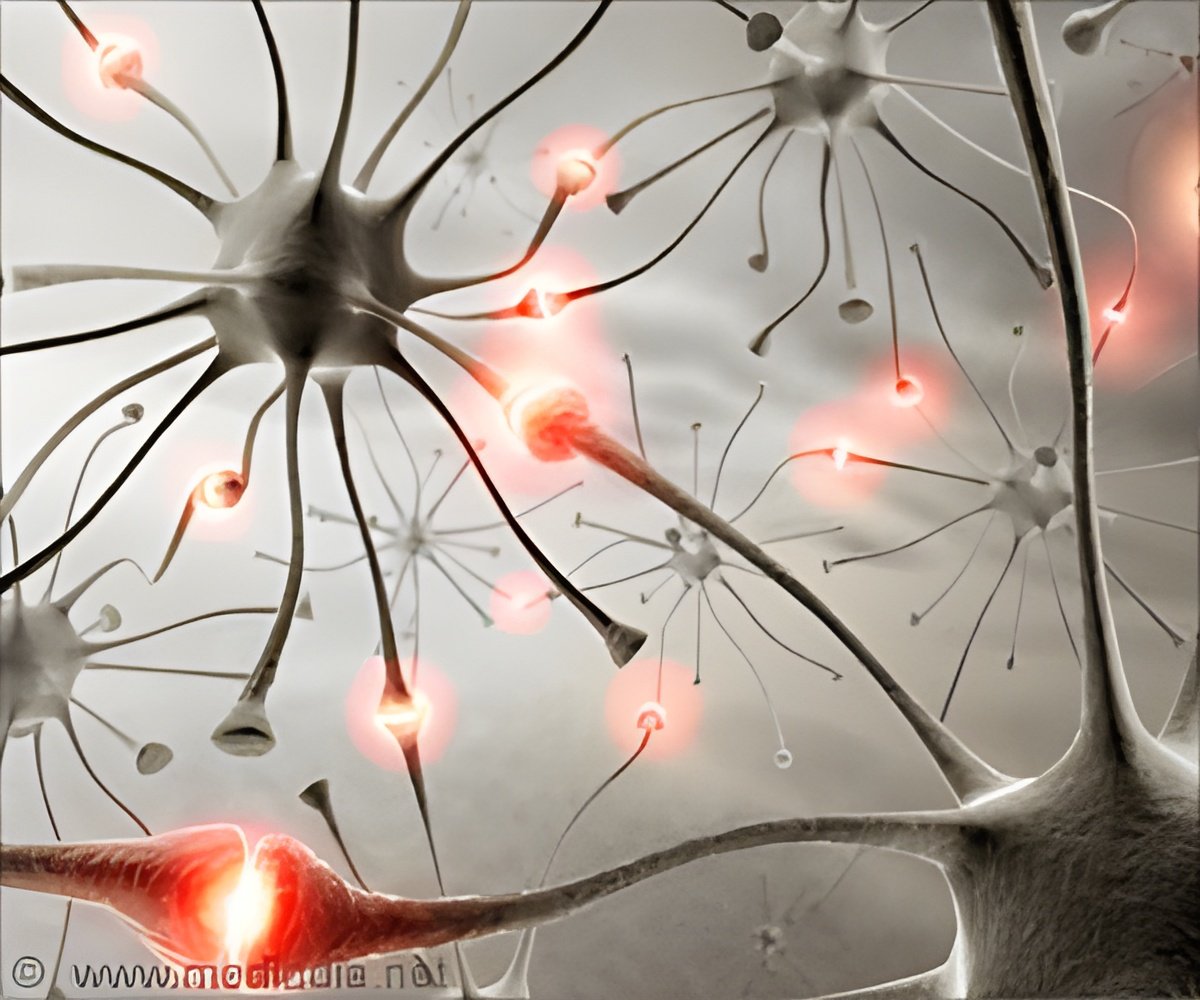
Scientists used new bioluminescent technology to illuminate these adult-born neurons in mice. They then observed the formation of neurons using electron scanning microscopes.
They revealed that in the olfactory bulb, where new neurons are continuously formed, the connections between these new neurons and neighboring cells are significantly rearranged throughout their lifetime. All these neurons are constantly reorganizing the billions of "synaptic" contacts they establish among themselves. The scientists were surprised by this observation. "We expected to see the synapses gradually stabilizing, as happens during brain development. But astonishingly, these synapses proved to be highly dynamic throughout the life of the new neurons. Also, these dynamics were reflected in the principal neurons, their primary synaptic partner," explained first author, Kurt Sailor, from the Institut Pasteur.
To observe the ongoing formation of neuronal circuits, the scientists marked the new neurons with a green fluorescent protein (GFP), to allow imaging of the dynamic changes with microscopy. These experiments were carried out over a period of several months to follow the entire life cycle of the new neurons. In the first three weeks of their life, these new neurons extended their cellular projections, known as dendrites, to form several ramifications, which subsequently became very stable. They next observed the neuronal spines, the structure where synapses form, and demonstrated that 20% of the synapses between new and pre-existing neurons were changed on a daily basis - a phenomenon that was also observed in their synaptic partners, the principal olfactory bulb neurons. Using computer-based models, the authors showed that these dynamics enabled the synaptic network to adjust efficiently and reliably to ongoing sensory changes in the environment.

Neurons Help the Immune System Keep Inflammation in Check
New research from Rockefeller University shows that neurons play a role in protecting intestinal tissue from over-inflammation.
New research from Rockefeller University shows that neurons play a role in protecting intestinal tissue from over-inflammation.
Regenerating Damaged Neurons by Mobilizing Mitochondria
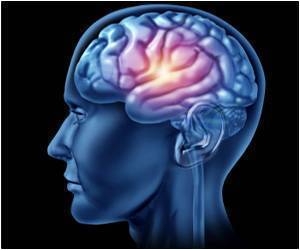
Mitochondria are transported up and down growing axons to generate ATP wherever it is needed but it declines with aging.
Mitochondria are transported up and down growing axons to generate ATP wherever it is needed but it declines with aging.
RTMS and TDCS can Regulate and Protect the Activities of Cerebral Motor Cortex Neurons
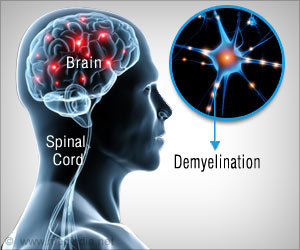
After injury, death or apoptosis of central nervous system neurons occur, spasticity is considered a common reaction.
After injury, death or apoptosis of central nervous system neurons occur, spasticity is considered a common reaction.
 Email
Email