MEDINDIA
 English
 हिन्दी
 Español
 français
 中文
中文
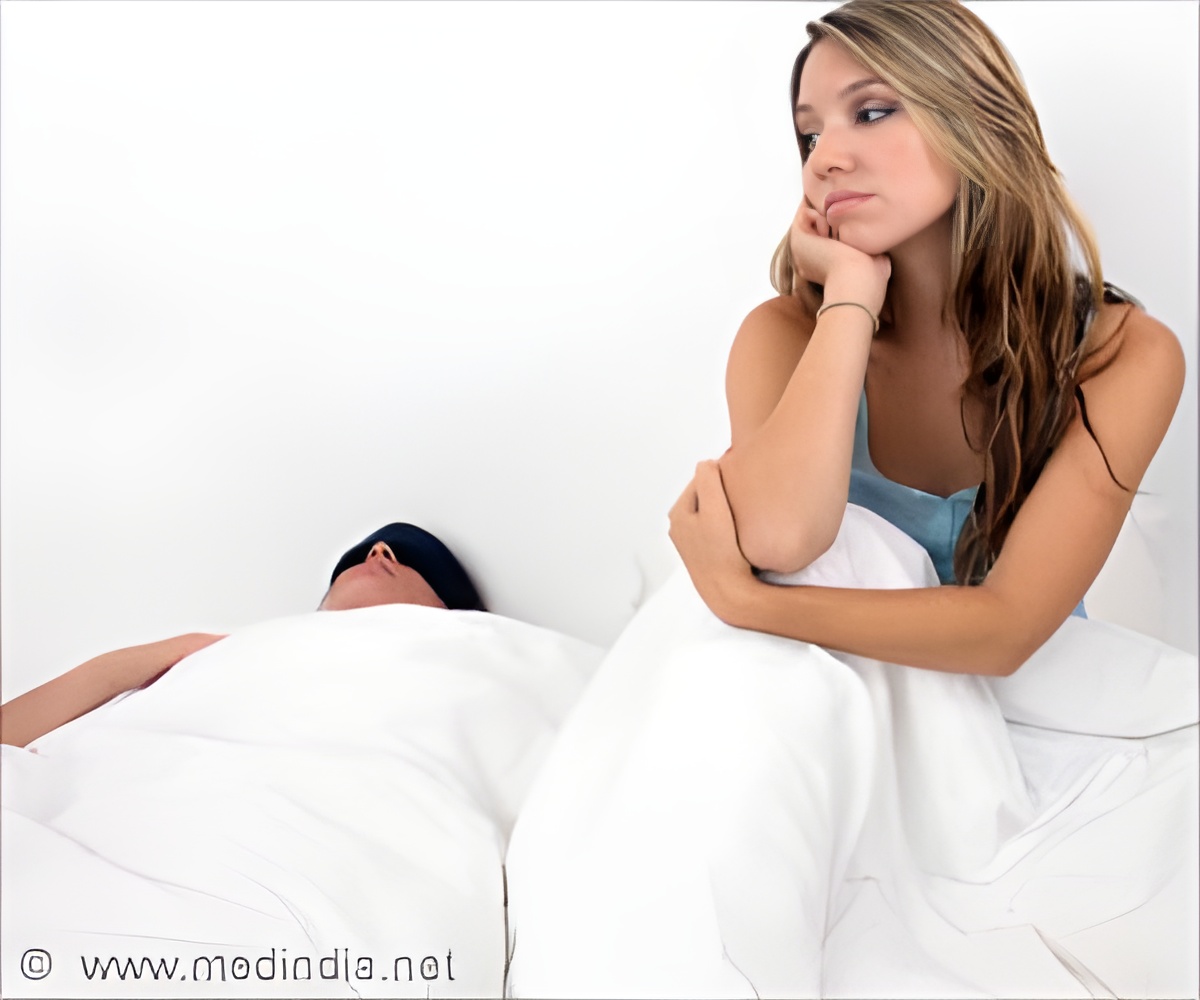
To show their support, spouses or partners of patients with insomnia involved in activities that reduced their sleep time and developed anxiety.

Insomnia | Sleeping Difficulty - Symptom Evaluation
Insomnia may be due to physiological, psychological, physical or environmental factors. Insomnia should be treated promptly in order to improve the quality of life and prevent other health problems.
Insomnia may be due to physiological, psychological, physical or environmental factors. Insomnia should be treated promptly in order to improve the quality of life and prevent other health problems.
TOP INSIGHT

Bed partners made accommodations that affected their own functioning, including their sleep and life outside of work.
"It is possible that partners are unwittingly perpetuating insomnia symptoms in the patient with insomnia," said lead author Alix Mellor.
"It is therefore important for more data to be collected to determine whether insomnia treatments may better benefit patients and their partners by proactively assessing and addressing bed partner behaviors in treatment programs."

Interesting Facts and Statistics on Insomnia
Do you have trouble sleeping and are you restless due to sleepless nights? Insomnia is the most common sleeping disorder and it is important to know about its risks.
Do you have trouble sleeping and are you restless due to sleepless nights? Insomnia is the most common sleeping disorder and it is important to know about its risks.
Partners completed several questionnaires at baseline: the Family Accommodation Scale, Beck Anxiety Inventory, and Dyadic Adjustment Scale. The insomnia patients also completed baseline questionnaires, including the Insomnia Severity Index, and kept a sleep diary for one week prior to starting treatment.

Insomnia — Overview
Difficulty in initiating and maintaining sleep is known as insomnia. It is a symptom that occurs due to other disorders and can cause daytime sleepiness.
Difficulty in initiating and maintaining sleep is known as insomnia. It is a symptom that occurs due to other disorders and can cause daytime sleepiness.
"Our preliminary results suggest that while some of these behaviors make the patient feel supported, their partner may be experiencing more anxiety," said Mellor.
Fatal Familial Insomnia - Symptoms, Signs, Stages, Diagnosis, Treatment
Find the facts of fatal familial insomnia including symptoms, causes, treatment & diagnosis.
Find the facts of fatal familial insomnia including symptoms, causes, treatment & diagnosis.
 Email
Email