MEDINDIA
 English
 हिन्दी
 Español
 français
 中文
中文
Restrictive housing (i.e., solitary confinement) may lead to an increased risk of death of a person who is released after doing their time in the prison.


Maternal Death - Causes, Prevention and Management
Maternal mortality or maternal death refers to the death of a woman occurring during her pregnancy or less than 42 days of childbirth, termination or miscarriage due to pregnancy-related complications and treatment.
Maternal mortality or maternal death refers to the death of a woman occurring during her pregnancy or less than 42 days of childbirth, termination or miscarriage due to pregnancy-related complications and treatment.
TOP INSIGHT

Non-white individuals were more probably to be assigned to restrictive housing than their white counterparts
Read More..
"For the first time ever, using data shared with us from our partners at the North Carolina Department of Public Safety, we’ve been able to demonstrate a connection between restrictive housing during incarceration and increased risk of death when people return to the community. In addition, our study found that the more time people spent in restrictive housing, the higher the risk of mortality after release. This study provides empirical evidence to support ongoing nationwide reforms that limit the use of restrictive housing. North Carolina is a leader in this thinking as the Department of Public Safety has preemptively implemented multiple reforms that have resulted in the limited use of restrictive housing," said lead author Lauren Brinkley-Rubinstein, Ph.D., an assistant professor of social medicine in the UNC School of Medicine.
The paper was published in JAMA Network Open.

Sudden Death in Children - Risk Factors, Symptoms, Diagnosis and Treatment
Sudden death in children occurs within one hour of the symptom onset and it is mostly due to the underlying cardiovascular pathology.
Sudden death in children occurs within one hour of the symptom onset and it is mostly due to the underlying cardiovascular pathology.
These findings are from a retrospective cohort study conducted by Brinkley-Rubinstein and co-authors from UNC, Emory University, N.C. Department of Public Safety and N.C. Department of Public Health. Incarceration data for people who were confined in North Carolina between 2000 and 2015 were matched with death records from 2000 to 2016. "We also found that non-white individuals were disproportionately more likely to be assigned to restrictive housing than their white counterparts. In fact, the mortality and reincarceration outcomes after release were also quite different between these racial groups. The post-release opioid overdose and suicide death outcomes among those receiving restrictive housing were more pronounced among white individuals compared to non-whites, while the all-cause and homicide death and reincarceration outcomes were higher among non-white Americans compared to whites," said co-author Shabbar Ranapurwala, PhD, MPH, an assistant professor of epidemiology in the UNC Gillings School of Global Public Health and a core faculty member of the UNC Injury Prevention Research Center. Given the observational nature of the study, establishing cause and effect may be difficult, yet, the strength and consistency of the findings point to the fact that restrictive housing is an important marker of increased mortality risk among formerly incarcerated individuals. And to prevent any potential harm, we not only need innovative prison programs like the Therapeutic Diversion Unit but also need to link this vulnerable population to appropriate care.
Sudden Infant Death Syndrome - Overview
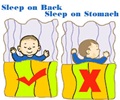
Sudden Infant Death Syndrome is death of a baby, under one year of age that occurs in sleep and cannot be explained.
Sudden Infant Death Syndrome is death of a baby, under one year of age that occurs in sleep and cannot be explained.
About DNA Fingerprinting
DNA fingerprinting is a technique which helps forensic scientists and legal experts solve crimes, identity thefts, legal suits and terrorism cases.
DNA fingerprinting is a technique which helps forensic scientists and legal experts solve crimes, identity thefts, legal suits and terrorism cases.
 Email
Email