MEDINDIA
 English
 हिन्दी
 Español
 français
 中文
中文
Despite recent achievements in the development of cancer immunotherapies, only a small group of patients typically respond to them.

Hybrid Immune Cells in Early-Stage Lung Cancer Spur Anti-Tumor T Cells
PHILADELPHIA - The microenvironment of tumors is a mix of cell types, mostly comprised of inflammatory cells.
PHILADELPHIA - The microenvironment of tumors is a mix of cell types, mostly comprised of inflammatory cells.
TOP INSIGHT

The MICSSS technique helps to characterize the distribution of complex cell subsets in tumor tissues without cross-reactivity between staining cycles.
"Our goal was to get a better understanding of immunologic responses at the tumor site while addressing the need for high-dimensional analysis using as little tissue as possible," said Sacha Gnjatic, PhD, Associate Professor of Immunology, Hematology, and Medical Oncology at TCI, who was the senior co-author of this study with Miriam Merad, MD, PhD, Professor of Oncological Sciences, Hematology, and Medical Oncology at TCI. "We need more comprehensive analyses of the immune microenvironment of tumors, as part of our immune monitoring to inform treatment and predict outcomes for cancer patients."
Lead author Romain Remark, PhD, a postdoctoral fellow working in the laboratories of Dr. Gnjatic and Dr. Merad, helped develop a new method to look at multiple tissue markers and detect expression of biological markers with just one tissue section slide. Researchers applied the MICSSS technique to tumor tissue sections of melanoma and lung cancers. This enabled views of co-expression of markers on the same cells while sparing material from tissues.

Hybrid Immune Cells Identified in Early-Stage Lung Cancer Tumors
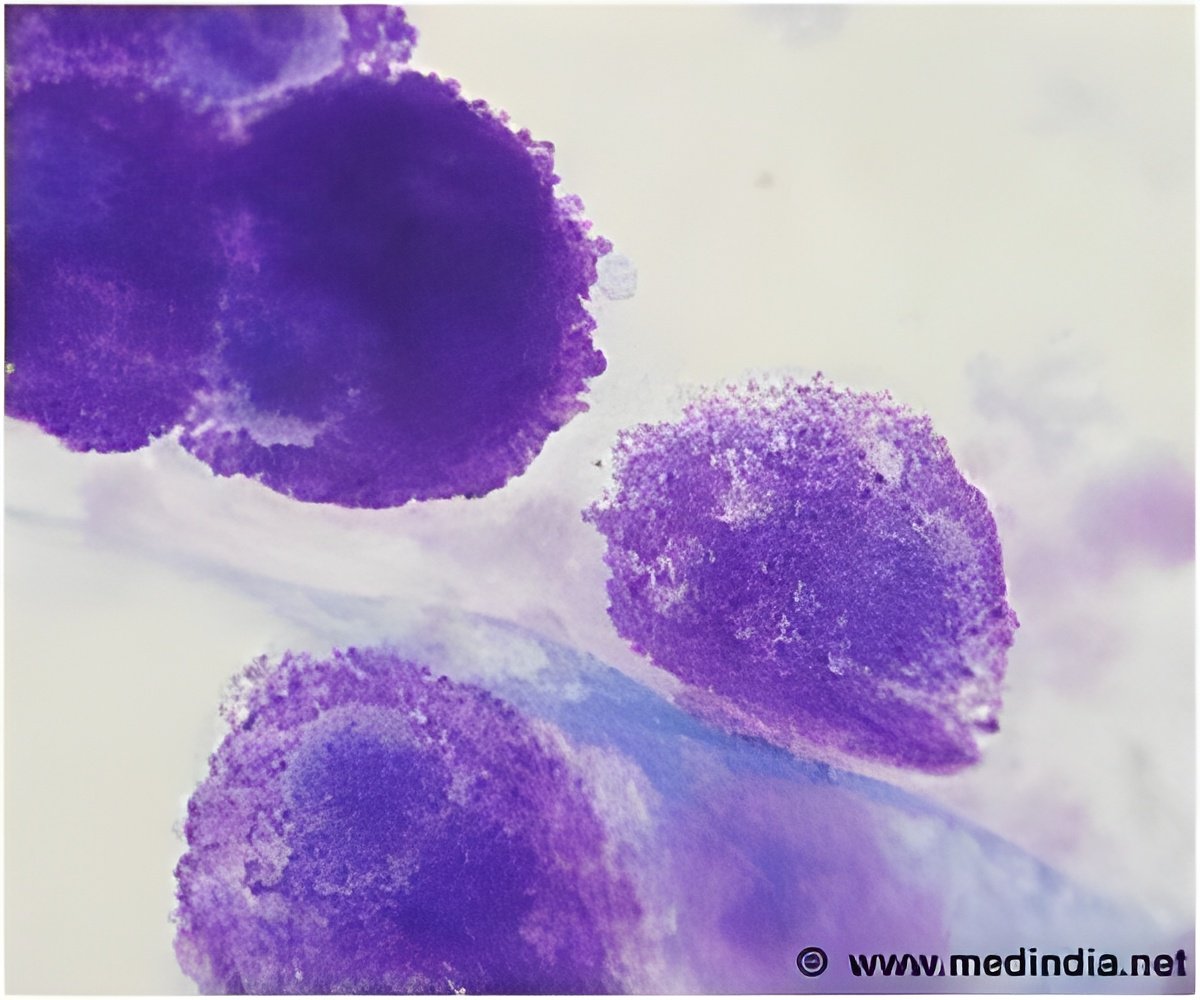
A unique subset of tumor associated neutrophils (TANs) have been idenfied in samples from early-stage human lung cancers.
A unique subset of tumor associated neutrophils (TANs) have been idenfied in samples from early-stage human lung cancers.
If the MICSSS method is proven successful in mapping other tumor types (hepatocellular carcinoma, colorectal, breast, head and neck, or pancreatic cancers), the investigators believe it may be useful beyond just cancer. It offers the ability to reuse any slide from a tissue sample, up to 10 times, and to characterize multiple parameters with standard chromogen staining. Researchers have begun to apply MICSSS to characterize immune and tissue markers of diabetes, HIV-related kidney pathology, inflammatory bowel disease, and atherosclerosis.

Allergy causing Immune Cells Unexpectedly Prove Life-Saving in C. Difficile
Immune cells vilified for their role in causing asthma and allergies can be vital for protecting patients from potentially fatal C. difficile infection.
Immune cells vilified for their role in causing asthma and allergies can be vital for protecting patients from potentially fatal C. difficile infection.
Collaborators included researchers from Memorial Sloan Kettering Cancer Center in New York, the University of Heidelberg in Germany, and the Paris Descartes University in France. The researchers declare no conflicts of interest.
Super-Resolution Microscopy Reveals Details of Vital Receptors on Immune Cells
Salk Institute researchers have imaged how vital receptors on the surface of T cells bundle together when activated.
Salk Institute researchers have imaged how vital receptors on the surface of T cells bundle together when activated.
 Email
Email