MEDINDIA
 English
 हिन्दी
 Español
 français
 中文
中文
At the University of Southampton, researchers has provided new insight into the consequence of accumulated 'misfolded proteins' in neurodegenerative disorders, such as Prion and Alzheimer's disease.

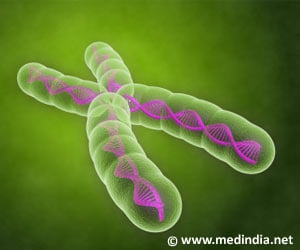
Expansion of DNA Leads to Production of Toxic Protein in Patients of Common Neurodegenerative Disorder
Researchers have recently discovered that an expansion of DNA in patients with the common neurodegenerative disorder Fragile X-associated Tremor syndrome causes the production of an
Researchers have recently discovered that an expansion of DNA in patients with the common neurodegenerative disorder Fragile X-associated Tremor syndrome causes the production of an
They found that the degenerative process is paralleled by an increase in astrocytes – a major support cell in the brain – and four specific astrocytes-associated proteins: GFAP (structural protein), peroxiredoxin-6 (an antioxidant protein), EAAT-2 (glutamate transporter), and Clusterin (a chaperone protein). These are produced in greater amounts in response to the misfolding protein, perhaps to provide support and protection for neurons in the brain.
Current research has identified Clusterin as a biomarker for Alzheimer's disease and Dr Asuni's team extended their investigation to address whether Clusterin changes in the brain could be detected in the blood; such a result would have confirmed Clusterin as a potential biomarker for brain disease.
Gene Responsible for Childhood Neurodegenerative Disorders Identified
Mutated gene responsible for three forms of leukodystrophies has been identified by scientists.
Mutated gene responsible for three forms of leukodystrophies has been identified by scientists.
"So we caution against the assumption that plasma levels of Clusterin provide an alternate peripheral measure for the progression of brain degeneration. We believe the observations from our study in experimental conditions, in which potential confounds can be well controlled, will likely be of value in the interpretation of results from Alzheimer's disease patients."
Chinese Herb may Now Help Treat Neurodegenerative Disorders
A new study has finally approved the use of 5-hydroxymethylyfurfural for the treatment of neurodegenerative disorders and other oxidative injury related diseases of the brain
A new study has finally approved the use of 5-hydroxymethylyfurfural for the treatment of neurodegenerative disorders and other oxidative injury related diseases of the brain
Saga of Autophagy and Neurodegenerative Disorders
From eukaryotic microorganisms to humans, autophagy is a highly conserved process through the evolution of species.
From eukaryotic microorganisms to humans, autophagy is a highly conserved process through the evolution of species.
 Email
Email