MEDINDIA
 English
 हिन्दी
 Español
 français
 中文
中文
A demonstration of how complex a visual task or any image consisting of simple and intricate elements, actually is to the brain was shown by a team of neuroscientists.

Strabismus | Squint - Types, Causes, Symptoms, Diagnosis, Treatment & Prevention
Strabismus or squint is a failure of the two eyes to maintain proper alignment when looking at an object. It is also called crossed eyes.
Strabismus or squint is a failure of the two eyes to maintain proper alignment when looking at an object. It is also called crossed eyes.
The findings of the study by Institute for Biological Studies neuroscientists Tatyana Sharpee and John Reynolds take two important steps forward in understanding vision.
Sharpee, an associate professor in the Computational Neurobiology Lab, said that understanding how the brain creates a visual image can help humans whose brains are malfunctioning in various different ways - like people who have lost the ability to see.
Corneal Ulcer - Causes - Symptoms - Diagnosis - Treatment - FAQs
A corneal ulcer (ulcerative keratitis/eyesore) is an open sore on the cornea.
A corneal ulcer (ulcerative keratitis/eyesore) is an open sore on the cornea.
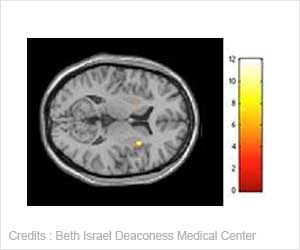
In these studies, the researchers neurobiologists sought to figure out how a part of the visual cortex known as area V4 is able to distinguish between different visual stimuli even as the stimuli move around in space. V4 is responsible for an intermediate step in neural processing of images.

Foods that Give You Sparkling Eyes
Food not only sustains us but the kind and quality of food determines the state of your health, which includes your eyes. Let us see which foods can bring a sparkle to your eyes!
Food not only sustains us but the kind and quality of food determines the state of your health, which includes your eyes. Let us see which foods can bring a sparkle to your eyes!
He said that in earlier stages of processing, these windows - known as receptive fields - are small and only have access to info within a restricted region of space.

Watery-Eyes - Causes - Symptoms - Signs - Diagnosis - Treatment - FAQs
Excess tearing may cause a sensation of watery eyes or result in tears falling down the cheek. Obstruction of tear drainage path can lead to stasis and is also a reason for watery eyes.
Excess tearing may cause a sensation of watery eyes or result in tears falling down the cheek. Obstruction of tear drainage path can lead to stasis and is also a reason for watery eyes.
Both new studies investigated the issue of translation invariance - the ability of a neuron to recognize the same stimulus within its receptive field no matter where it is in space, where it happens to fall within the receptive field.
The Neuron paper looked at translation invariance by analyzing the response of 93 individual neurons in V4 to images of lines and shapes like curves, while the PNAS study looked at responses of V4 neurons to natural scenes full of complex contours.
The Salk researchers found that neurons that respond to more complicated shapes - like the curve in 5 or in a rock - demonstrated decreased translation invariance. "They need that complicated curve to be in a more restricted range for them to detect it and understand its meaning," Reynolds said. "Cells that prefer that complex shape don't yet have the capacity to recognize that shape everywhere."
The findings of the two studies have been published in Neuron and June 24 in the Proceedings of the National Academy of Sciences (PNAS).
Source-ANI
 Email
Email