MEDINDIA
 English
 हिन्दी
 Español
 français
 中文
中文
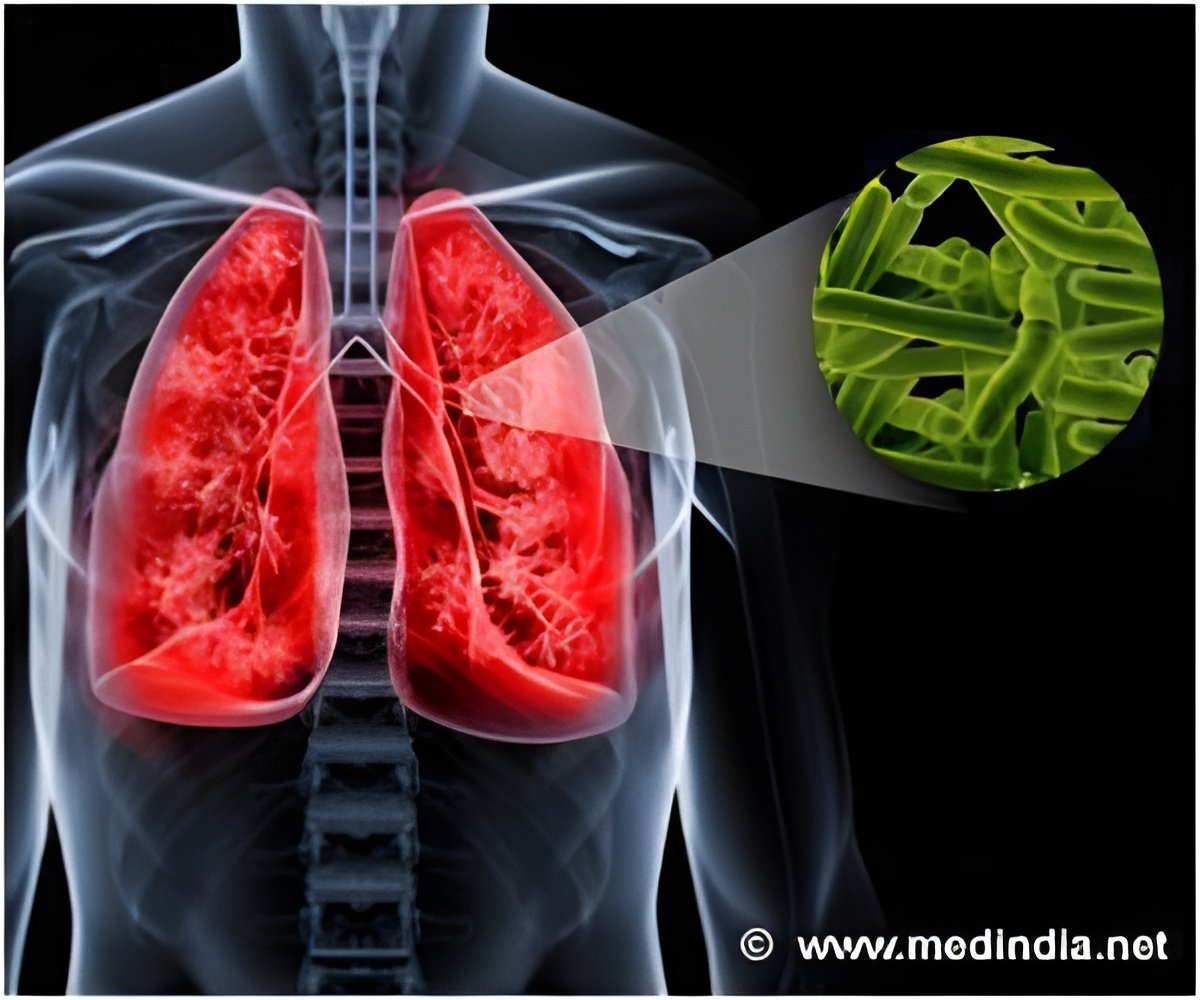
Researchers have discovered that bacterium Mycobacterium tuberculosis can lay dormant within bone marrow stem cells for a long period.
Tuberculosis - Spread - Symptoms - Diagnosis - Treatment - FAQs
Tuberculosis, caused by Mycobacterium tuberculosis, primarily affects the lung. It may spread to other organs.
Tuberculosis, caused by Mycobacterium tuberculosis, primarily affects the lung. It may spread to other organs.
Summary of StudyDr. Campos-Neto and his team conducted in vitro experiments, as well as in vivo using a well-defined animal model of latent TB, and from data collected from human patients treated for TB. From these studies they concluded that Mtb infects and persists in a dormant state for long periods of time within bone marrow (BM) stem cells. These cells constitute a unique niche or a sanctuary that provides the pathogen both immune privilege and protection from drug attack. Stem cells, like those infected by Mtb, are long living cells and possess a special machinery to exclude external molecules such as anti-TB drugs to enter their cytoplasm. Therefore, once inside these cells, Mtb benefits from this mechanism for its survival in a quiescent manner.

Screening Tests for Tuberculosis
Tuberculin skin test and Interferon – Release Assays are tests used to screen for tuberculosis.
Tuberculin skin test and Interferon – Release Assays are tests used to screen for tuberculosis.

Drug Resistance – Antibiotic or Antimicrobial Resistance
Drug resistance is often a problem in malaria, tuberculosis, HIV, sexually transmitted diseases and hospital acquired diseases. Judicious use of antibiotics can control the problem.
Drug resistance is often a problem in malaria, tuberculosis, HIV, sexually transmitted diseases and hospital acquired diseases. Judicious use of antibiotics can control the problem.
 Email
Email