MEDINDIA
 English
 हिन्दी
 Español
 français
 中文
中文
A protein that can help detect the earliest signs of ovarian has been identified
Ovarian Cancer | Cancer in the Ovaries - Causes, Symptoms, Treatment & Prevention
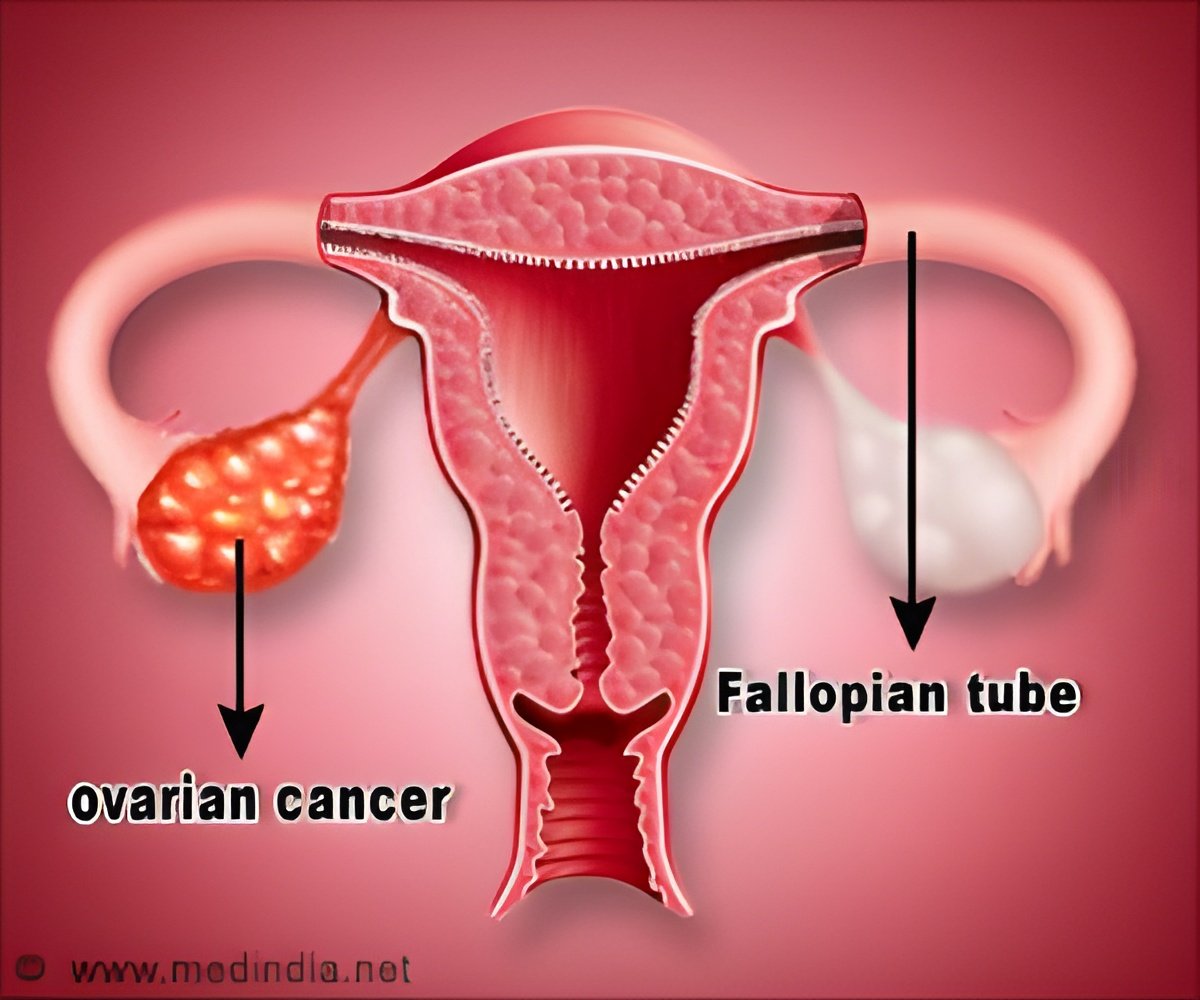
Ovarian cancer affects both the ovaries and is referred to as the 'silent killer' as the symptoms go unnoticed until the disease advances.
Ovarian cancer affects both the ovaries and is referred to as the 'silent killer' as the symptoms go unnoticed until the disease advances.
TOP INSIGHT

The level of protein SOX2 are higher in people who have ovarian cancer and in those who are at a risk of developing cancer. Early detection of cancer helps in providing faster treatment and improves the odds of survival for patients.
The new findings which were published in two journals, could not only help detect cancers early, but in some cases would enable doctors to detect a tumour before it becomes cancerous.
In their first paper, published in the online journal EBioMedicine, researchers showed that levels of a protein called SOX2 are much higher in the fallopian tubes of people with ovarian cancer. It is also prevalent in some people who are at high risk of developing ovarian cancer, such as those with inherited mutations in BRCA1 and BRCA2 genes.

Parasite in Cat Feces Shows Promise in Fighting Ovarian Cancer
T.gondii from the feces of cat could break immune tolerance towards ovarian cancer, according to new study.
T.gondii from the feces of cat could break immune tolerance towards ovarian cancer, according to new study.
In their second paper, published in the journal Cancer Cel, the team identified an enzyme that enables ovarian cancer to spread. When ovarian cancer spreads, it usually does so to the omentum, an apron of fatty tissue covering the small intestine. This can cause death by malnutrition, as the growing cancer obstructs the intestines.

Quiz on Ovarian Cancer / Cancer of the Ovary
Ovarian cancer is a cancer that does not produce definite symptoms. Here are a few questions that you could attempt to answer to check your knowledge on ovarian cancer.
Ovarian cancer is a cancer that does not produce definite symptoms. Here are a few questions that you could attempt to answer to check your knowledge on ovarian cancer.
The findings show that ovarian cancer could only proliferate in the presence of an enzyme called SIK2, which has a role in burning fat to produce energy that is needed by the cancer cells to survive in the omentum.
Liquid Biopsies Offer Hope for Better Tracking of Ovarian Cancer
Ovarian cancer is a hard-to-detect disease. More than 21,000 women in the U.S. were diagnosed with ovarian cancer, and 14,000 women died of the disease in 2015.
Ovarian cancer is a hard-to-detect disease. More than 21,000 women in the U.S. were diagnosed with ovarian cancer, and 14,000 women died of the disease in 2015.
Further experiments revealed the processes, known to medical researchers as pathways, involving SIK2 that support the development and spread of ovarian cancer. SIK2 is an important target for future treatments because it provides cancer cells with energy and also drives their increase in number.
The experiments showed that suppressing SIK2 disrupted these pathways, which in the human body would reduce the possibility of cancer cells spreading and remission.
Source-Medindia
 Email
Email