
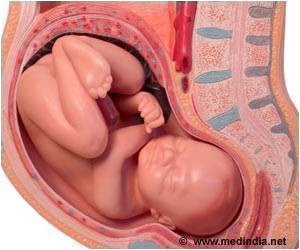
Delaying Premature Delivery - How Safe Is It?
An expert on women and child health explores the dangers of delaying premature delivery and says it is important to choose the right tocolytic agent to delay delivery.
An expert on women and child health explores the dangers of delaying premature delivery and says it is important to choose the right tocolytic agent to delay delivery.
‘Women who deliver prematurely require long-term clinical follow-up to detect and treat chronic disorders tied to early mortality.
’
Tweet it Now
So a team led by Professor Casey Crump at the Icahn School of Medicine at Mount Sinai in New York set out to examine the long term mortality associated with preterm delivery in women and to explore the potential influence of shared genetic or environmental factors within families.Using nationwide birth records, they analyzed data on length of pregnancy for over two million women who gave birth in Sweden during 1973-2015.
Deaths were then identified from the Swedish Death Register up to 31 December 2016 (a maximum follow-up time of 44 years).

About Pregnancy
Detailed look at Early pregnancy Symptoms and easy health solutions during 1st, 2nd and 3rd trimester of pregnancy. With an addition of an online pregnancy due date calculator.
Detailed look at Early pregnancy Symptoms and easy health solutions during 1st, 2nd and 3rd trimester of pregnancy. With an addition of an online pregnancy due date calculator.
After taking account of many other risk factors, the researchers found that women who delivered preterm or extremely preterm had 1.7-fold, and 2.2-fold increased risk of death from any cause, respectively, during the next ten years compared with those who delivered full term. This equates to around 28 excess deaths per 100,000 person-years.
Advertisement
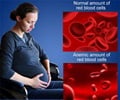
Anemia in Pregnancy - Causes Prevention Symptoms Diagnosis Treatment
Anemia is the commonest blood disorder that may occur in pregnancy and is usually due to low iron or folate reserves of the body and this is reflected as anemia.
Anemia is the commonest blood disorder that may occur in pregnancy and is usually due to low iron or folate reserves of the body and this is reflected as anemia.
For example, there was a 1.5-fold increased risk (equivalent to 48 excess deaths per 100,000 person-years) 10-19 years after delivery, and a 1.4-fold increased risk (equivalent to 143 excess deaths per 100,000 person-years) 20-44 years after delivery.
Advertisement

Healthy Weight Gain during Pregnancy
Recommended weight gain during pregnancy is determined as per pre-pregnancy weight and BMI. Healthy weight gain is very important for pregnancy health and is achieved with the right diet and exercise.
Recommended weight gain during pregnancy is determined as per pre-pregnancy weight and BMI. Healthy weight gain is very important for pregnancy health and is achieved with the right diet and exercise.
Several specific causes of death associated with preterm delivery were identified, including cardiovascular and respiratory disorders, diabetes, and cancer. What's more, these findings did not seem to be attributable to shared genetic or environmental factors within families.
This is an observational study so can't establish cause, and the researchers acknowledge some limitations, such as a lack of complete information on spontaneous or medically indicated preterm delivery, and the fact that the results might not be applicable to other countries.
However, strengths included the large sample size and long follow-up time, prompting the researchers to say that premature delivery should now be recognized as a risk factor for early mortality in women that can remain raised up to 40 years later.
"Women who deliver prematurely need long term clinical follow-up for detection and treatment of chronic disorders associated with early mortality," they conclude.
Source-Eurekalert