MEDINDIA
 English
 हिन्दी
 Español
 français
 中文
中文
People tend to eat more when they are dining with their family and friends. A new study says that this could be a habit inherited from ancient ancestors and intake of food could go up by almost 50 percent compared to those who dine alone.

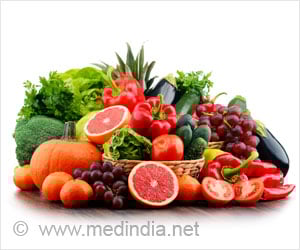
Family Meal Time Promotes Healthy Eating Habits
Families who regularly dine together are more likely to eat more fruits, vegetables and fiber and are less likely to eat fried foods, stated new study.
Families who regularly dine together are more likely to eat more fruits, vegetables and fiber and are less likely to eat fried foods, stated new study.
TOP INSIGHT

People tend to eat more when they are dining with their family and friends. A new study says that this could be a habit inherited from ancient ancestors and intake of food could go up by almost 50 percent compared to those who dine alone.
They explain that ancient hunter gatherers shared food because it protected against periods of food insecurity - this survival mechanism may still persist today, leading to people eating more with friends and family because: Eating with others is more enjoyable and enhanced reward from social eating could increase consumption. Social norms might 'permit' overeating in company but sanction it when eating alone. Providing food becomes associated with praise and recognition from friends and family, strengthening social bonds. Research leader Dr Helen Ruddock, from the School of Psychology at the University of Birmingham, commented: "We found strong evidence that people eat more food when dining with friends and family than when alone. However, this social facilitation effect on eating was not observed across studies which had looked at food intake among people who were not well acquainted."
People want to convey positive impressions to strangers. Selecting small portions may provide a means of doing so and this may be why the social facilitation of eating is less pronounced among groups of strangers.

Family Meal Time Minus TV Helps Beat Obesity
Adults who don't flip on the TV during dinner and those who eat home-cooked meals are less likely to be obese.
Adults who don't flip on the TV during dinner and those who eat home-cooked meals are less likely to be obese.
The study highlights that, as with many other species, humans tend to share a common food resource. Most humans are no longer hunter-gatherers, but mechanisms similar to those that once served efficient foraging continue to guide our dietary behavior.
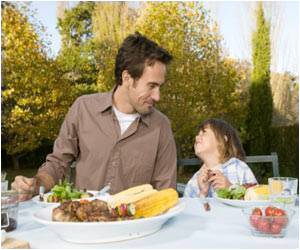
Family Meal Times Lowers the Risk of Obesity
Sitting down to eat together with families help children and adolescents to avoid eating unhealthy food and obesity, claim researchers at the University of Illinois at Urbana, Champaign.
Sitting down to eat together with families help children and adolescents to avoid eating unhealthy food and obesity, claim researchers at the University of Illinois at Urbana, Champaign.
Researchers note that, in the case of social facilitation, we have inherited a mechanism that once ensured equitable food distribution, but now exerts a powerful influence on unhealthy dietary intakes. The same process has been observed in chickens, rats, gerbils and other species, suggesting it serves an ultimate purpose. Individuals compete for resource and research suggests that eating more than others is likely to lead to ostracism, which, in turn, reduces food security. This creates a tension between an individual 'being seen' to share food altruistically and eat as much as they need.

A Family Meal a Day may Keep Obesity Away: Study
Family meals could be protective against obesity, finds new study.
Family meals could be protective against obesity, finds new study.
"What we describe as 'social facilitation' can be seen as a natural by-product of social food sharing - a strategy that would have served a critical function in our ancestral environments. This also explains why it is more likely to occur in groups with individuals who are familiar with each other."
Source-Eurekalert
 Email
Email