MEDINDIA
 English
 हिन्दी
 Español
 français
 中文
中文
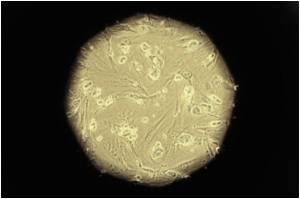
A new study says that adding stem cells to the brain can reverse the loss of the specific nerve cells implicated in Parkinson's disease, by regeneration of the diseased tissues.

Parkinson’s Disease - Causes, Symptoms, Diagnosis, Treatment
Parkinson’s disease is a neurodegenerative disease caused by progressive dopamine brain cells loss. Symptoms of Parkinson’s disease are correctable to an extent.
Parkinson’s disease is a neurodegenerative disease caused by progressive dopamine brain cells loss. Symptoms of Parkinson’s disease are correctable to an extent.
The reprogramming proteins can be transferred directly into the cells (protein-based iPS cells) to transform them into iPS cells, which in process reverses the disease.
The study, led by Sang-Hun Lee, at Hanyang University, Republic of Korea, and Kwang-Soo Kim, at Harvard Medical School, Belmont, found that nerve cells derived from protein-based human iPS cells achieved this feat when transplanted into the brain of rats modelling Parkinson disease. They therefore conclude that protein-based human iPS cells could be used in the treatment of individuals with Parkinson disease.

Parkinson's Disease
Slide animation on Parkinson disease. It is a progressive movement disorder due to degeneration of nerve cells of the substantia nigra of the brain. The symptoms get worse with time but drugs or surgery can control them. PD cannot be cured.
Slide animation on Parkinson disease. It is a progressive movement disorder due to degeneration of nerve cells of the substantia nigra of the brain. The symptoms get worse with time but drugs or surgery can control them. PD cannot be cured.

Parkinson's Disease - Surgical Treatment
Slide animation on surgery for Parkinson disease. Surgery is only indicated where drugs fail to control the symptoms of this progressive movement disorder. Surgery cannot cure the disease.
Slide animation on surgery for Parkinson disease. Surgery is only indicated where drugs fail to control the symptoms of this progressive movement disorder. Surgery cannot cure the disease.
 Email
Email