MEDINDIA
 English
 हिन्दी
 Español
 français
 中文
中文
Thousands of people are donating blood after the attack at a gay bar that killed 49 and left 53 injured. But gay men are excluded from donation due to federal laws.
France to Repeal Ban on Gay Men Donating Blood
Blood donation will be open to gay men who have not been sexually active for the preceding 12 months.
Blood donation will be open to gay men who have not been sexually active for the preceding 12 months.
TOP INSIGHT

The federal policy still imposes a one-year celibacy before homosexual men can donate blood to prevent HIV transmission.
"So at a time when I am needed the most to help save my brothers and sisters, I can do nothing. So it is very frustrating," he said at the center's small, jam-packed headquarters, which has operated in crisis mode since the massacre in the wee hours of Sunday at the Pulse nightclub by gunman Omar Mateen.
The Center teemed with activity Monday as volunteers arranged appointments for people who need counseling after the carnage and took delivery of supplies -- food, drink, even toiletries -- for victims' families.
Argentina Lifts Ban on Gay Blood Donations in the Country
For long, people believed that homosexual relationships were more risky than heterosexual in terms of contracting HIV, a perception that led to the ban.
For long, people believed that homosexual relationships were more risky than heterosexual in terms of contracting HIV, a perception that led to the ban.
Outside The Center, Chris Callen, 34, said he knew Pulse very well -- he worked there performing as a drag queen.
American Regulators Recommend Lifting the Lifetime Ban on Gay Blood Donors
In the past year, men who have had sex with men and women who have had sex with a bisexual man would be on a one-year waiting period to donate blood.
In the past year, men who have had sex with men and women who have had sex with a bisexual man would be on a one-year waiting period to donate blood.
"I lost a total of seven -- and I actually just found out I lost one more, on the phone," he said, gesturing to his mobile and wincing.

Reverse Gay Blood Ban, Say US Docs
The reversal of a decades-old ban on donations of blood from gay men has been urged by a leading doctors group in the US, which said the law is discriminatory and outdated.
The reversal of a decades-old ban on donations of blood from gay men has been urged by a leading doctors group in the US, which said the law is discriminatory and outdated.
Callen said he could not donate blood because he has been HIV-positive for nearly seven years.
Back when he was healthy, however, he said it hurt really badly not to be able to give.
"When the Twin Towers fell, we had a whole bunch of the gay community that wanted to rally and go and give blood. And we weren't allowed," said Callen, wiry and shirtless in the muggy Florida heat.
"I would do anything to help my community," he added.
The government restriction on gay men giving blood used to be even tougher.
Until very recently, the Food and Drug Administration rule stipulated that any man who has had sex with another man since 1977 could not give blood, said Pat Michaels, a spokesman for OneBlood, a network of blood bank clinics in Florida and other southern states.
OneBlood had been pressuring the FDA for years to lift the older blanket ban, said Susan Forbes, another representative of that not-for-profit network. She called the change, mandating a year of abstinence, a step in the right direction.
Domenico said it was a joy to see so many straight people turning out to donate blood. On Sunday alone, it was 3,500 people across OneBlood's network, said Michaels, compared to 1,000 on a regular day.
"We have straight allies that are there for us and have been there for years," Domenico said.
Herb Voyles, a 40-year photographer who is straight but has gay friends who used to go to Pulse, said even the new rule is ridiculous, arguing that since blood can be tested for HIV, gay men should not be barred from donating.
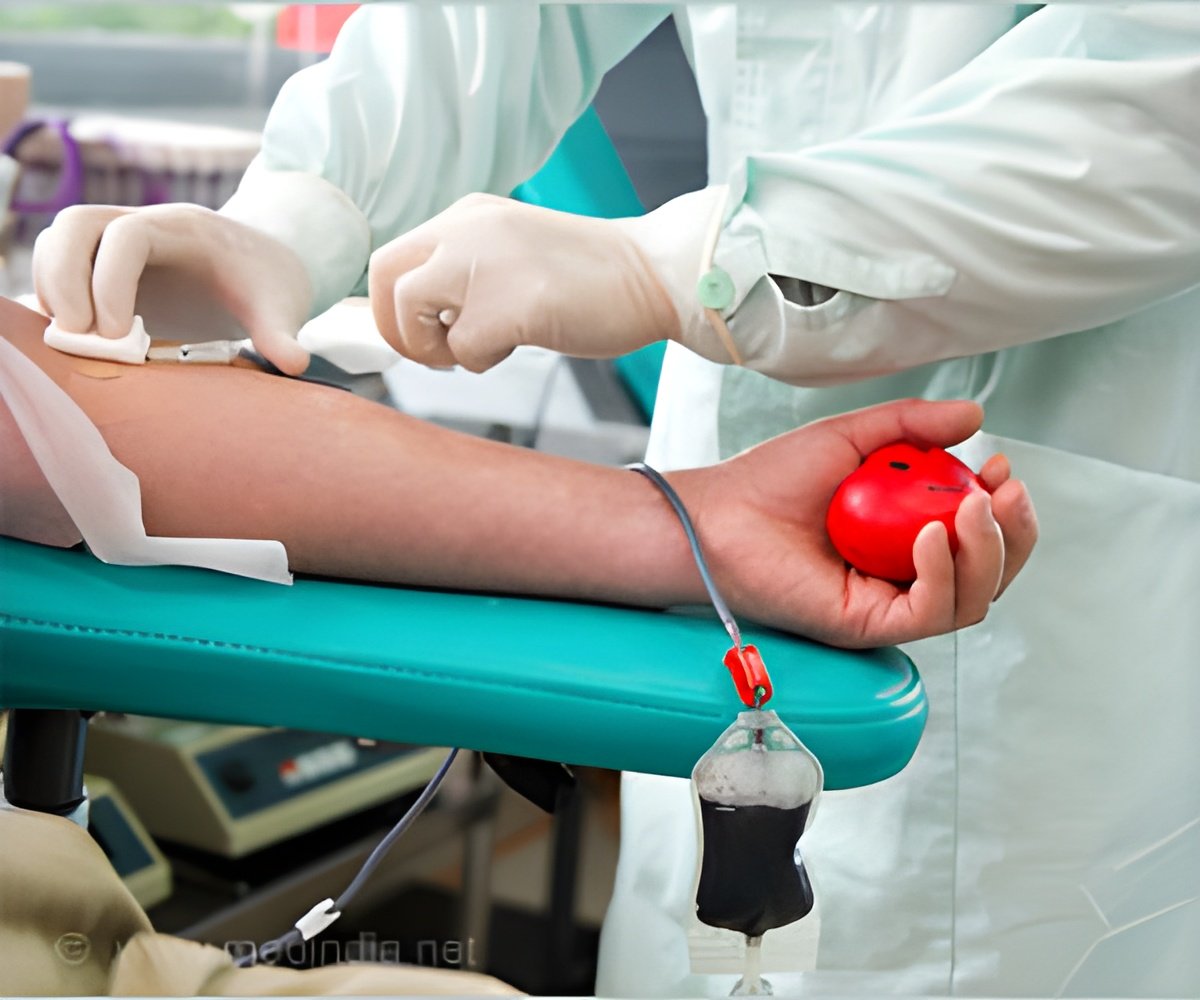
Voyles spoke as he sat in what looked like a dentist chair, donating his dark, red O+ and squeezing a rubber toy to keep it pumping.
Of his contribution, he said: "It is small. But if it can save someone's life, I guess it is something I should do."
Source-AFP
 Email
Email