MEDINDIA
 English
 हिन्दी
 Español
 français
 中文
中文
Brains are made up of billions of cells, as signals are sent from one cell to the next, rhythmic patterns of electrical activity, brain waves, are generated.

Experiences Change Brain Cells Differently: Virginia Tech
Synapses, the specialized connections between neurons, work by translating an electrical signal into a chemical signal to modify the receiving neuron.
Synapses, the specialized connections between neurons, work by translating an electrical signal into a chemical signal to modify the receiving neuron.
TOP INSIGHT

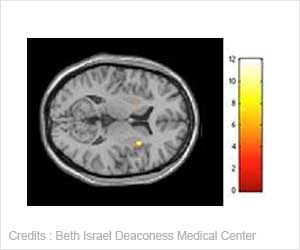
Structural magnetic resonance imaging (MRI) and magnetoencephalography (MEG) are used to track potential age-related differences as groups of younger and older adults performed a memory task.
Structural magnetic resonance imaging (MRI), which measures the anatomy and structural integrity of the brain, and magnetoencephalography (MEG), which measures magnetic fields created by the brain's electrical activity, were used to track potential age-related differences as groups of younger and older adults performed a memory task. The median ages of the two groups were 24.8 and 65.9 years, respectively.
Rondina explained that brains are made up of billions of cells, which use electricity to communicate with each other. As signals are sent from one cell to the next, rhythmic patterns of electrical activity, commonly known as brain waves, are generated. "Past studies have shown that brain waves travelling at slower speeds tend to be important for memory, while slightly faster speed brain waves play a role in our attention," said Rondina.
Brain Plasticity Is Assorted into Functional Networks
Individual neurons whose synapses are most likely to strengthen in response to a certain experience are more likely to connect to certain partner neurons.
Individual neurons whose synapses are most likely to strengthen in response to a certain experience are more likely to connect to certain partner neurons.
In contrast, older adults demonstrated a rush of alpha oscillatory power (relatively faster brain waves) that was not observed in younger adults."It's remarkable to see how different the older participants' brain patterns are from the younger participants, while still maintaining accuracy," said Rondina. "According to the MRIs, there were minimal differences in the brain structures in the two groups, yet the brain waves were very different. With additional study, these results may lead to new, more sensitive ways of screening or diagnosing cognitive decline."
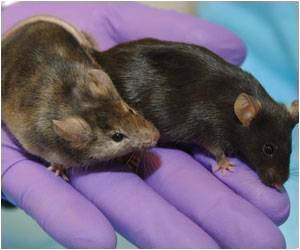
Aggression Causes Production of New Nerve Cells in the Brain
A series of experiments on male mice have experimentally proven that aggression has an influence on the production of new nerve cells in the brain.
A series of experiments on male mice have experimentally proven that aggression has an influence on the production of new nerve cells in the brain.
Source-Eurekalert
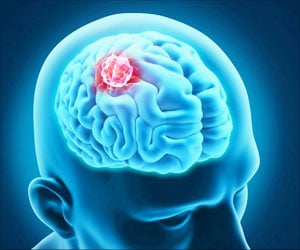
'Gene Fusion' Mutation Uses 3-way Mechanism to Tackle Childhood Brain Cancers
The discovery will lead to better methods for diagnosing, treating childhood brain cancers and avoiding wrong chemotherapy that can cause lasting harm.
The discovery will lead to better methods for diagnosing, treating childhood brain cancers and avoiding wrong chemotherapy that can cause lasting harm.
 Email
Email