MEDINDIA
 English
 हिन्दी
 Español
 français
 中文
中文
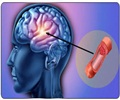
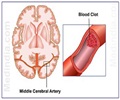
Middle aged people suffering from even mild obstructive sleep apnea have a greater risk of experiencing a stroke that can be fatal

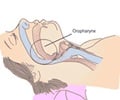
Obstructive Sleep Apnea - Overview
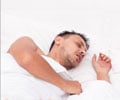
Obstructive sleep apnea should be suspected in overweight middle aged adults who snore loudly and which can cause interruption of breathing for 10 seconds or more and this results in reduced blood o
Obstructive sleep apnea should be suspected in overweight middle aged adults who snore loudly and which can cause interruption of breathing for 10 seconds or more and this results in reduced blood o
New Model, New Findings
The most common animal model used to study OSA today is intermittent hypoxia (IH) which relies solely on exposing animals to a decrease in blood oxygen levels. The new model incorporates all physiological consequences involved in OSA by inducing true apnea (closure of the airway). The revised model creates a more complete picture of the apnea process and one that more accurately mimics how OSA unfolds in humans.
Using their model the researchers induced 30 apneas (10 seconds duration) per hour in animals for 8-hours during the sleep cycle for up to one month. After one month of apnea, cerebral vessel dilatory function was reduced by up to 22 percent. This finding correlates with studies that show similar cell dysfunction in arteries and an increased risk of stroke in OSA patients. Damage to the vascular wall in brain arteries could be a factor predisposing an individual with OSA to stroke.
Circadian Rhythm Sleep Disorders - Types, Causes, Health risks, Diagnosis, Treatment, Prognosis
Circadian rhythm (also known as sleep/wake cycle or the body clock) is a biological process that follows an internal cycle of roughly 24 hours.
Circadian rhythm (also known as sleep/wake cycle or the body clock) is a biological process that follows an internal cycle of roughly 24 hours.
OSA Prevalence Expected to Rise
According to Mr. Crossland, some researchers estimate that up to 85 percent of patients with clinically significant sleep apnea have not been diagnosed. Obesity and aging are strongly associated with OSA. "As the prevalence of obesity is rising, and the population continues aging, we expect the rates of OSA to rise. It should also be noted that non-obese individuals and even children can have OSA," he said. And while OSA is seen more often in men than in women for unknown reasons some researchers believe that the true rate in females has been underestimated.
Sleep Disorder : Restless Legs Syndrome
Restless legs syndrome (RLS) causes - An urge to move, usually due to uncomfortable sensations that occur primarily in the legs.
Restless legs syndrome (RLS) causes - An urge to move, usually due to uncomfortable sensations that occur primarily in the legs.
About Experimental Biology 2012
Six scientific societies will hold their joint scientific sessions and annual meetings, known as Experimental Biology, from April 21-25, 2012 in San Diego. This meeting brings together the leading researchers from a broad array of life science disciplines. The societies include the American Association of Anatomists (AAA), American Physiological Society (APS), American Society for Biochemistry and Molecular Biology (ASBMB), American Society for Investigative Pathology (ASIP), American Society for Nutrition (ASN), and American Society for Pharmacology and Experimental Therapeutics (ASPET). More information about the meeting can be found online at http://bit.ly/ymb7av.

Obstructive Sleep Apnea
Obstructive sleep apnea occurs when the tissue in the back of the throat collapses completely blocking the airway. Obstructive sleep apnea is treated using continuous positive airway pressure.
Obstructive sleep apnea occurs when the tissue in the back of the throat collapses completely blocking the airway. Obstructive sleep apnea is treated using continuous positive airway pressure.
The American Physiological Society (APS) is a nonprofit organization devoted to fostering education, scientific research, and dissemination of information in the physiological sciences. The Society was founded in 1887 and today has more than 10,500 members. APS publishes 13 scholarly, peer-reviewed journals covering specialized aspects of physiology. Eleven of the journals are published monthly.
###
NOTE TO EDITORS: To receive a copy of the abstract or schedule an interview with a member of the research team, please contact Donna Krupa at [email protected], 301.634.7209 (office) or 703.967.2751 (cell).
Source-Newswise
 Email
Email