MEDINDIA
 English
 हिन्दी
 Español
 français
 中文
中文
European Medicines Agency (EMEA) and the Food Drug Administration. (FDA) have now decided to work on additional tests to determine safety of drugs.
European Medicines Agency (EMEA) and the Food Drug Administration. (FDA) have now decided to work on additional tests to determine safety of drugs.
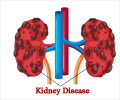
Hereafter drug companies may have to submit the results of seven new tests that evaluate kidney damage during animal studies of new drugs.The tests measure the levels of seven key proteins or "biomarkers" found in urine that can provide additional information about drug-induced damage to kidney cells, also known as renal toxicity, the FDA said on its website.
For decades, both FDA and EMEA have required drug companies to submit the results of two blood tests, called blood urea nitrogen (BUN) and serum creatinine, to evaluate renal toxicity. In addition to those tests, the FDA and EMEA will now consider results from the seven new tests as part of their respective drug review processes. Although a decision by the sponsor to collect information using the new tests is voluntary, if collected, it must be submitted to FDA.
"The development of these and other biomarkers can result in important tools for better understanding the safety profile of new drugs," said Janet Woodcock, director of FDA's Center for Drug Evaluation and Research. "We hope these biomarkers will lead to human tests that detect drug-induced kidney injury in people earlier than is now possible, and help health care professionals better manage potential kidney damage from drugs."
Woodcock added that such human tests could one day open the door to the approval of more powerful drugs, especially for diseases where renal toxicity currently prevents promising experimental drugs from being approved. With more sensitive tests for renal toxicity, FDA could approve such drugs because health care professionals could closely monitor patients and halt the drug if early signs of renal toxicity appear.
Development of the new biomarkers was led by the Predictive Safety Testing Consortium (PSTC), whose members include scientists from 16 pharmaceutical companies. The PSTC was organized and led by the Critical Path Institute, a nonprofit organization that works to support FDA research collaborations that improve the development of medical products.
FDA scientists believe that the seven new tests may provide important advantages over the BUN and creatinine tests. For example, in experiments using rats, the two traditional tests can only detect kidney damage a week after it has begun to occur. The new tests, however, are more sensitive and can detect cellular damage within hours. And while BUN and serum creatinine show that damage has occurred somewhere in the kidneys, the new tests can pinpoint which parts of the kidney have been affected.
Source-Medindia
GPL
 Email
Email