MEDINDIA
 English
 हिन्दी
 Español
 français
 中文
中文
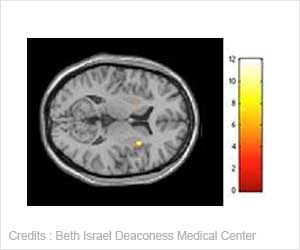
The medial amygdala, which form crucial connections to other parts of the brain, appeared to shrink due to chronic stress and cause anxiety and depression.


Dr. Sharon Horesh Reveals 'How Lethal is Chronic Stress for Our Body'?
Chronic stress is really lethal, causing heart attacks, stroke, irritable bowel syndrome and weight gain.
Chronic stress is really lethal, causing heart attacks, stroke, irritable bowel syndrome and weight gain.
TOP INSIGHT

Humans naturally produce acetyl carnitine under normal conditions. Treating chronic stress with acetyl carnitine can act as an antidepressant.
"There have been hints that the amygdala displays a complex response to stress," says lead author Carla Nasca, a postdoc in Bruce S. McEwen's lab. "When we took a closer look at three regions within it, we found that neurons within one, the medial amygdala, retract as a result of chronic stress.
"While this rewiring can contribute to disorders such as anxiety and depression, our experiments with mice showed that the neurological and behavioral effects of stress can be prevented with treatment by a promising potential antidepressant that acts rapidly," Nasca says.

Chronic Stress Increases Risk of Diet-related Metabolic Disorders: Study
A research has said when people burdened with stress eat a lot of high-fat and high-sugar foods, they face higher risk of suffering from metabolic disorders, compared to people with low stress level.
A research has said when people burdened with stress eat a lot of high-fat and high-sugar foods, they face higher risk of suffering from metabolic disorders, compared to people with low stress level.
A Close Look at the Amygdala

Chronic Stress Caused by Neglect Could Shrink Kids� Brains
Chronic stress caused by poverty among children could shrink parts of their brain that are responsible for memory, learning and processing emotion.
Chronic stress caused by poverty among children could shrink parts of their brain that are responsible for memory, learning and processing emotion.
To see what was going on in this area, as well as two other parts of the amygdala, Nasca and her team first subjected mice to 21 days of periodic confinement within a small space--an unpleasant experience for mice. Afterward, they tested the mice to see if their behaviors had changed--for instance, if they had begun to avoid social interaction and showed other signs of depression. They also analyzed the neurons of these mice within the three regions of the amygdala.

Chronic Stress Can Increase High Stroke Risk
Chronic stress due to major life stressors and type A personality traits, is associated with a high risk of stroke in a recent study.
Chronic stress due to major life stressors and type A personality traits, is associated with a high risk of stroke in a recent study.
Protecting Neurons
This effect could be prevented. The scientists repeated the stress experiment, and this time they treated mice nearing the end of their 21 days of chronic stress with acetyl carnitine, a molecule Nasca is studying for its potential as a rapid-acting antidepressant. These mice fared better than their untreated counterparts; not only were they more sociable, the neurons of their medial amygdalas also showed more branching.
Stress does not affect everyone the same way. This is true for both humans and mice--some individuals are just more vulnerable. Nasca and her colleagues' experiments included mice at high risk of developing anxiety- and depression-like behaviors in response to stress. Treatment with acetyl carnitine also appeared to protect these mice, suggesting that a similar preventative approach might work for depression-prone people.
Both humans and rodents naturally produce acetyl carnitine under normal conditions and several depression-prone animal models are deficient in acetyl carnitine. In a separate study, Nasca and colleagues are examining whether people with depression have abnormally low levels of the molecule.
"Chronic stress is linked to a number of psychiatric conditions, and this research may offer some new insights on their pathology," McEwen says. "It seems possible that the contrasting responses we see within the amygdala, and the limbic system in general, may contribute to these disorders' differing symptoms, which can range from avoiding social contact to experiencing vivid flashbacks."
Source-Eurekalert
 Email
Email