MEDINDIA
 English
 हिन्दी
 Español
 français
 中文
中文
In a recent study completed at the University of Eastern Finland, new methods that enhance the quality of myocardial perfusion imaging were developed.


Use of SPECT MPI Limited By New Protocol
A US retrospective analysis revealed that a new stress test protocol was found to be diagnostically safe.
A US retrospective analysis revealed that a new stress test protocol was found to be diagnostically safe.
The quality of images obtained by MPI are dependent on a variety of factors, the most significant ones being image noise, photon attenuation, Compton scattering, collimator-detector response (CDR), and patient movement. Problems in image quality resulting from the above factors can be corrected by means of reconstruction-based compensation methods, but this is not always straightforward.
The study focused on the testing of methods which seek to reduce the imaging time and to correct image problems caused by a long imaging time. The possibility to shorten the imaging time makes the scan easier for the patient and makes it possible to scan a larger number of patients during one day. The study investigated the possibilities to shorten the imaging time by using collimator response compensation and by performing the stress/rest MPI scans simultaneously by using different radionuclides.
Multiple Cardiac Imaging Tests Result in High Cumulative Radiation Dose
Cardiac diagnostic imaging technique of myocardial perfusion imaging often involves multiple testing, which results in a high cumulative estimated radiation dose in patients.
Cardiac diagnostic imaging technique of myocardial perfusion imaging often involves multiple testing, which results in a high cumulative estimated radiation dose in patients.
For many patients, even the shortened imaging time is too long and they tend to move during the scan. The study also developed and tested two motion correction methods. The methods were successful in correcting even major errors caused by patient movement, and they resulted in error-free MPI images.
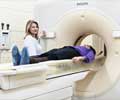
Computed Tomography Scan (CT Scan)
Computed Tomography (CT) scan is a type of medical examination that uses X-rays and computer processing to create sectional images of the body to provide more efficient results than X-rays.
Computed Tomography (CT) scan is a type of medical examination that uses X-rays and computer processing to create sectional images of the body to provide more efficient results than X-rays.
The results were originally published in Nuclear Medicine Communications, International Journal of Molecular Imaging, and Annals of Nuclear Medicine.
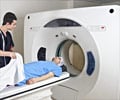
About Magnetic Resonance Imaging(MRI)
Encyclopedia section of medindia gives general info about Magnetic Resonance Imaging
Encyclopedia section of medindia gives general info about Magnetic Resonance Imaging
 Email
Email