MEDINDIA
 English
 हिन्दी
 Español
 français
 中文
中文
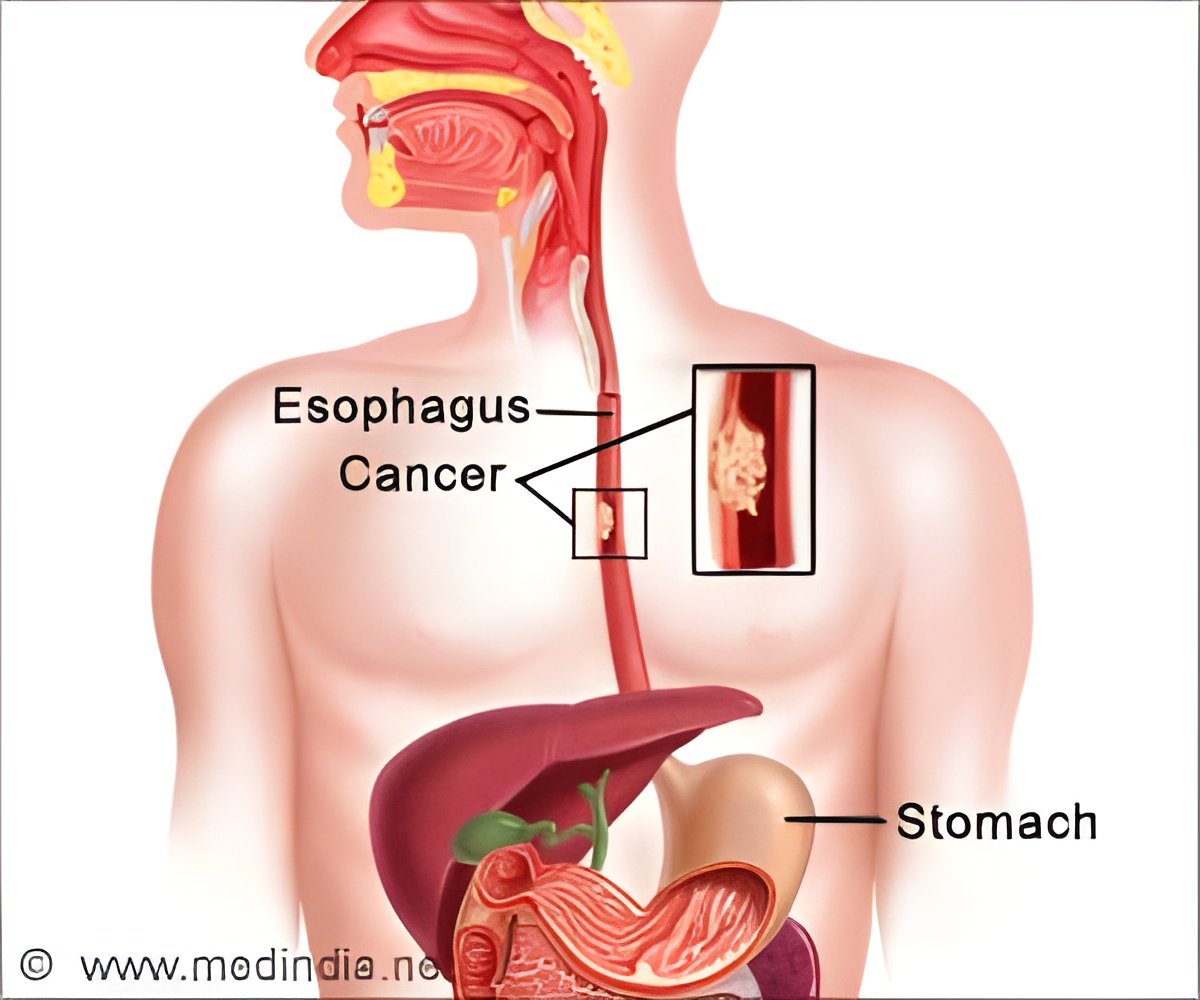
The earliest stages of esophageal cancer are very difficult to detect and only a handful of medical specialists in the Netherlands are experienced in this.

Oral Bacteria is Associated With Esophageal Cancer
P. gingivalis infection could be a novel risk factor for esophageal squamous cell carcinoma and may also serve as a prognostic biomarker for this type of cancer.
P. gingivalis infection could be a novel risk factor for esophageal squamous cell carcinoma and may also serve as a prognostic biomarker for this type of cancer.
TOP INSIGHT

Recognizing the early stages of esophageal cancer is very difficult, thus a method is being developed to enable a computer to scan esophagus images for signs of esophageal cancer.
Spectacular Therefore, four years ago Dr. Erik Schoon, gastroenterologist at the Catharina Hospital and top specialist in the area of the Barrett's esophagus, knocked on the door of the Video Coding and Architectures Research Group of TU/e, led by professor Peter de With. His group has many years of experience in image analysis methods in which the recognition of people and objects is central, for instance in smart cameras. TU/e PhD doctoral candidate Fons van der Sommen and Dr. Sveta Zinger, both of the VCA, worked with Erik Schoon to develop new methods that can accurately investigate the first signs of cancer. These methods have already become as good as the recognition score of the best European specialists. "Spectacular," Schoon says of the results. "To recognize early forms of cancer in a Barrett's esophagus is one of the most difficult things to do in our field."
Much less invasive The computer analysis should become available in every hospital over time to help gastroenterologists recognize the earliest stages of cancer and so pave the way for 100% recognition and treatment. That would save many patients having to undergo surgery that removes part of the esophagus, which is normally inevitable when the cancer is detected late on. The treatment of early cancer is much less invasive for patients and tends to comprise a microsurgical operation from within. It is also much cheaper. Additionally, doctors who are not Barrett specialists can use this method to learn to recognize abnormalities faster.

Height Influences Risk of Esophageal Cancer
A new study in Clinical Gastroenterology and Hepatology says that taller individuals are less likely to develop esophageal cancer.
A new study in Clinical Gastroenterology and Hepatology says that taller individuals are less likely to develop esophageal cancer.
Source-Eurekalert
New Technique �Pill On a String� Developed To Detect Esophageal Cancer At An Early Stage
'Cytosponge' inside the pill, when swallowed, dissolves to a sponge that scrapes off all cells including abnormal ones when withdrawn up the esophagus.
'Cytosponge' inside the pill, when swallowed, dissolves to a sponge that scrapes off all cells including abnormal ones when withdrawn up the esophagus.
Esophageal Cancer Less Likely in Taller Persons
Tall people are less likely to suffer from esophageal cancer as compared to short people, observes a new study.
Tall people are less likely to suffer from esophageal cancer as compared to short people, observes a new study.
 Email
Email