MEDINDIA
 English
 हिन्दी
 Español
 français
 中文
中文
A newly developed hydrogel shows promise in healing vocal cord injuries by lasting longer inside the body and preventing further damage.
Clicktetrazine dECM-alginate hydrogels for injectable, mechanically mimetic, and biologically active vocal fold biomaterials
Go to source). Permanent voice loss often occurs when scarring develops on the vocal cords. Existing injectable materials used for treatment tend to break down rapidly, forcing patients to undergo repeated procedures that can cause more harm to already delicate vocal tissue.
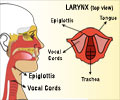
Voice Disorders | Problems in Voice Production - Causes Symptoms Types
Voice is an effective way of communication in human beings, ranging from getting across one’s point of view to powerfully commanding an army.
Voice is an effective way of communication in human beings, ranging from getting across one’s point of view to powerfully commanding an army.
TOP INSIGHT

Did You Know?
Every year, about one in thirteen adults experiences a voice disorder, and a new long-lasting gel could finally help repair damaged vocal cords without repeated treatments. #voiceloss #vocalcord #medindia
New Hydrogel Shows Long-Lasting Performance
In a preclinical investigation published in Biomaterials, scientists at McGill University reported that their innovative gel resisted degradation for several weeks in both laboratory and animal experiments. This performance exceeded that of existing injectable options, allowing the vocal cords more time to heal and recover proper function.The material is derived from natural tissue proteins that are processed into a fine powder and then converted into a gel. To enhance its durability, the team employed a process known as click chemistry, which creates a stronger and more stable molecular structure.

Voice Disorders Significantly Affect Listeners
Speakers with voice disorders when compared to speakers with healthy voices were found to demonstrate a tenfold increase in the number of speech intelligibility errors, revealed study.
Speakers with voice disorders when compared to speakers with healthy voices were found to demonstrate a tenfold increase in the number of speech intelligibility errors, revealed study.
Unique Molecular Design for Improved Stability
“This process is what makes our approach unique,” explained co-senior author Maryam Tabrizian, professor in McGill’s Department of Biomedical Engineering and Canada Research Chair in Nanomedicine and Regenerative Medicine. “It acts like a molecular glue, locking the gel together so that it does not disintegrate too quickly after being injected.”This strengthened bonding method enables the gel to remain intact for a longer period, giving vocal tissues more time to regenerate and minimizing the need for repeated injections that can worsen tissue damage.

Prolonged or Improper Use of Vocal Cords can Cause Injuries
For most people, the ability to speak is an essential function of their everyday personal and professional life, and one that they take for granted.
For most people, the ability to speak is an essential function of their everyday personal and professional life, and one that they take for granted.
Voice Loss and Its Common Causes
Vocal cord injuries frequently affect older adults who suffer from acid reflux or smoke, as well as individuals who rely heavily on their voice in their professions, such as singers, teachers, and radio presenters. According to the U.S. National Institutes of Health, around one in thirteen adults experiences a voice disorder every year.Senior author Nicole Li-Jessen, a clinician-scientist and pianist who works closely with vocal performers, has witnessed how losing one’s voice can severely impact both emotional well-being and overall quality of life.

People With Voice Problems Ignorant of Treatment
Voice problems do not get the medical care and attention it deserves in America, because two-thirds of sufferers are not aware of the available treatment or they feel it will just go away.
Voice problems do not get the medical care and attention it deserves in America, because two-thirds of sufferers are not aware of the available treatment or they feel it will just go away.
Emotional and Professional Impact of Voice Loss
“People often take their voices for granted, but losing it can deeply affect mental health and daily living, especially for those whose careers depend on it,” said Li-Jessen, associate professor in McGill’s School of Communication Sciences and Disorders and Canada Research Chair in Personalized Medicine of Upper Airway Health and Diseases.For professional voice users, even a small improvement in treatment durability could make a life-changing difference, preventing repeated medical procedures and preserving vocal performance.
The next stage of development involves testing the gel in computer simulations that mimic its behavior inside the human body. Once validated, the team plans to move toward human trials. If the results continue to be positive, this innovation could lead to a minimally invasive and longer-lasting treatment for voice loss caused by scarring.
Such advancement may ultimately help restore the ability to speak or sing for countless individuals who currently face permanent voice damage, improving both their physical and emotional health.
Reference:
- Clicktetrazine dECM-alginate hydrogels for injectable, mechanically mimetic, and biologically active vocal fold biomaterials - (https://www.sciencedirect.com/science/article/pii/S0142961225005095?via%3Dihub)
Source-Eurekalert
 Email
Email