MEDINDIA
 English
 हिन्दी
 Español
 français
 中文
中文
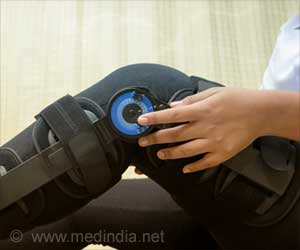
Approximately 16,000 people in the UK are affected by a poorly understood condition called Complex Regional Pain Syndrome (CRPS).


Chronic Pain Patients can Taper Opioids Successfully
Patients can learn to respond to their pain in a different way, making it less overwhelming. They don't have to be so tied to their medications.
Patients can learn to respond to their pain in a different way, making it less overwhelming. They don't have to be so tied to their medications.
TOP INSIGHT

Sometimes chronic pain can begin without any obvious cause. But for many people, it starts after an injury or because of a health condition.
The team tested how quickly people with CRPS processed visual information in the side of their environment nearer to their painful limb compared to the other side of the environment. Using laser pointers controlled by a computer, they projected two flashes of light onto the left and right side of a board that was placed in front of the patients, and the patients had to say which light appeared first. Their results showed that people with CRPS processed the light on the affected side of the board more slowly than the light on the unaffected side, suggesting that information that is nearer to the affected side of the body is not well processed by the brain.
Lead author, Dr Janet Bultitude from the University of Bath's Centre for Pain Research, explained: "People with CRPS are usually in constant pain that they can't ignore. Yet paradoxically they often report that they are not sure where their painful limb is unless they look at it directly, and that movements are not automatic - they have to 'tell' their limb to move. The odd sensations they experience suggest there could be a change in mechanisms that normally allow us to process information at different locations in the space around us. "Our results show that people with CRPS are slower to process visual information that comes from the side of their environment where their painful limb is normally located. Since we used a test of vision, the slower processing can't be because of changes in the limb itself, but must be due to the way the brain processes information. We're excited that these results can help propel us forward to developing new treatments for those affected by the condition."

First Trial of DBS Brings Hope for Chronic Pain
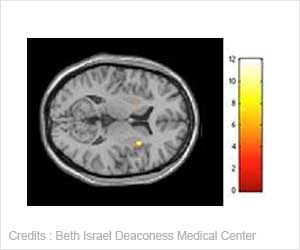
The affective component of pain in patients with post-stroke pain syndrome can be addressed by deep brain stimulation (DBS) of the ventral striatum/anterior limb of the internal capsule.
The affective component of pain in patients with post-stroke pain syndrome can be addressed by deep brain stimulation (DBS) of the ventral striatum/anterior limb of the internal capsule.
Source-ANI

Women Who Catastrophize Chronic Pain More Likely to Take Prescribed Opioids
Women with a psychological condition of catastrophizing pain were more likely to take prescribed opioids than men.
Women with a psychological condition of catastrophizing pain were more likely to take prescribed opioids than men.

Older Adults With Chronic Pain Are at Risk Of Dementia
Patients who complain about persistent pain have a small but significantly increased likelihood of developing dementia.
Patients who complain about persistent pain have a small but significantly increased likelihood of developing dementia.
 Email
Email