MEDINDIA
 English
 हिन्दी
 Español
 français
 中文
中文
The study findings have important implications for better understanding the neurological basis for autism spectrum disorder (ASD).
Genetic Defects in Autistic Patients
Luikart and his colleagues have engineered viruses to “knock out” the normal mouse PTEN gene and replace it with the mutated human PTEN gene. They then used sophisticated imaging and electrophysiological techniques to study how neuronal function was altered in mice.
Autism Causes, Symptoms, Diagnosis, Treatment, Prognosis
Autism is a neurodevelopmental disorder typically characterized by impaired social and communication skills combined with repetitive movements.
Autism is a neurodevelopmental disorder typically characterized by impaired social and communication skills combined with repetitive movements.
TOP INSIGHT

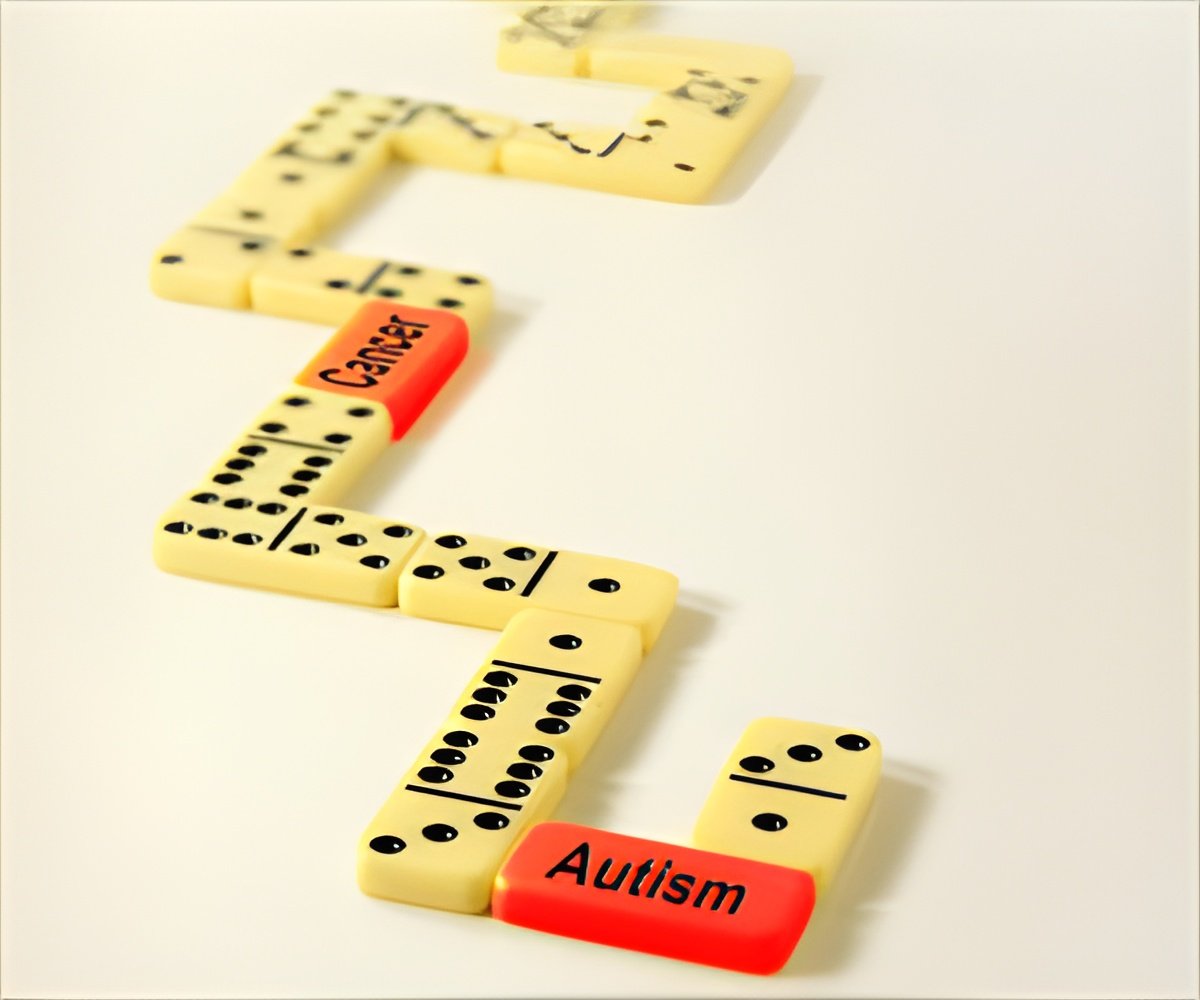
In recent years, researchers have established a strong association between certain mutated genes and autism spectrum disorder (ASD). One of the most common genes that mutates is called PTEN, which normally functions to control cell growth and regulate the ability of neurons to alter the strength of their connections, not only causes ASD but also macrocephaly and epilepsy.
“We were able to determine that if you take out the gene known as Raptor, an essential gene in the mTORC1 signaling pathway, it rescues all of the neuronal overgrowth and synapses that occur with normal PTEN loss,” he says. “We also found that by using the drug Rapamycin to inhibit the mTORC1 pathway—which is necessary for neuronal growth and synapse formation—it rescues all of the changes in neuronal overgrowth.”
In a clinical trial earlier this year, when Rapamycin was administered to children it showed some benefit to the symptoms of autism. “One caveat is that our work is indicating that in order to have the best chance of having a therapeutic effect, these genetic changes associated with ASD really have to be targeted prior to the onset of symptoms.”

Quiz on Autism
Autism spectrum disorder is a complex genetic disorder that impairs social, behavioral, and communication functions in humans. Autistic people may act, communicate, interact, and learn differently than most other people. ASD usually begins in childhood and can last for the rest of a person's life, though symptoms may improve over time
Autism spectrum disorder is a complex genetic disorder that impairs social, behavioral, and communication functions in humans. Autistic people may act, communicate, interact, and learn differently than most other people. ASD usually begins in childhood and can last for the rest of a person's life, though symptoms may improve over time
Source-Eurekalert
Medical History Helps Predict Autism
Machine learning models assess hundreds of variables to find correlations that are related to an increased likelihood for autism spectrum disorder.
Machine learning models assess hundreds of variables to find correlations that are related to an increased likelihood for autism spectrum disorder.
Brain Organoids Shed Insights into Autism
Human organoids grown in the laboratory provide insights into the brain and uncover differences that may contribute to autism in some people.
Human organoids grown in the laboratory provide insights into the brain and uncover differences that may contribute to autism in some people.
 Email
Email