MEDINDIA
 English
 हिन्दी
 Español
 français
 中文
中文
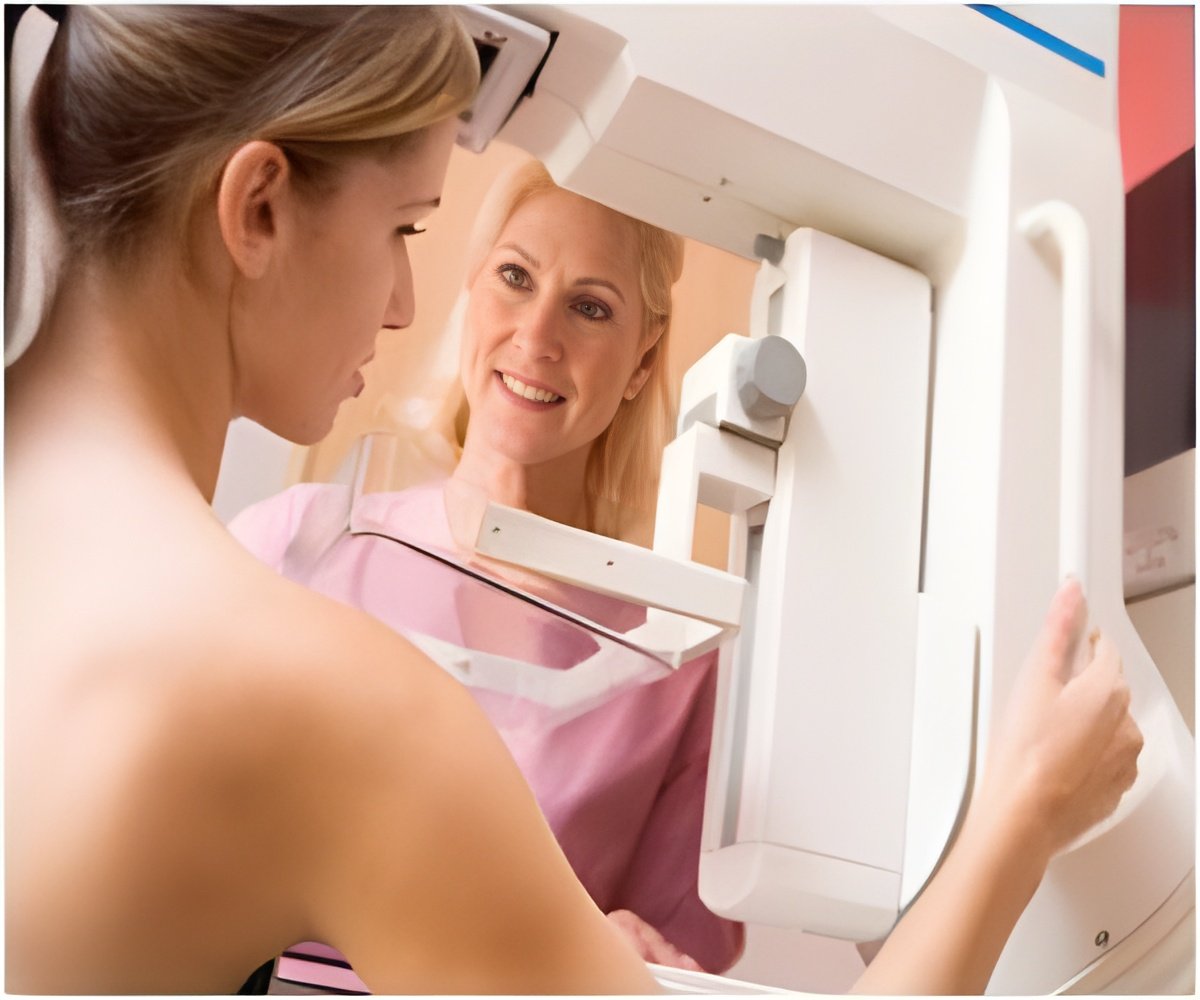
Dartmouth engineers and radiologists are developing new approaches for an emerging technique in diagnostic imaging for breast cancer—MRI with near-infrared spectroscopy (NIRS).

Breast Cancer - Prevention and Management with Lifestyle Changes
Lifestyle choices may or may not cause breast cancer but healthy lifestyle changes can open up avenues beyond breast cancer. Good habits will allow one to fight breast cancer and to live with dignity.
Lifestyle choices may or may not cause breast cancer but healthy lifestyle changes can open up avenues beyond breast cancer. Good habits will allow one to fight breast cancer and to live with dignity.
Prior approaches for MRI/NIRS used parallel plates and relied on custom breast molds for each patient. Biomedical engineers from the Thayer School of Engineering at Dartmouth developed a new, more flexible, convenient, and comfortable approach. They designed a set of eight light transmitting cables that can be adjusted to surround the breast with light tension. A woman lies on her stomach and the breast hangs pendant through the holes of the MRI/NIRS breast coil. The procedure is nearly identical to clinical MRI.
Eight women participated in a trial of the new design. "We found that the new interface allowed us to target lesions more effectively than ever before, said Michael Mastanduno, corresponding author of the study. "Set up time was faster and images were of higher quality."
Recent Advances and the Present Status of Breast cancer Management
The crab that invades the breast is no more a fear factor with all the advancements that medical science and customized protocols can fight breast cancer. the recent developments in the management of breast cancer.
The crab that invades the breast is no more a fear factor with all the advancements that medical science and customized protocols can fight breast cancer. the recent developments in the management of breast cancer.
"This work is a huge improvement on previous designs of MRI/NIRS systems. All breast sizes and lesion locations can now be effectively imaged. Though there is more work to be done, this technology is promising for improving MRI's ability to distinguish cancer from benign abnormalities," said Mastanduno.

Breast Cancer - Causes, Risks, Symptoms, Diagnosis, Staging, Treatment, Prevention & Prognosis
Breast cancer is a cancer that affects the breasts or mammary glands. Early detection and lifestyle changes help in controlling breast cancer.
Breast cancer is a cancer that affects the breasts or mammary glands. Early detection and lifestyle changes help in controlling breast cancer.
Source-Eurekalert

Male Breast Cancer-Causes-Risk Factors-Signs-Symptoms-Diagnosis-Treatment-FAQs
Most cases of male breast cancer are diagnosed between the ages of 60 and 70 years. Treatment of male breast cancer often involves surgery.
Most cases of male breast cancer are diagnosed between the ages of 60 and 70 years. Treatment of male breast cancer often involves surgery.
 Email
Email