MEDINDIA
 English
 हिन्दी
 Español
 français
 中文
中文
In an analysis to examine how often throughout adulthood clinically significant changes occur in a patient's family history of cancer, researchers found substantial changes in family
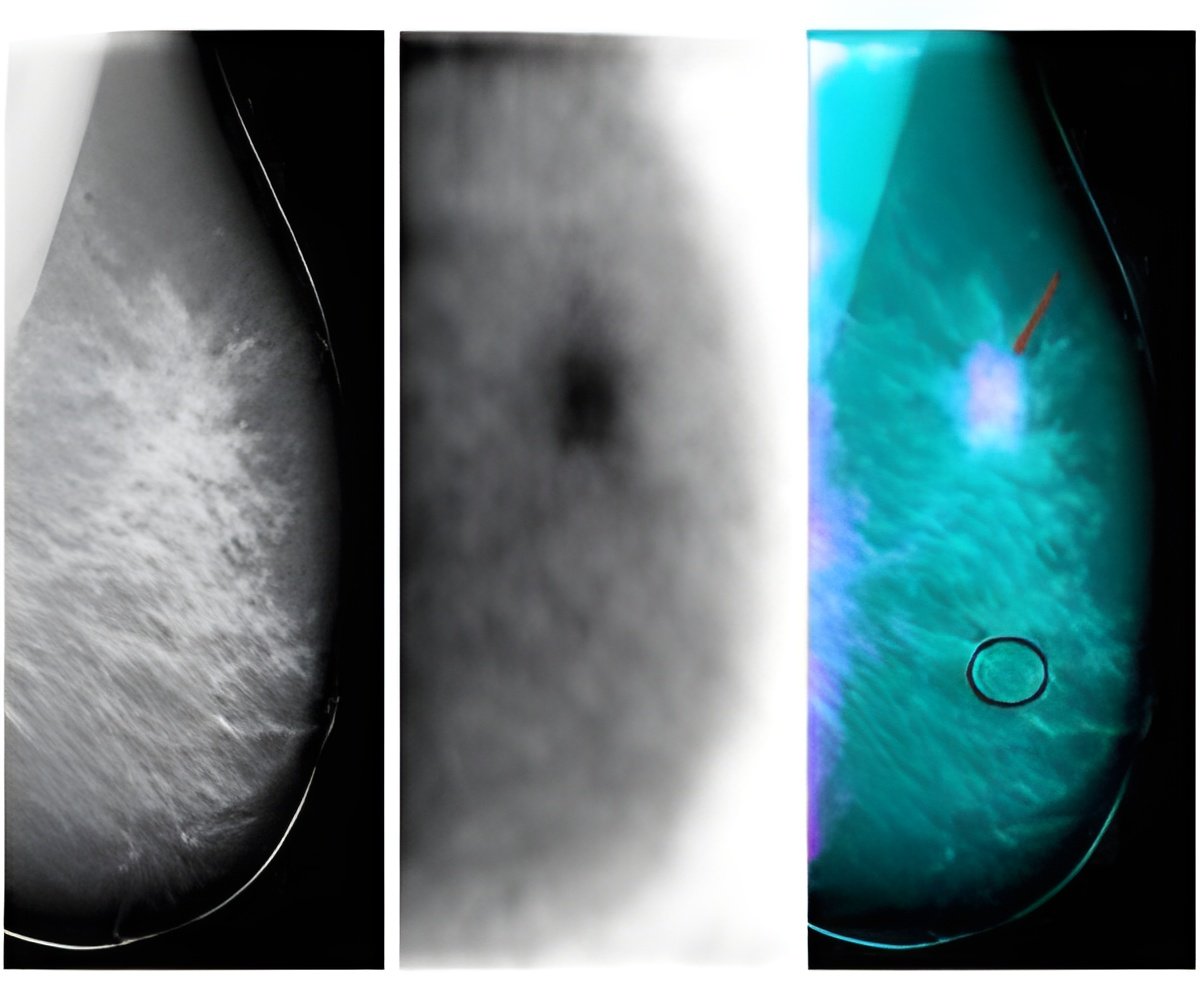

Breast Cancer Screening using Mammogram
Breast cancer if detected early can be completely cured. Mammography is used to screen women for breast cancer.
Breast cancer if detected early can be completely cured. Mammography is used to screen women for breast cancer.
The researchers found that retrospective analysis indicated that the percentages of participants who met criteria for high-risk screening based on family history at ages 30 and 50 years, respectively, were as follows: for colorectal cancer, 2.1 percent and 7.1 percent; for breast cancer, 7.2 percent and 11.4 percent; and for prostate cancer, 0.9 percent and 2.0 percent. "In prospective analysis, the numbers of participants who newly met criteria for high-risk screening based on family history per 100 persons followed up for 20 years were 2 for colorectal cancer, 6 for breast cancer, and 8 for prostate cancer. The rate of change in cancer family history was similar for colorectal and breast cancer between the 2 analyses," the authors write.
"Both analyses demonstrate that clinically relevant family history changes substantially during early and middle adulthood, particularly for colorectal and breast cancer, for which the percentage recommended for high-risk screening increases 1.5- to 3-fold between ages 30 and 50 years."

Lung Cancer Screening - FAQs
Lung cancer accounts for nearly 1.3 million deaths annually worldwide. Lung cancer screening can help in early detection of cancer and possible cure.
Lung cancer accounts for nearly 1.3 million deaths annually worldwide. Lung cancer screening can help in early detection of cancer and possible cure.
Source-Eurekalert
Pap smear and Cervical Cancer Screening
Pap smear is the most common test used in screening cervical cancer caused by an infection with human papilloma virus. Pap smear should be repeated every 1 to 3 years till the age of 65 years.
Pap smear is the most common test used in screening cervical cancer caused by an infection with human papilloma virus. Pap smear should be repeated every 1 to 3 years till the age of 65 years.
Prostate Cancer Screening
PSA (Prostate Specific Antigen) test and Digital Rectal Examination are two tests that allow detection of prostate cancer at early stages.
PSA (Prostate Specific Antigen) test and Digital Rectal Examination are two tests that allow detection of prostate cancer at early stages.
 Email
Email