MEDINDIA
 English
 हिन्दी
 Español
 français
 中文
中文
Don't you think that stem cells are special?

"If telomerase is unable to maintain the ends of the chromosomes, cells will stop multiplying," said professor of medicine Steven Artandi, MD, PhD. "This would be advantageous in cancer cells, but in normal stem cells it can cause severe dysfunction and lead to diseases such as pulmonary fibrosis, aplastic anemia and a genetic condition called dyskeratosis congenita. We want to understand how telomerase works, and to develop therapies for cancer and these other diseases."
Artandi is the senior author of the research, which will be published Aug. 3 in Cell. He is also a member of the Stanford Cancer Institute. Graduate student Franklin Zhong is the first author of the study.
Earlier research in Artandi's lab identified a protein called TCAB1 that brings the telomerase complex (actually a large clump of many proteins) to a processing area in the cell's nucleus called a Cajal body. But no one knew how the complex was then ferried to the ends of telomeres, and research was stymied by the complex's large size, multiple components and relative scarcity.
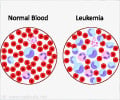
Chronic Lymphocytic Leukemia
Chronic Lymphocytic Leukemia (CLL) is one of the most common types of adult leukemia and is considered as one of the ‘good cancers’.
Chronic Lymphocytic Leukemia (CLL) is one of the most common types of adult leukemia and is considered as one of the ‘good cancers’.
"When we mutated this site in TPP1," said Artandi, "we blocked the interaction between the two proteins and prevented telomerase from going to the telomeres. And when we interfered with this interaction in human cancer cells, the telomeres began to shorten." The researchers are now assessing whether the life span of the cancer cells, and their ability to divide unchecked, will also be affected by the treatment.

Embryonic Blood Vessels That Make Blood Stem Cells can also Make Beating Heart Muscles: Study
In a new study, a team used the yolk sac from embryos that lacked Scl and within four hours of plating on the culture dish, the tissue had generated beating cardiomyocytes.
In a new study, a team used the yolk sac from embryos that lacked Scl and within four hours of plating on the culture dish, the tissue had generated beating cardiomyocytes.
"It was impossible to even begin to understand this mechanism before we knew how these two molecules interact," said Artandi. "But now that we're getting a handle on this, we can begin to think about developing inhibitors — maybe in the form of peptides or small molecules — that can mimic this disruption. This could be very valuable in cancer therapies."
Source-Eurekalert
 Email
Email